Pest Control Ad Examples: 5 Ads That Book Treatments
Five pest control ad examples that book treatments — a one-visit UGC ad, a pet-safe hero, a store-spray comparison, a results testimonial, and a first-treatment offer.
Pest control ads that book treatments answer two questions fast: will this actually make the problem go away, and is it safe for my family and pets? Speed of relief and safety get the call; visible results and a clear offer get the booking — including the recurring plan that’s the real prize. The five fictional ads that follow — a one-visit UGC ad, a pet-safe hero, a store-spray comparison, a results testimonial, and a first-treatment offer — each run a different angle in a different format.
Key takeaways
- Speed and safety are the twin hooks: “gone in one visit” and “pet-safe, kid-safe” answer the homeowner’s only two real questions.
- Sell the recurring plan, not just the one-time spray — quarterly protection is the compounding revenue Meta builds well.
- Beat the DIY alternative: homeowners try store sprays first, so creative that shows why pro service wins converts the frustrated.
- Run five distinct angles so Meta matches each to the right homeowner instead of bidding your own near-duplicates against each other.
What makes a great pest control ad
The buyer is a homeowner reacting to disgust or worry — they saw an ant trail, heard something in the attic, got bitten in their own backyard — or planning ahead with a protection mindset. The reactive buyer wants the problem gone now; the proactive buyer wants the peace of mind of a plan. Both screen hard for two things: effectiveness and safety around kids and pets.
Acute infestations often start on search, but Meta owns the preventive and plan-based demand, plus the familiarity that decides who gets the call when the first pest shows up. The recurring-plan revenue is the real prize — quarterly protection is the compounding, route-density business that makes pest control profitable, and it’s exactly what Meta builds well over a season. That demand-generation logic mirrors the recurring-revenue play in the landscaping ad examples and the broader home services ad examples playbooks.
The proof that matters is results and safety, shown plainly. Homeowners have usually tried store sprays first and failed, so creative that contrasts DIY with pro service converts the frustrated. Keep one promise per ad and make it concrete — and avoid gratuitous pest imagery, which both repels viewers and risks Meta’s content limits. The five concepts below cover the angles that book treatments, and testing them at volume follows the same cadence as how many ad creatives to test per week.
| Ad | Format | Angle | Funnel stage | Best for |
|---|---|---|---|---|
| One-visit UGC | UGC | Speed/relief | Cold | Reactive infestation jobs |
| Pet-safe hero | Service hero | Trust/safety | Cold/warm | Family-focused positioning |
| Store-spray comparison | Comparison | Us-vs-old-way | Warm | Converting DIY homeowners |
| No-ants-since testimonial | Testimonial | Trust/results | Warm | Recurring-plan signups |
| $89 first-treatment offer | Offer | Price/value | Cold/warm | Filling routes |
1. The one-visit UGC ad
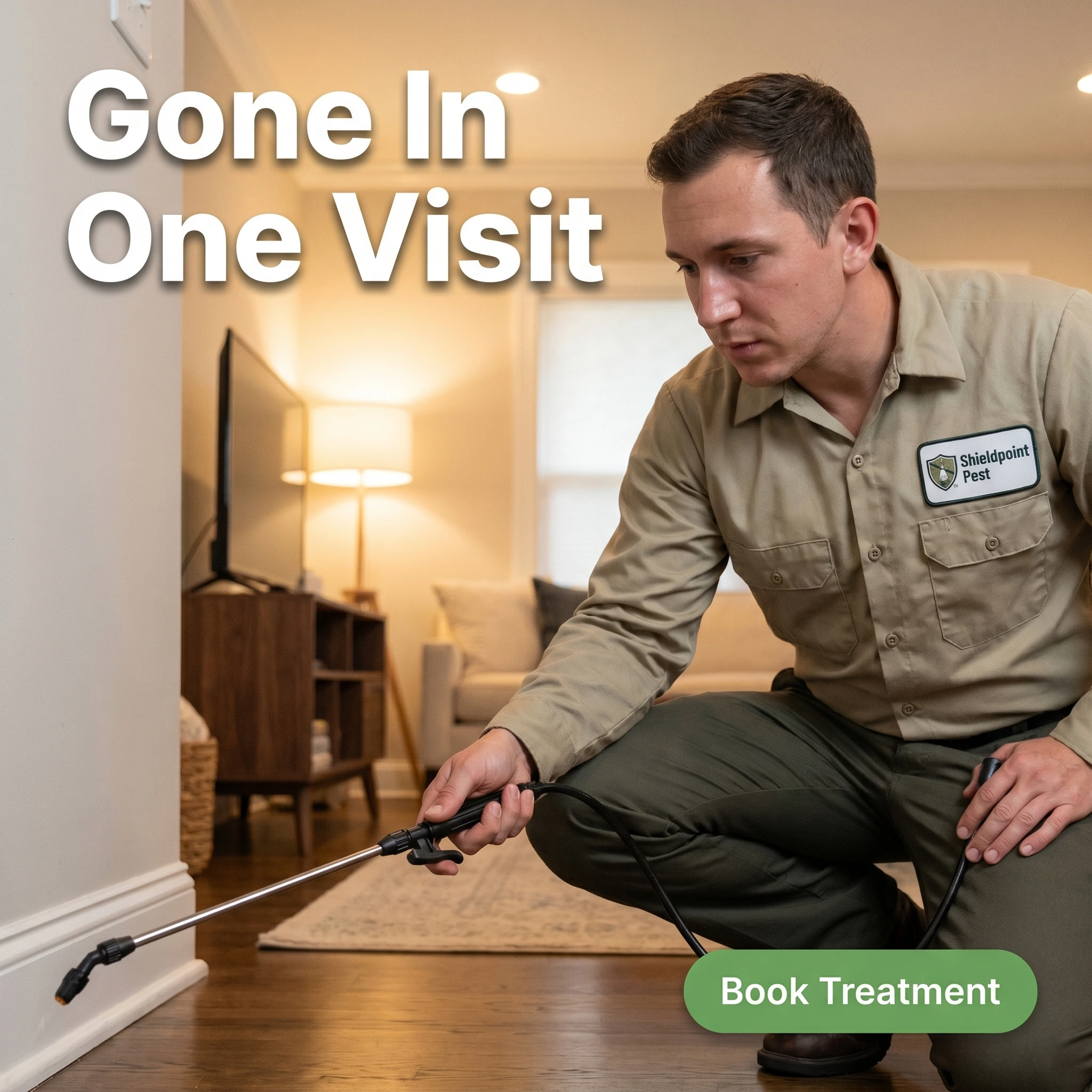
The format & angle. A Shieldpoint Pest tech treating along a baseboard with a sprayer, shot like a relieved homeowner caught the moment. Speed and relief — no pests shown, just the fix in progress.
Who it targets. Cold homeowners who just noticed a problem and want it handled fast — the reactive buyer in mild panic.
The hook. “Gone In One Visit.” A concrete effectiveness promise that answers the reactive buyer’s only question — how fast does this end.
Why it works. The candid in-home shot is proof of service, not a promise of it — a real tech, real equipment, real work along the baseboard. Keeping the pest itself out of frame makes the ad watchable and policy-safe while still signaling action. For a homeowner who wants the problem gone yesterday, a specific “one visit” claim lands harder than “effective treatments,” and the real-moment framing signals a competent local pro.
Steal it. Photograph a tech treating a home interior, phone-camera style, focused on the work rather than the pest. Headline your strongest realistic speed-of-relief promise, and route the click to a fast-booking page.
2. The pet-safe hero ad

The format & angle. Greenguard Pest Control’s hero: a bright, clean living room with a dog on the rug and sunlight through the window — the safe, calm home the service protects. Trust and safety.
Who it targets. Cold and warm homeowners with kids or pets — the buyer who wants the pests gone but worries about the chemicals more.
The hook. “Pet-Safe. Kid-Safe. Bug-Free.” Three short claims that answer the safety question and the effectiveness question in one line.
Why it works. For families, the hesitation isn’t whether pest control works — it’s whether it’s safe to spray around the people and animals they’re protecting. Leading with safety removes the objection before it forms, and the calm, clean home image shows the outcome they want rather than the problem they have. The rule-of-three line is punchy and scannable, covering safety twice and results once — the priority order this buyer actually holds.
Steal it. Show a clean, lived-in home that signals safety — natural light, a pet, no pests, no hazmat imagery. Headline the safety-plus-results promise, and back it on the landing page with your actual product and method details.
3. The store-spray comparison ad
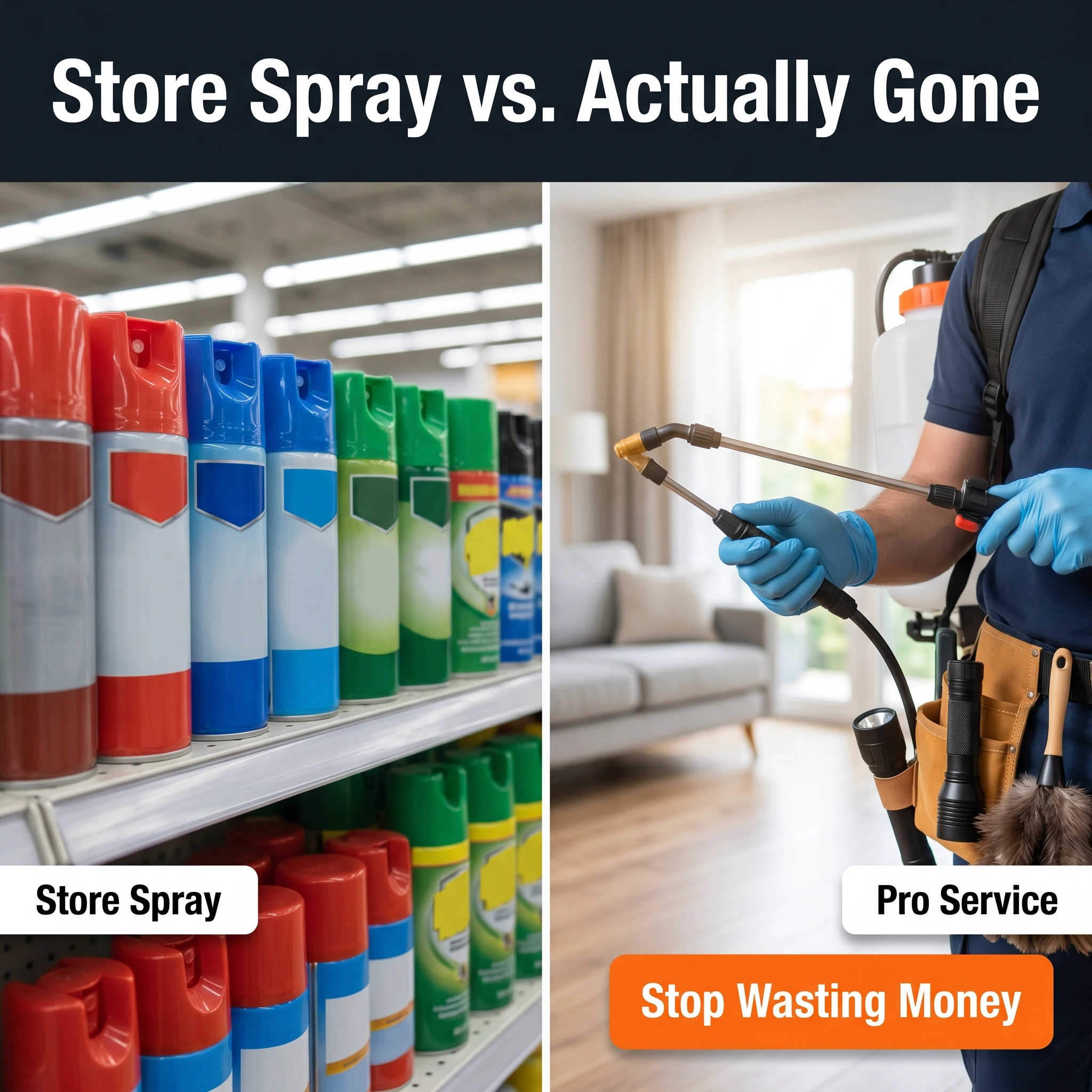
The format & angle. Borderline Pest Co.’s split: a row of supermarket bug-spray cans on the left; a pro tech with proper equipment on the right. Us-versus-the-DIY-way.
Who it targets. Warm homeowners who’ve already tried and failed with store products — the frustrated DIY-er ready to call a pro.
The hook. “Store Spray vs. Actually Gone.” It validates the failed DIY attempt and draws the line to a real solution.
Why it works. Most homeowners try the cheap store fix first, so the left half lands as a shared, slightly embarrassing experience. Contrasting it with professional service reframes the spend not as a new cost but as the thing that finally works after wasting money on cans. The comparison format converts the warm, frustrated buyer who already knows DIY failed and just needs permission to call. No pest imagery required — the cans and the pro tell the story.
Steal it. Show a believable row of store products beside your pro setup, same crop. Headline the gap between dabbling and a real fix, and route the click to a service page that names the pests store sprays never actually solve.
4. The no-ants-since testimonial ad
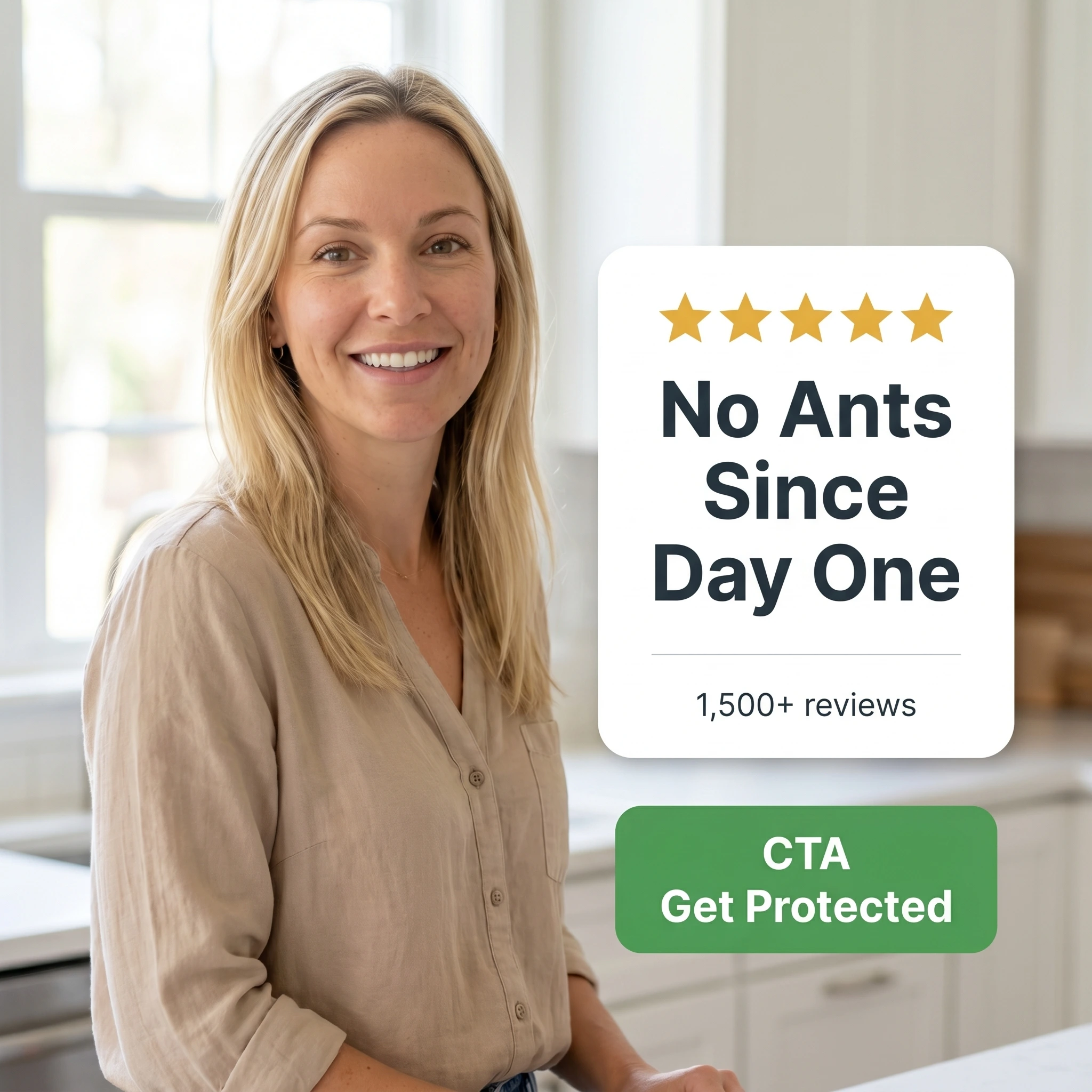
The format & angle. Hearthshield Pest pairs a homeowner with a review card — five stars, a real review count, and a results quote. Trust, told through a clean result.
Who it targets. Warm homeowners comparing providers — especially those considering a recurring plan and wanting proof it keeps pests gone.
The hook. “No Ants Since Day One.” A review fragment that proves lasting results, which is exactly what the plan buyer is paying for.
Why it works. Recurring-plan buyers aren’t buying one treatment — they’re buying ongoing absence of pests, and they need proof it holds. A testimonial about results that lasted, backed by a visible review count, answers the fear that the bugs come right back. It turns the abstract promise of “protection” into a real customer’s lived experience, which is the deciding input when someone’s about to commit to a quarterly contract.
Steal it. Mine your reviews for lasting-results language — “haven’t seen one since,” “still bug-free months later” — and build the card around the best one, with your live review count beneath it. Route the click to a recurring-plan page.
5. The $89 first-treatment offer ad
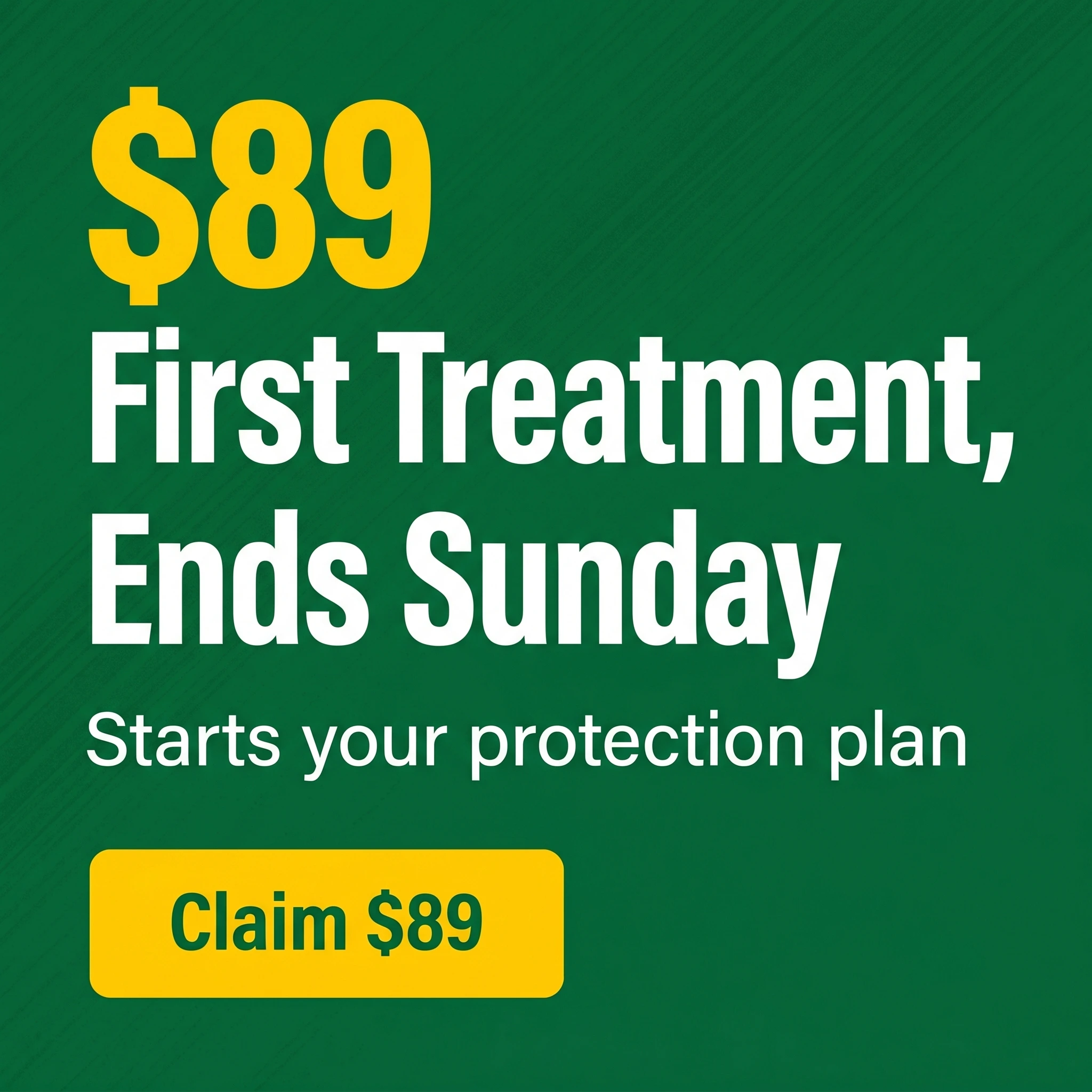
The format & angle. Sentry Pest Co.’s route-filler: typography-led, one price, a deadline, a confident color block — no photo competing with the number. Price and value.
Who it targets. Cold and warm homeowners on the fence — the people who’d act on a low-risk price to get started.
The hook. “$89 First Treatment, Ends Sunday.” A flat entry price plus a near deadline; the number lowers the barrier and the day makes it move.
Why it works. A discounted first treatment is the classic foot-in-the-door for a recurring plan — the homeowner samples the service at low risk, and most stay on a plan once the pests are gone. The flat price removes fear of a surprise bill, and the named day beats “limited time” because it’s checkable. The typography-only format reads as a genuine local deal, not an agency campaign, and seasonal timing does the targeting.
Steal it. Pick a flat first-treatment price that covers your cost and opens a plan, name the deadline, and run it to fill routes in your service area. The first treatment is the entry point; the recurring plan is the revenue — then rotate the creative before ad fatigue sets in.
Run all five through the season
A one-visit promise, a safety hero, a DIY contrast, a results review, and a starter offer — five angles for the reactive homeowner and the planner alike. The spread matters because Meta’s delivery rewards distinct creatives matched to distinct households, and recurring-plan revenue compounds when each angle reaches the buyers it actually suits rather than re-serving one ad to everyone in the radius.
Prospect cold with the one-visit UGC and pet-safe hero, convert the frustrated DIY crowd with the comparison and review, and use the starter offer to fill routes and seed recurring plans. Shift the pest in focus with the season — ants and mosquitoes as it warms, rodents as it cools — and rotate before a tight local audience tunes the ads out.
Producing five-plus fresh concepts a season is the real work. Zendux creates on-brand static ad variants with AI and bulk-launches them across ad sets, so the next season’s set is live before the first ant shows up.