5 Landscaping Ad Examples That Win Jobs
Five landscaping ad examples that book quotes and contracts — a local-crew UGC ad, a dream-backyard hero, a patchy-lawn before/after, a reliability testimonial, and a first-mow offer.
Landscaping ads that win jobs do one thing first: they show a transformation real enough that a homeowner pictures their own yard finished. The visual result stops the scroll and earns the quote request; local proof and reliability win the contract — especially the recurring maintenance kind. Here are five fictional ads — a local-crew UGC ad, a dream-backyard hero, a patchy-lawn before/after, a reliability testimonial, and a first-mow offer — no two alike in angle or layout.
Key takeaways
- Transformation is the hook: yard before/afters are dramatic and self-evident, the strongest creative this niche has.
- Local proof closes the job — a recognizable neighborhood or a real review tells the homeowner you actually work their streets.
- Sell the recurring contract, not just the one-time build — reliability creative wins the maintenance revenue that compounds.
- Run five distinct angles so Meta matches each to the right homeowner instead of bidding your own near-duplicates against each other.
What makes a great landscaping ad
The buyer is a homeowner with one of two jobs in mind: a project (a redesign, a patio, a fixed-up lawn) or ongoing maintenance (mowing, cleanups, a yard they can stop worrying about). The project buyer is driven by a vision; the maintenance buyer is driven by reliability. The same ad rarely serves both well, which is why a portfolio beats a single hero.
Landscaping is one of the most visual local trades, and that’s the advantage: a dramatic before/after does the persuading no copy can match. The work sells itself when you show it. Tight local targeting matters as much as the creative — a stunning yard ad shown across the county is wasted, so the radius should match where crews actually drive. This demand-generation logic mirrors the broader home services ad examples playbook.
The proof that matters is local and visible. A recognizable neighborhood, a real review count, a finished yard that looks like it belongs on the buyer’s street — these signal a real local operator, not a national lead-broker. Keep one promise per ad and let the transformation carry it. The five concepts below cover the angles that win jobs, including the recurring ones that look a lot like the steady demand behind the pest control ad examples playbook.
| Ad | Format | Angle | Funnel stage | Best for |
|---|---|---|---|---|
| Local-crew UGC | UGC | Trust/local proof | Cold | Established local crews |
| Dream-backyard hero | Project hero | Dream outcome | Cold/warm | Design-build & hardscape |
| Patchy-lawn before/after | Before/after | Transformation | Warm | Lawn renovation |
| Every-Thursday testimonial | Testimonial | Reliability | Warm | Recurring maintenance |
| Free first-mow offer | Offer | Value/season | Cold/warm | Filling maintenance routes |
1. The local-crew UGC ad
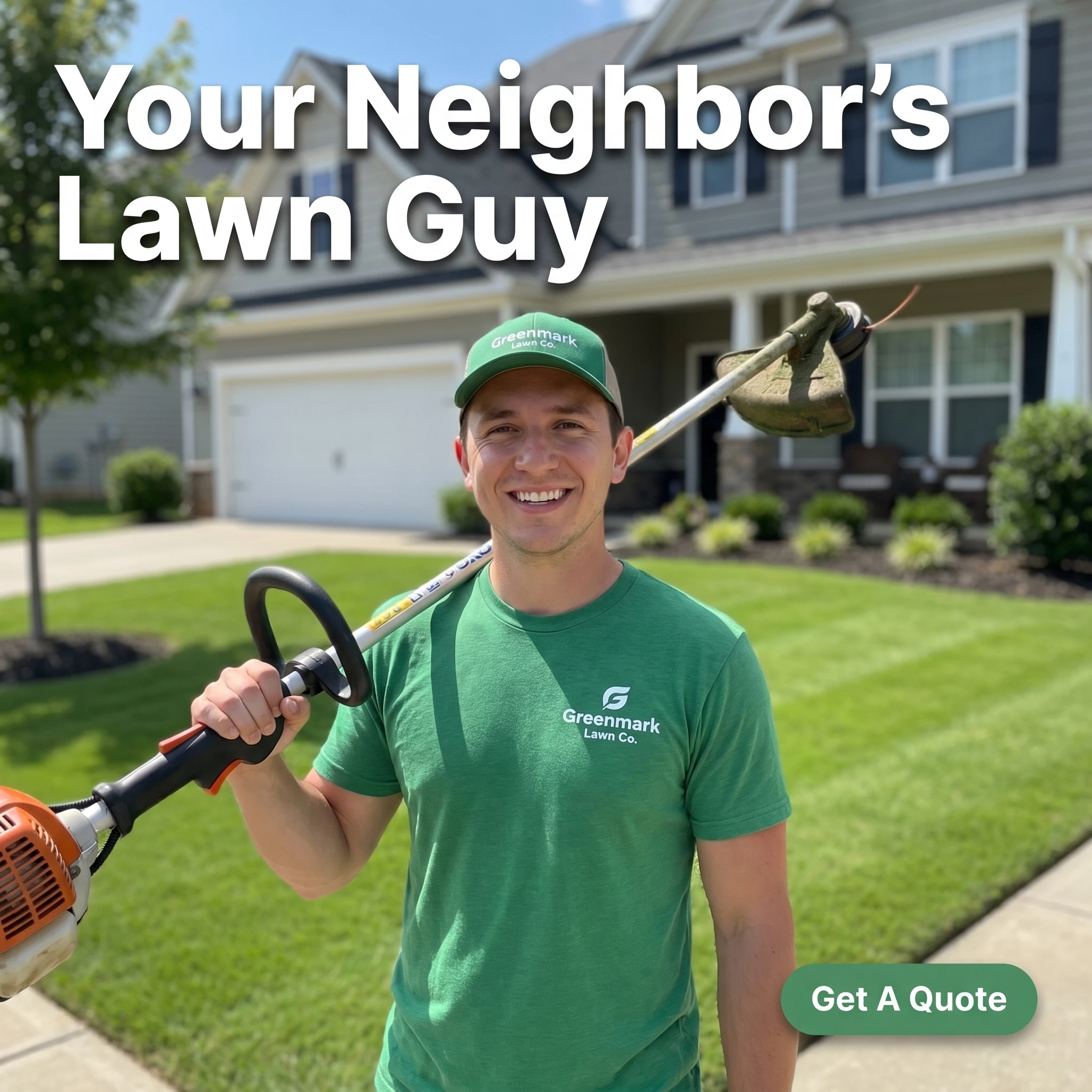
The format & angle. A Greenmark Lawn Co. owner standing in a freshly finished front yard, shot like a happy customer snapped it from the sidewalk. Plain and local. Trust through local proof.
Who it targets. Cold homeowners in the service area who want a crew that actually works their neighborhood, not a faceless company.
The hook. “Your Neighbor’s Lawn Guy.” It positions the company as the trusted local that’s already on the street, not an outsider.
Why it works. A candid shot of a real owner in a real local yard reads as proof of work and proof of place at once. In a category where homeowners trust the crew their neighbors use, the “neighbor’s lawn guy” framing taps directly into local social proof. The unpolished feel signals a hands-on operator, not a corporate franchise, which is exactly the reassurance a homeowner wants before letting someone work their property.
Steal it. Photograph the owner or crew lead in a real finished yard in a recognizable neighborhood, phone-camera style. Headline the local angle, and run it tight to the streets you already serve so the social proof is real.
2. The dream-backyard hero ad
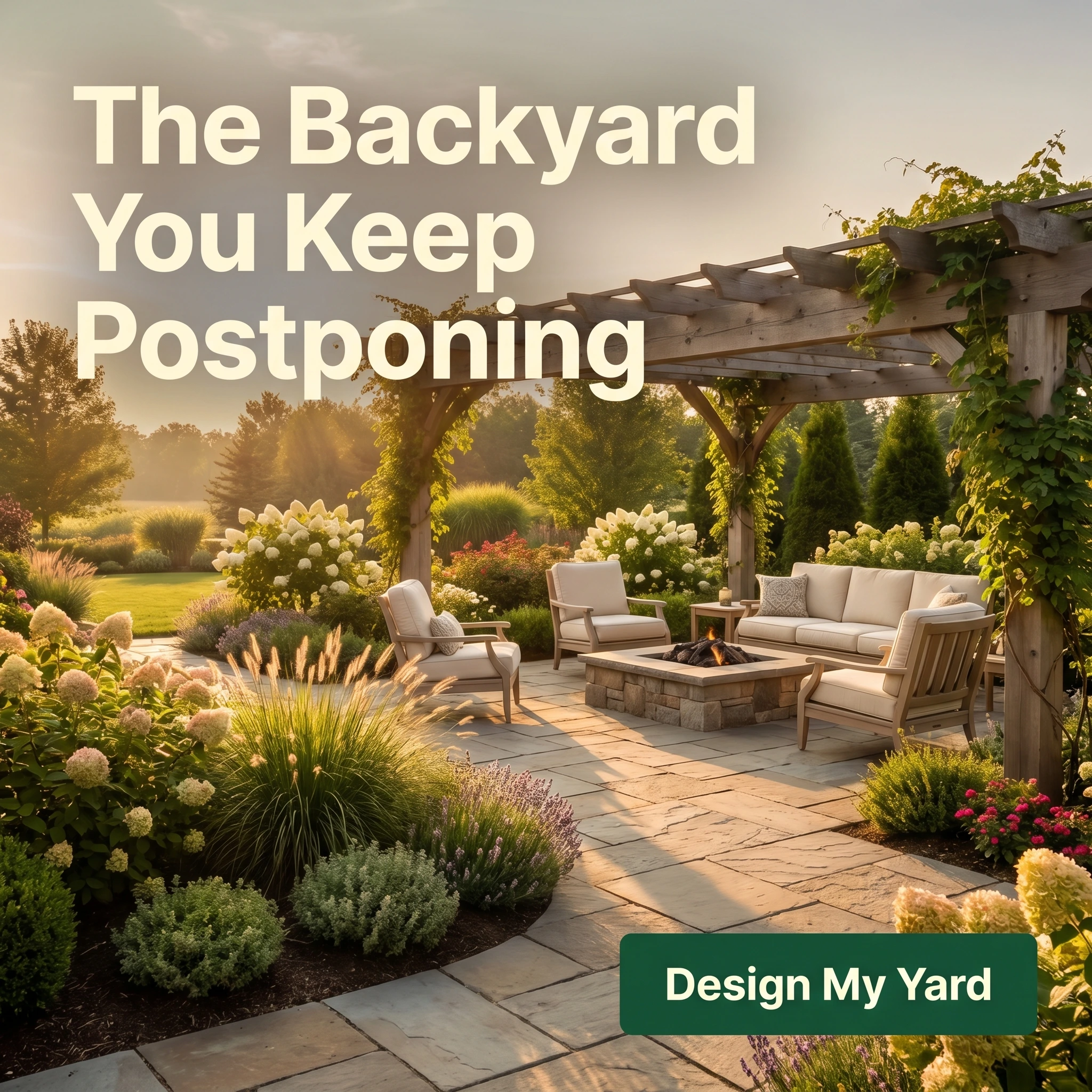
The format & angle. Stoneleaf Landscapes’ hero: a finished backyard — patio, plantings, soft evening light — one focal point, magazine-grade. Dream outcome.
Who it targets. Cold and warm homeowners imagining a better outdoor space — the people who’ve been “meaning to do the backyard” for years.
The hook. “The Backyard You Keep Postponing.” It names the procrastination directly and turns the daydream into a nudge to finally act.
Why it works. Project work starts as a fantasy, and a beautifully finished yard sells that fantasy as achievable — the company’s real work, not a render. The headline’s gentle callout of postponement converts passive admiration into “maybe this year,” which is the mental shift that produces a quote request. Golden-hour light does the aspiration work without staging anything fake.
Steal it. Photograph your best finished design at golden hour, one cohesive space, uncluttered frame. Headline the procrastination the homeowner feels, and send the click to a design-build gallery, not a generic homepage.
3. The patchy-lawn before/after ad
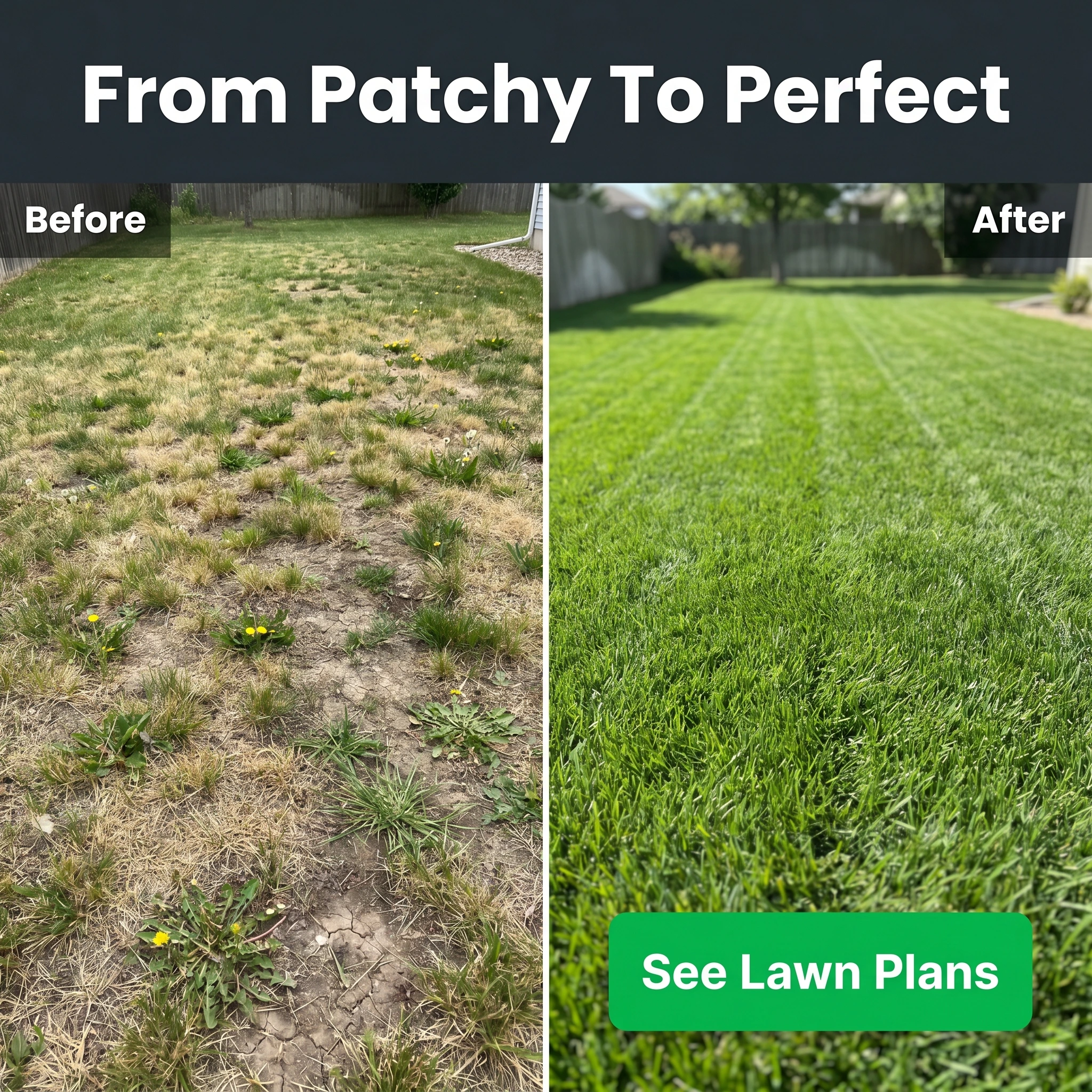
The format & angle. Evergreen Edge’s split: a weedy, patchy, bare lawn on the left; a thick, even, green one on the right, same yard. The trade’s natural before/after.
Who it targets. Warm homeowners embarrassed by their lawn — the people who see their own bare patches in the left half.
The hook. “From Patchy To Perfect.” It states the transformation plainly and makes the result instantly readable.
Why it works. Lawn condition is visible to the whole street, so the before/after taps real social pressure — the left half is mildly embarrassing, the right is a relief. The dramatic, self-evident transformation proves capability without a claim, the strongest argument this niche has. It converts homeowners who’ve tolerated a bad lawn for years into people who suddenly want it fixed before summer.
Steal it. Shoot every lawn renovation’s before and after from the same spot. Use a genuinely dramatic transformation — the bigger the contrast, the less the headline has to do — and route the click to a lawn-care quote.
4. The every-Thursday testimonial ad

The format & angle. Maplewild Landscaping pairs a homeowner with a review card — five stars, a real review count, and a reliability quote. Trust, aimed at the maintenance buyer.
Who it targets. Warm homeowners shopping for recurring maintenance — people who’ve been let down by crews that ghost or show up whenever.
The hook. “They Show Up Every Thursday.” A review fragment that measures reliability in the thing maintenance buyers care about most — consistency.
Why it works. Recurring maintenance is a reliability purchase, not a quality one — the buyer wants to stop thinking about the yard. A testimonial about a crew that shows up like clockwork answers the exact fear of the no-show landscaper, and the specific day makes it concrete and believable. The visible review count turns one customer’s experience into evidence the whole operation runs on schedule.
Steal it. Mine your reviews for consistency language — “every week,” “never miss,” “always on time” — and build the card around the most specific one, with your live review count beneath it. Route the click to a maintenance-plan page.
5. The free first-mow offer ad

The format & angle. Cedarstone Outdoor’s route-filler: typography-led, the free offer and the season dominant, a confident green color block — no photo competing. Value and seasonal urgency.
Who it targets. Cold and warm homeowners deciding on a maintenance provider for the season — the people choosing now who’ll stick for months.
The hook. “First Mow Free This Spring.” A zero-risk trial plus a seasonal window that prompts the homeowner to lock in a provider now.
Why it works. A free first mow is the lowest-friction way to start a recurring relationship — the homeowner samples the service before committing, and the season’s start is a natural decision point. The offer’s real value is the contract it opens, not the free visit. The typography-only format reads as a genuine seasonal deal, and the spring framing does the timing — getting in before the homeowner picks someone else for the whole season.
Steal it. Make the free offer and the season the two biggest elements, run it hard in early spring, and route leads onto a recurring plan. The free mow is the foot in the door; the season-long contract is the revenue.
Keep all five on the route
A local face, a dream yard, a lawn transformation, a reliability review, and a free first mow — five angles spanning project work and recurring maintenance. Meta’s Andromeda retrieval engine evaluates far more ads per auction than it once could, so five distinct concepts each reach the homeowners they fit, where five versions of the same yard shot would only trade impressions among themselves.
Run the local-crew and dream-backyard ads to prospect in early spring, the before/after to convert the embarrassed-lawn crowd, and the reliability testimonial plus free-mow offer to lock homeowners into a season-long contract. Fold new project photos in as jobs finish so the proof on screen keeps pace with the work.
Keeping that much current creative live across the season is the bottleneck. Zendux produces static ad variants in your company’s look with AI and bulk-launches them across ad sets faster than loading the trailer.