5 Vacation Rental Ad Examples Worth Stealing
Five vacation rental ad examples that fill the calendar — a cabin-deck UGC ad, a beach-house hero, a whole-house-vs-hotel split, a guest review, and a weekly-stay deal.
Vacation rental ads book direct stays when they sell what a hotel can’t: the whole place to yourselves, with room for everyone. Travelers don’t compare a beach house to another beach house first — they compare it to cramming the family into two hotel rooms, and the ad’s job is to make the private-home upgrade obvious. These five fictional vacation rental ad examples each run a different angle in a different layout — a cabin-deck UGC moment, a beach-house hero, a whole-house-versus-hotel split, a guest testimonial, and a weekly-stay offer.
Key takeaways
- Sell space and privacy — the whole house, the full kitchen, no shared walls is the real upgrade over a hotel; lead with it.
- Show the property honestly — real rooms and real views in good light convert; staged or misleading photos tank reviews and kill repeat bookings.
- Match the trip type — family reunions, group getaways, and remote-work stays each want a different room in the hero.
- Reward longer stays — weekly and off-season offers fill the gaps and lift average booking value.
What makes a great vacation rental ad
The buyer is usually one organizer planning for a group — the person wrangling a family reunion, a friends’ trip, or a multigenerational holiday. Their decision isn’t only about the destination; it’s about whether everyone fits, whether there’s a kitchen, whether the kids and the grandparents each get a room. The ad that pictures that — space, privacy, the whole house — speaks to the real job to be done.
Honest photography is the trust mechanism. A rental lives on reviews, and the fastest way to a bad one is a listing that oversells. Show the genuine rooms, the actual view, and the best real feature in good light — the same discipline that runs through strong real estate ad examples, where the photo is the product. Travelers reward homes that look exactly like what shows up.
Then the ad needs a job. A dream hero prospects cold travelers; a comparison converts the ones weighing a hotel; an offer fills the slow weeks. One creative can’t do all three well, which is why a set of distinct angles — the principle behind the best static ads — beats running a single hero until it fatigues. How much to rotate is its own question, answered in how many ad creatives to test per week. The five concepts below cover the spread.
| Ad | Format | Angle | Funnel stage | Best for |
|---|---|---|---|---|
| Cabin-deck UGC | UGC | Space/experience | Cold | Cabins & group getaways |
| Beach-house hero | Hero | Location/dream | Cold/warm | Beachfront & view homes |
| Whole-house-vs-hotel split | Comparison | Us-vs-the-hotel-way | Warm | Family & group travelers |
| Guest testimonial | Testimonial | Trust/social proof | Warm | Well-reviewed rentals |
| Weekly-stay offer | Offer | Price/value | Cold/warm | Off-season & long stays |
1. The cabin-deck UGC ad
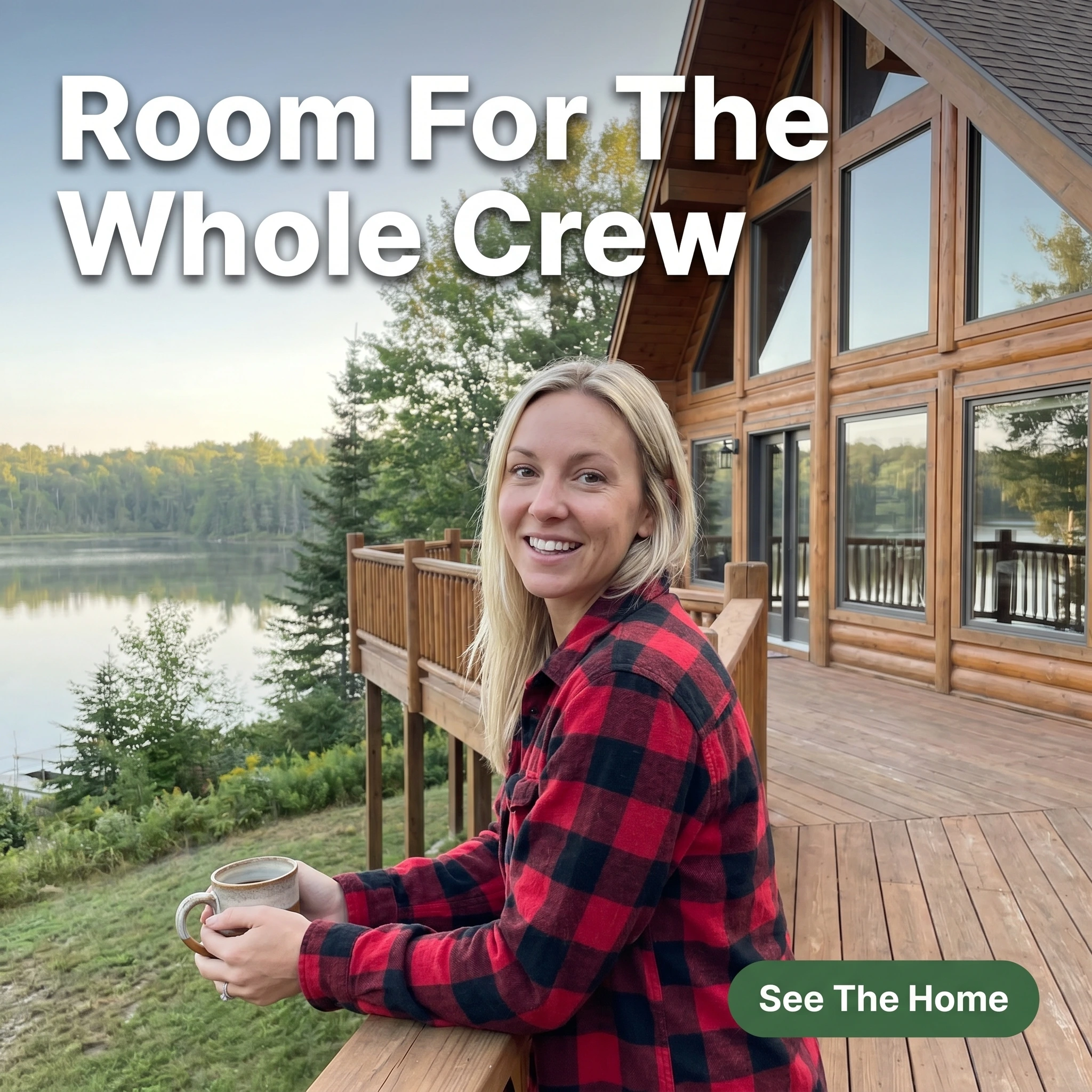
The format & angle. A guest at Pinecrest Stays with a coffee on a big wraparound deck, the timber cabin behind her and a lake view ahead, shot like a real morning at the rental. Space and experience.
Who it targets. Cold organizers daydreaming about a group escape — the person who’ll book for everyone.
The hook. “Room For The Whole Crew.” It promises the one thing a hotel can’t: enough space for the whole group under one roof.
Why it works. The big deck and the cabin behind her telegraph scale in a single frame, so the headline lands as fact, not claim. A candid guest-style photo reads as a real stay rather than a listing, which is how rental recommendations actually travel. For an organizer picturing the trip, “room for everyone” is the deciding emotional benefit.
Steal it. Shoot your largest gathering space — deck, great room, long dining table — with one person in it for scale and warmth, phone-camera style. Headline the togetherness the space enables and send the click to a calendar.
2. The beach-house hero ad
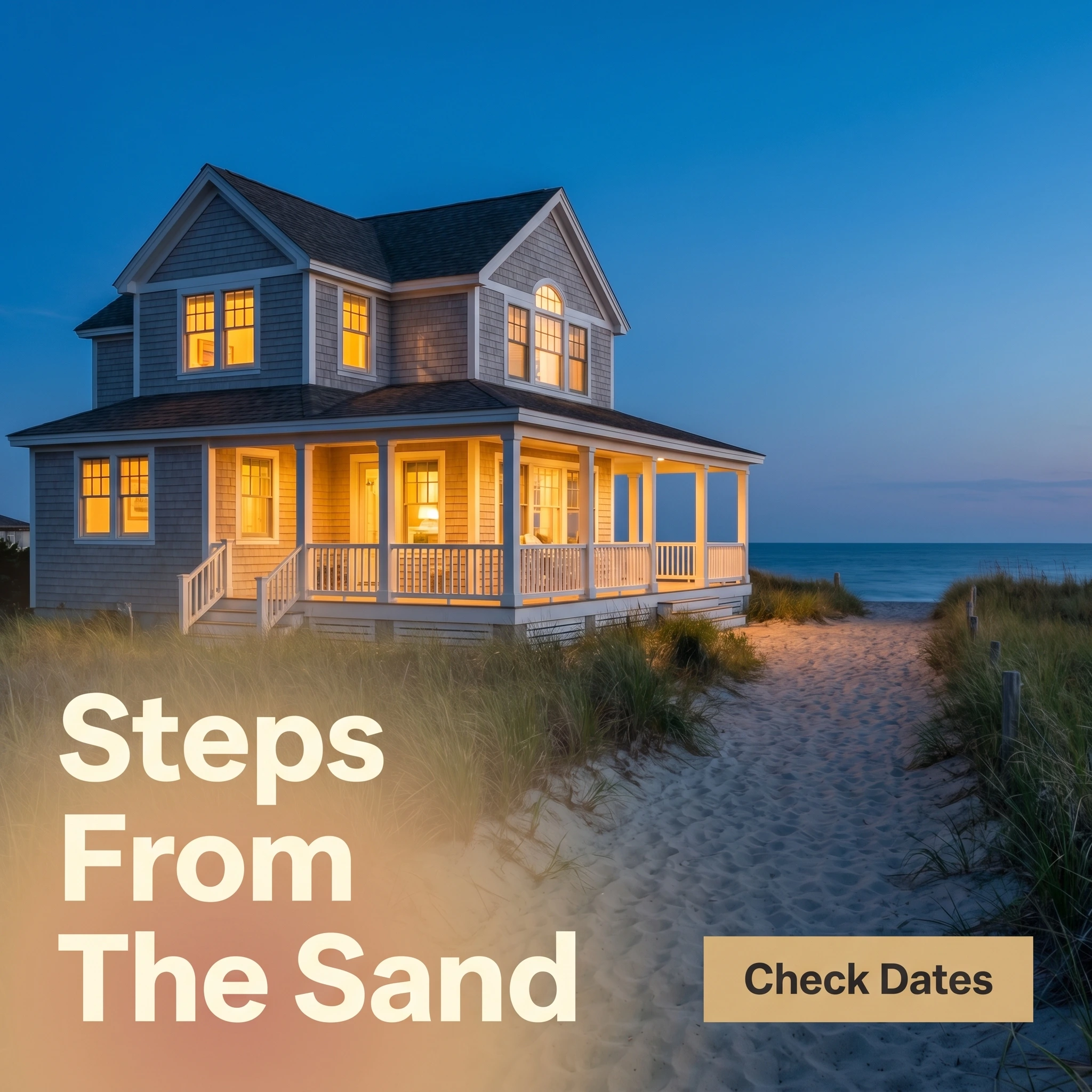
The format & angle. Blue Heron House at dusk, warm windows glowing, a sandy path leading to the ocean, no people, one focal point. Location and dream.
Who it targets. Cold and warm travelers choosing a beach week on which home feels closest to the water.
The hook. “Steps From The Sand.” A concrete location claim that beats a vague “beachfront getaway.”
Why it works. Proximity to the water is the single biggest lever in beach-rental pricing, so saying it plainly answers the first question travelers have. The dusk shot with lit windows reads as warm and occupied — somewhere you’d want to be tonight — and the simplicity keeps the focus on the home and its location. It’s a clean prospecting play — cheap clicks now, with the weekly deal converting them later.
Steal it. Shoot the exterior at golden hour or dusk with the lights on so it feels alive, and put the most specific true location claim in the headline — steps, blocks, or minutes to the thing people came for.
3. The whole-house-vs-hotel split ad
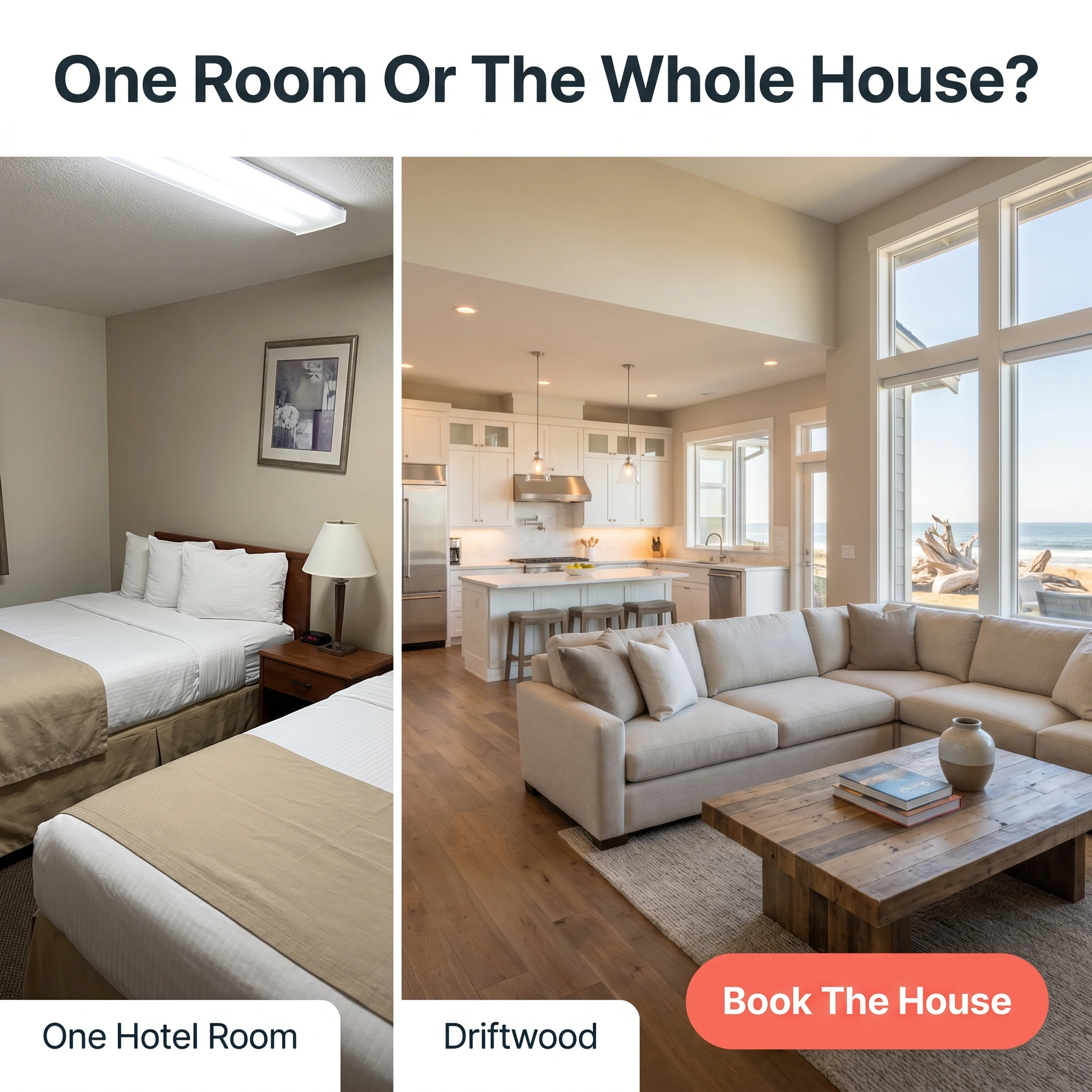
The format & angle. Driftwood Rentals’ split: a cramped two-bed hotel room on the left, a bright open living room and full kitchen on the right. Us-versus-the-hotel-way.
Who it targets. Warm group and family travelers actively weighing a rental against booking several hotel rooms.
The hook. “One Room Or The Whole House?” It frames the choice as obvious the moment you see both sides.
Why it works. Everyone has been stuck in a tight hotel room, so the left half lands instantly; the spacious rental on the right makes the upgrade feel like a reward rather than a splurge. The comparison does the value math visually — more space, a kitchen, privacy — which converts the travelers already debating the trade. It’s a retargeting workhorse for people who viewed the home but hesitated.
Steal it. Put a typical cramped hotel room beside your brightest living space, label each side, and keep the headline to the one-line choice. Aim it at warm traffic that already engaged with your listing.
4. The guest testimonial ad

The format & angle. Lakeside Lodges Co. pairs a relaxed guest on a dock with a review card — five stars and a stay count. Trust and social proof.
Who it targets. Warm travelers comparing a few well-reviewed homes who need reassurance before they commit.
The hook. “Better Than The Photos.” It flips the rental buyer’s biggest fear — that the place won’t match the listing — into a promise.
Why it works. Rental travelers are trained to distrust listings, so a guest saying the home over-delivered is the exact objection-killer they need. The “300+ five-star stays” subline proves it isn’t a fluke. Coming from a customer, the claim carries weight an owner’s description never could, and it nudges the careful planner from “maybe” to “booked.”
Steal it. Find the review that says the place beat expectations, build a card around the verbatim quote with a real guest photo and your live stay count, and run it to warm audiences and lookalikes of past bookers.
5. The weekly-stay offer ad

The format & angle. Hearthstone Getaways’ gap-filler: typography-led, the deal dominant on warm cream, no photo competing. Price and value.
Who it targets. Cold and warm travelers with flexible schedules looking for a longer-stay bargain.
The hook. “Stay 7, Pay For 5.” A clear value math that rewards exactly the bookings owners want — longer ones.
Why it works. Longer bookings are the most profitable kind — they cut turnover costs and fill the calendar in big blocks — so the deal is engineered to pull them in. A concrete “7 for 5” beats “discounts on weekly stays” because the shopper does the math instantly. Letting the type carry it signals a real promotion rather than a brand post, and it converts the value-driven travelers the dreamy ads warmed up.
Steal it. Make the stay math the biggest element, tie it to your slow weeks, and schedule it to retarget everyone who engaged with your property in the prior month. Rotate the featured deal seasonally so repeat viewers don’t tune it out.
Book out the season, not one weekend
Space, a location, a pointed comparison, a rave, and a longer-stay deal — five reasons a group picks your home over two hotel rooms. Meta’s Andromeda retrieval engine weighs many more creatives per auction than the system it replaced, so handing it five real angles lets it match the family organizer to the whole-house comparison and the budget planner to the weekly rate, rather than spending the whole budget on one hero.
Sequence by intent: the deck and beach-house shots prospect, the comparison and testimonial convert warm date-checkers, and the weekly deal fills shoulder season. Refresh the featured room and rate with the calendar so a small feeder-market audience never fatigues.
Producing that volume by hand is the constraint when you manage a handful of properties. Zendux generates static creatives with AI and distributes them across ad sets in one pass, so a fresh slate is ready before the next booking window. Hosts taking bookings off-platform should read the Airbnb ad examples too; for a single property, the hotel ad examples breakdown is a useful companion.