Hotel Ad Examples: 5 Ads That Drive Direct Bookings
Five hotel ad examples that win direct bookings — a balcony-view UGC ad, a rooftop-pool hero, a book-direct-vs-OTA split, a guest review, and a midweek deal.
The hotel ads that win direct bookings do one thing first: they make a traveler feel the stay, then give a reason to skip the booking site and book with you. Guests already trust the big travel platforms, so your ad has to be more inviting than a search result and more rewarding than the OTA’s price. These five fictional hotel ad examples each take a different angle in a different layout — a balcony-view UGC moment, a rooftop-pool hero, a book-direct-versus-OTA comparison, a guest testimonial, and a midweek offer.
Key takeaways
- Win the direct booking — your ad competes with OTAs, so pair the view with a perk for booking direct: a lower price, free breakfast, or a room upgrade.
- Sell the feeling of the stay — a real balcony, pool, or room in the right light converts better than a logo or a star rating.
- Location is half the product — “steps from the beach” or “downtown in five minutes” is a booking reason; say it plainly.
- Retarget the abandoners — people who checked dates but didn’t book respond to a deadline rate or a last-room nudge.
What makes a great hotel ad
The buyer is mid-decision among a dozen properties and three booking sites, comparing photos and prices in a few restless minutes. Your ad lands in that feed as one more option, so the first frame has to out-invite a search result. That means your actual best asset — the view, the pool, the room — shot well enough that a traveler pictures themselves in it.
Then comes the direct-booking problem. Most travelers default to an OTA out of habit, even when your own site is cheaper. An ad is the cheapest place to break that habit: show the rate difference or the perk, and you keep the commission a platform would have skimmed. Spelling out copy and offers like this at scale is its own skill, covered in how to write Facebook ad copy, headlines, and CTAs at scale.
Hotels also live and die by occupancy. The same property needs a dream ad for the weekend leisure traveler and a price ad for the dead midweek nights — different jobs, different creatives. Running the same hero on a small feeder-market audience for months is how creative fatigues; refreshing creative faster keeps the cost per booking from drifting up. The five below cover the spread.
| Ad | Format | Angle | Funnel stage | Best for |
|---|---|---|---|---|
| Balcony-view UGC | UGC | Experience/dream | Cold | Boutique & view properties |
| Rooftop-pool hero | Hero | Status/amenity | Cold/warm | Hotels with a signature feature |
| Book-direct-vs-OTA split | Comparison | Price/us-vs-OTA | Warm | Independents fighting OTA fees |
| Cleanliness testimonial | Testimonial | Trust/social proof | Warm | Highly-rated properties |
| Midweek rate offer | Offer | Price/urgency | Cold/warm | Filling low-occupancy nights |
1. The balcony-view UGC ad
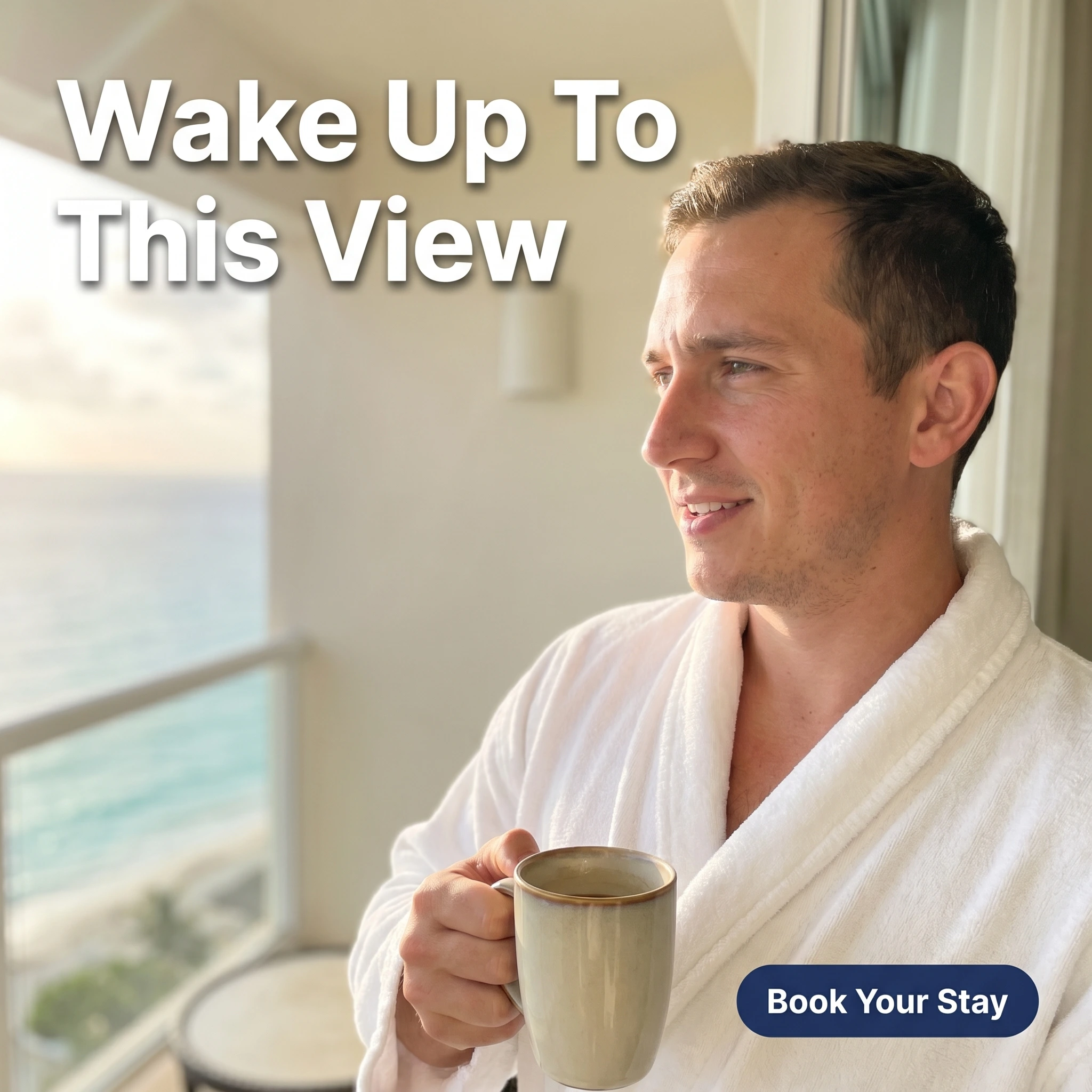
The format & angle. A guest at The Marlowe in a hotel robe, coffee in hand on a private balcony over the ocean, shot like a relaxed vacation snapshot. Experience and dream over brochure polish.
Who it targets. Cold leisure travelers in feeder markets daydreaming about a weekend away.
The hook. “Wake Up To This View.” It sells the single best moment of the stay — the first morning on the balcony — instead of a feature list.
Why it works. A guest-style photo reads as a real person’s vacation, not a paid placement, which is how travel inspiration actually spreads in the feed. The robe, the coffee, and the natural light trigger the want without looking staged, and the headline frames the booking around a feeling rather than a room category. For a cold scroller, that’s a faster path to a click than any amenity list.
Steal it. Photograph your best view from the guest’s point of view, phone-camera style, with a small human detail — coffee, a book, bare feet on the railing. Headline the moment, not the room number, and send the click to a date picker.
2. The rooftop-pool hero ad
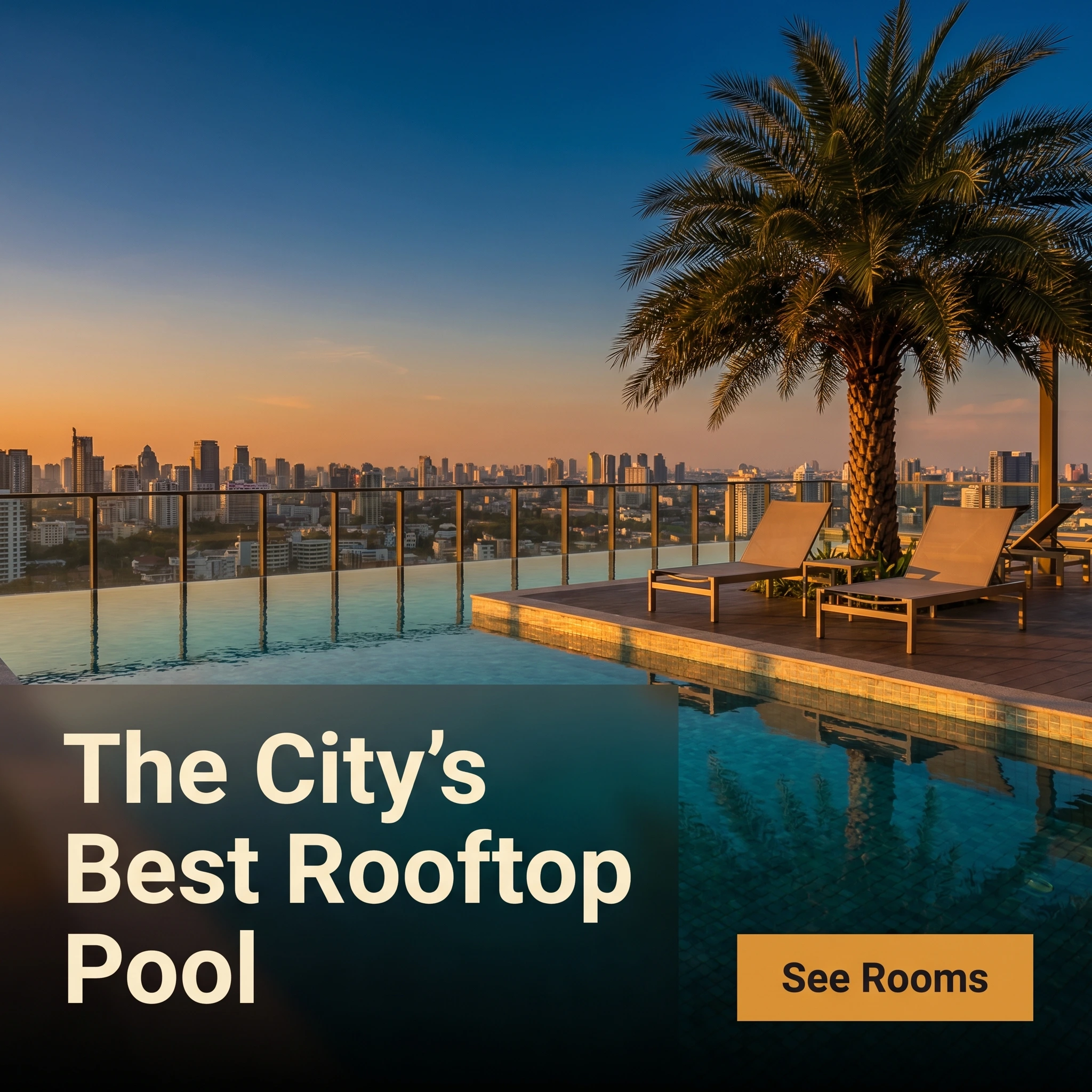
The format & angle. Hotel Verano’s signature shot: a rooftop infinity pool at golden hour, skyline beyond, water catching warm light, no people, one focal point. Status and amenity.
Who it targets. Cold and warm city travelers choosing between properties on which one feels like the better stay.
The hook. “The City’s Best Rooftop Pool.” A confident superlative tied to a specific, ownable amenity.
Why it works. When a hotel has one standout feature, leading with it is the whole strategy — the pool becomes the reason to choose you over the place down the street. A clean, well-lit hero makes the amenity the entire pitch, and the superlative gives travelers a quick, quotable reason to book. It runs cold to fill the top of the funnel — the midweek rate handles the closing later.
Steal it. Identify your one signature amenity and shoot it at its best light with nothing cluttering the frame. Make a specific, defensible claim about it — “best,” “only,” “rooftop” — and let the image carry the rest.
3. The book-direct-vs-OTA split ad
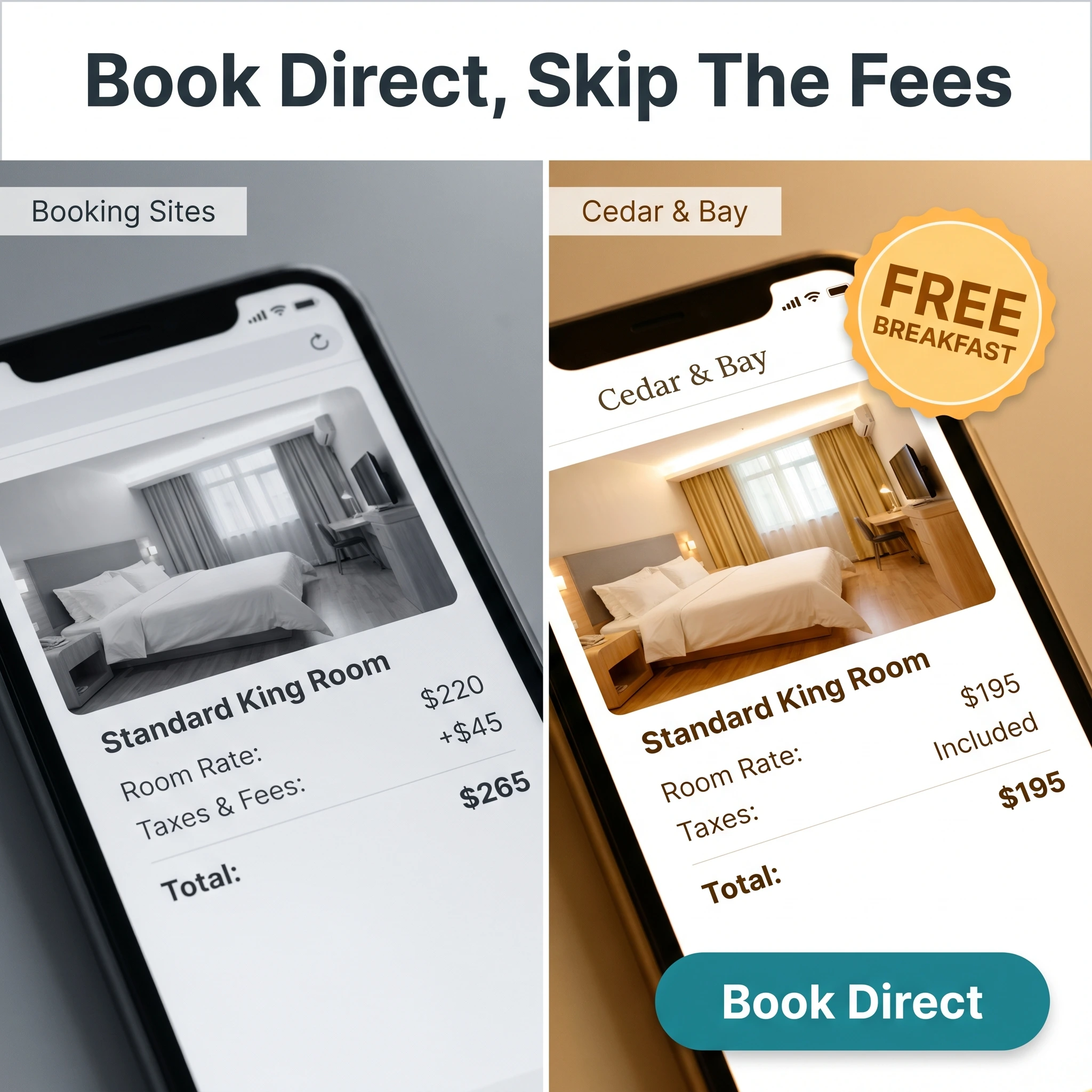
The format & angle. Cedar & Bay Hotel’s split: a booking-site listing with added fees on the left, the same room booked direct at a lower total with free breakfast on the right. Price and us-versus-the-OTA.
Who it targets. Warm travelers who’ve already shopped your property on a platform and are price-comparing before they commit.
The hook. “Book Direct, Skip The Fees.” It names the habit and the reward in five words.
Why it works. Most travelers don’t realize booking direct is cheaper, so showing the side-by-side total is a small revelation that flips the default. The comparison format does the math for them, and the free-breakfast perk tips a close decision. Aimed at warm, price-comparing traffic, it recaptures bookings — and margin — the OTAs would otherwise take.
Steal it. Build an honest side-by-side of the platform total versus your direct total, add one perk the OTA can’t match, and retarget people who viewed your rooms or dates. Keep the claim true; an inflated comparison erodes the trust you need to close.
4. The cleanliness testimonial ad
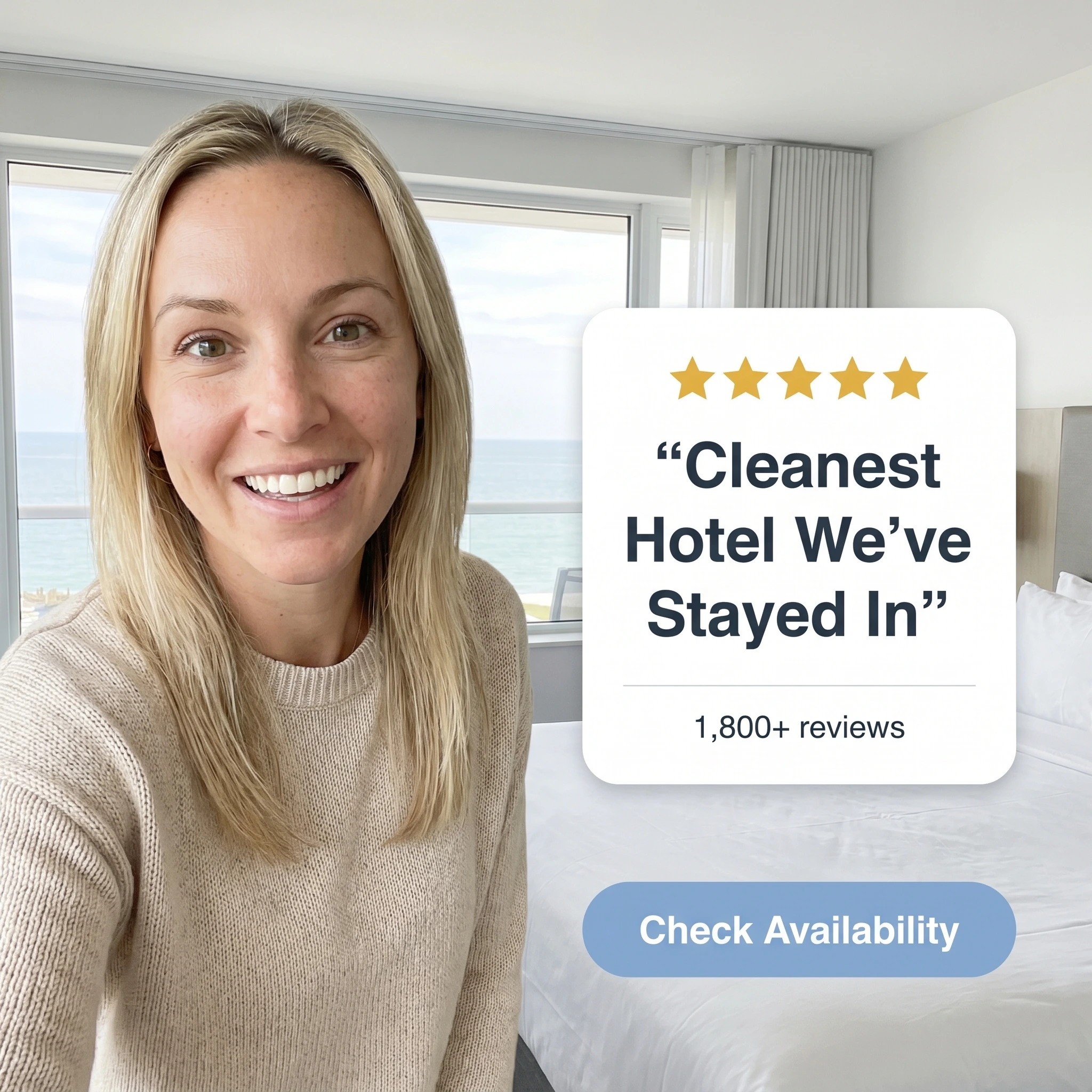
The format & angle. The Tidewater Inn pairs a happy guest in a bright, crisply made room with a review card — five stars and a visible review count. Trust and social proof.
Who it targets. Warm travelers comparing well-reviewed options who need the final nudge.
The hook. “Cleanest Hotel We’ve Stayed In.” Cleanliness is the number-one driver of hotel reviews, so leading with it answers the exact thing travelers screen for.
Why it works. Hotel choice is risk management — nobody wants the gamble of a dirty room — and a real guest vouching for cleanliness defuses that fear better than any brand claim. The visible review count signals it isn’t a one-off. Putting the praise in a customer’s voice sidesteps the credibility gap a hotel has when it rates itself.
Steal it. Find your most-repeated five-star theme — usually cleanliness, staff, or location — and build a card around a verbatim quote with a real guest photo and your live review count. Run it to warm audiences deciding between you and one competitor.
5. The midweek rate offer ad
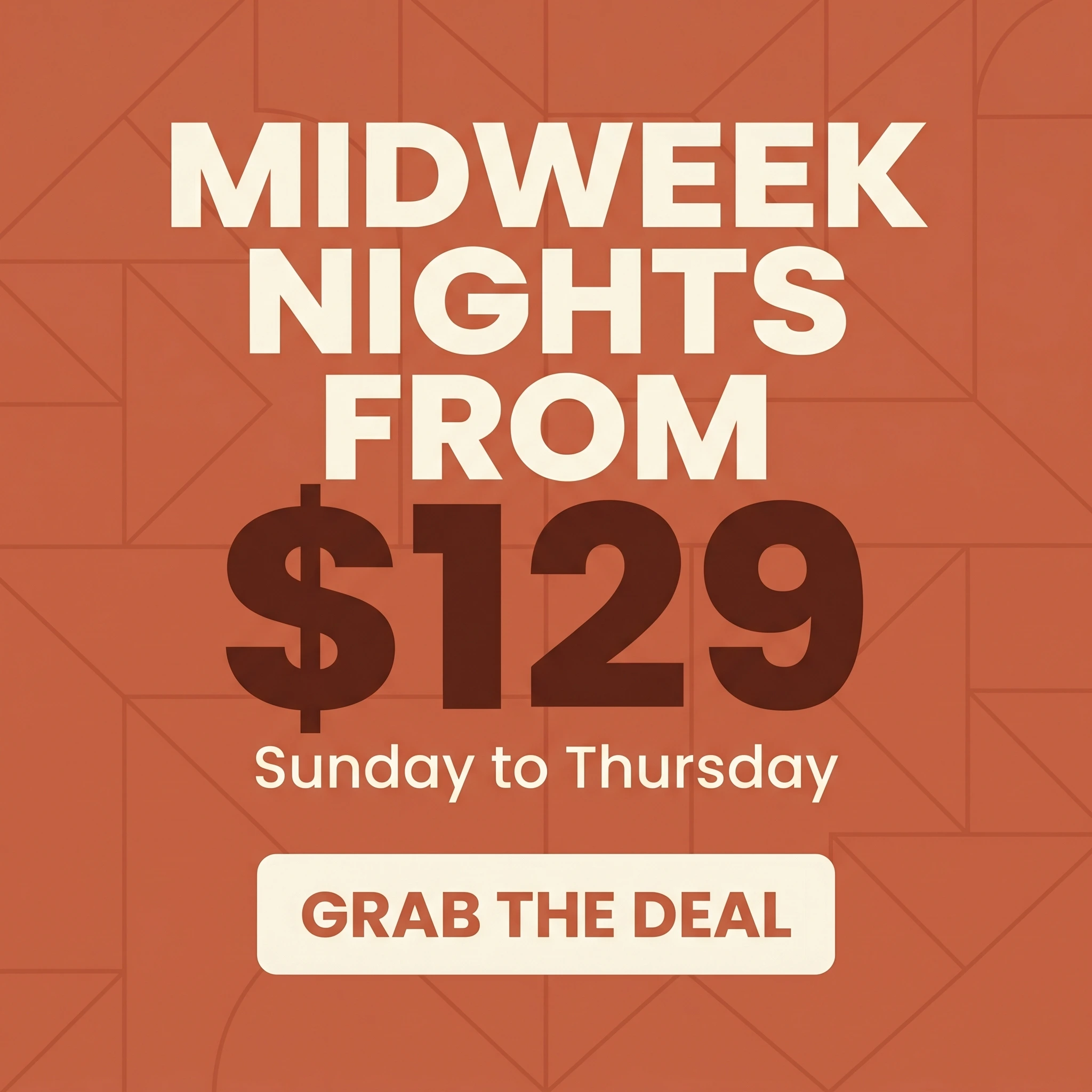
The format & angle. Loftbridge Hotel’s occupancy play: typography-led, the rate dominant on warm terracotta, no room photo competing with the number. Price and urgency.
Who it targets. Cold and warm locals and short-haul travelers open to a spontaneous midweek stay at the right price.
The hook. “Midweek Nights From $129.” A concrete rate and an implied window — the slow nights you most need to fill.
Why it works. Empty midweek rooms earn nothing, so a rate aimed at them is close to found money for the property. A specific number does more than “special rates available,” and the “Sunday to Thursday” subline points the discount at exactly the nights that otherwise sit empty. With no photo to soften it, the price reads as a genuine deal and pulls the rate-driven travelers the dream ads can’t.
Steal it. Make the rate the biggest element, name the nights it applies to, and schedule the ad to deliver early in the week to a tight local and feeder-market radius. Rotate the featured rate seasonally so repeat viewers don’t tune it out.
Keep every night working
A dream view, a signature amenity, an honest price comparison, a trusted rave, and a midweek deal — five reasons one traveler picks your property over the platform default. Each speaks to a different mindset, so running them together beats asking one hero shot to win the leisure dreamer and the deal-hunter at the same time.
Schedule by intent: the view and the amenity prospect, the comparison and testimonial convert warm shoppers, and the midweek rate backfills soft nights. Rotate the featured room and rate with the season so your feeder-market audience — which sees these ads on repeat — never burns out on a single frame.
Shooting and writing that much creative is the bottleneck for an independent property. Zendux turns one brand kit into dozens of on-brand statics and launches them across your ad sets in a few clicks, so a fresh slate is ready for each booking window. Marketing a getaway property too? The travel agency ad examples and vacation rental ad examples breakdowns sit right alongside this one.