Electrician Ad Examples: 5 Ads That Book Work
Five electrician ad examples that book work — a panel-safety UGC ad, an EV charger hero, a fuse-box before/after, a no-surprise testimonial, and a free inspection offer.
Electrician ads that book work lead with the one thing homeowners can’t ignore: safety they didn’t know was at risk, or an upgrade they suddenly want. A specific worry or want earns the click; visible trust and transparent pricing earn the job. The five fictional ads that follow — a panel-safety UGC ad, an EV charger hero, a fuse-box before/after, a no-surprise testimonial, and a free inspection offer — each take a different angle and a different format.
Key takeaways
- Safety is the strongest electrician hook: naming a real hazard (an aging panel, knob-and-tube wiring) creates demand homeowners didn’t know they had.
- EV chargers and panel upgrades are Meta’s best jobs — high-ticket, plannable work homeowners research before they buy.
- Transparent pricing is a trust lever: “no surprise bill” answers the homeowner’s second-biggest fear after safety.
- Run five distinct angles so Meta matches each to the right homeowner instead of bidding your own near-duplicates against each other.
What makes a great electrician ad
The buyer is a homeowner who either has a nagging worry — flickering lights, a hot outlet, a panel that looks ancient — or a new want, like charging an EV at home. Electrical work carries a fear most trades don’t: the risk isn’t just inconvenience, it’s fire and safety. That fear, named honestly, is the strongest demand generator in the category, because most homeowners can’t assess their own electrical risk.
Search captures the outage and the dead circuit. Meta owns the planned, higher-ticket work — panel upgrades, EV chargers, rewiring, generators — and the safety inspections that surface those jobs. The same demand-generation logic runs through the plumbing ad examples and HVAC ad examples playbooks: treat Meta as a familiarity-and-planning channel, not an emergency one.
The proof that matters is a licensed, accountable pro and transparent pricing. Homeowners fear two things from electricians — getting hurt by bad work and getting gouged on the bill — so creative that signals safety credentials and no-surprise pricing converts. Keep one promise per ad and make it concrete, the focal discipline behind the broader home services ad examples. The five concepts below cover the angles that book work.
| Ad | Format | Angle | Funnel stage | Best for |
|---|---|---|---|---|
| Panel-risk UGC | UGC | Safety/fear | Cold | Panel & rewiring jobs |
| EV charger hero | Service hero | Convenience/dream | Cold/warm | EV charger installs |
| Fuse-box before/after | Before/after | Transformation | Warm | Service upgrades |
| No-surprise testimonial | Testimonial | Trust/transparent pricing | Warm | Reputation-driven shops |
| Free safety inspection offer | Offer | Low-friction lead | Cold/warm | Lead capture for big jobs |
1. The panel-risk UGC ad
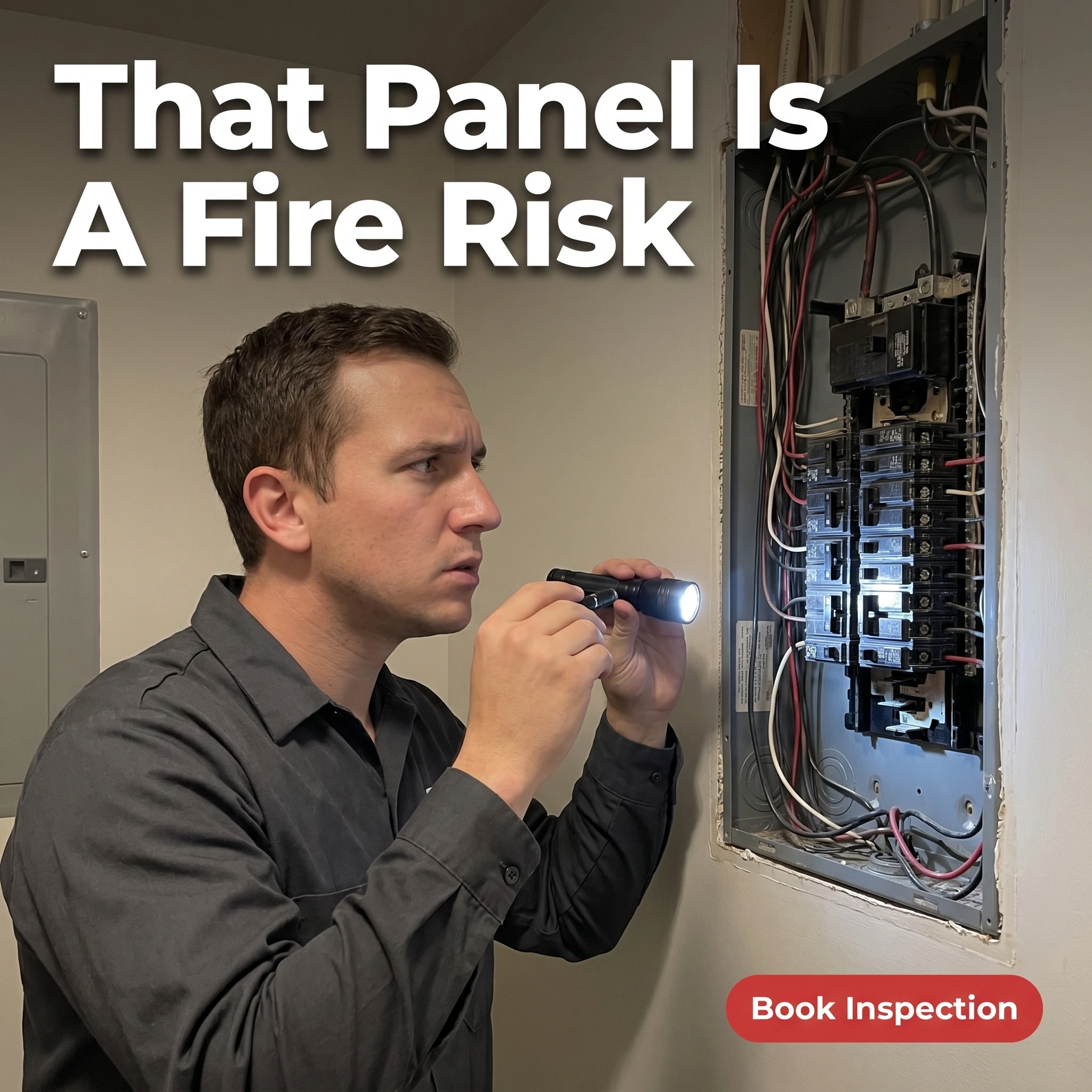
The format & angle. A Voltline Electric tech at an open electrical panel, flashlight on the breakers, shot like a homeowner caught the moment. Safety and honest alarm.
Who it targets. Cold homeowners with older homes who’ve never thought about their panel — until an ad makes them look at it.
The hook. “That Panel Is A Fire Risk.” A direct safety warning that names a danger most homeowners can’t evaluate themselves.
Why it works. Fear is the most effective demand generator in electrical work because the homeowner genuinely can’t judge their own risk and the stakes are severe. A candid shot of a pro inspecting a real panel makes the warning credible — this is someone who’d know — rather than scare-tactic clickbait. It converts homeowners who weren’t in the market at all into people who suddenly want a professional to take a look.
Steal it. Photograph a tech examining a genuinely outdated or overloaded panel, phone-camera style. Headline the specific hazard honestly — overloaded, undersized, outdated — and route the click to an inspection booking. Keep the claim defensible to stay on the right side of ad policy.
2. The EV charger hero ad
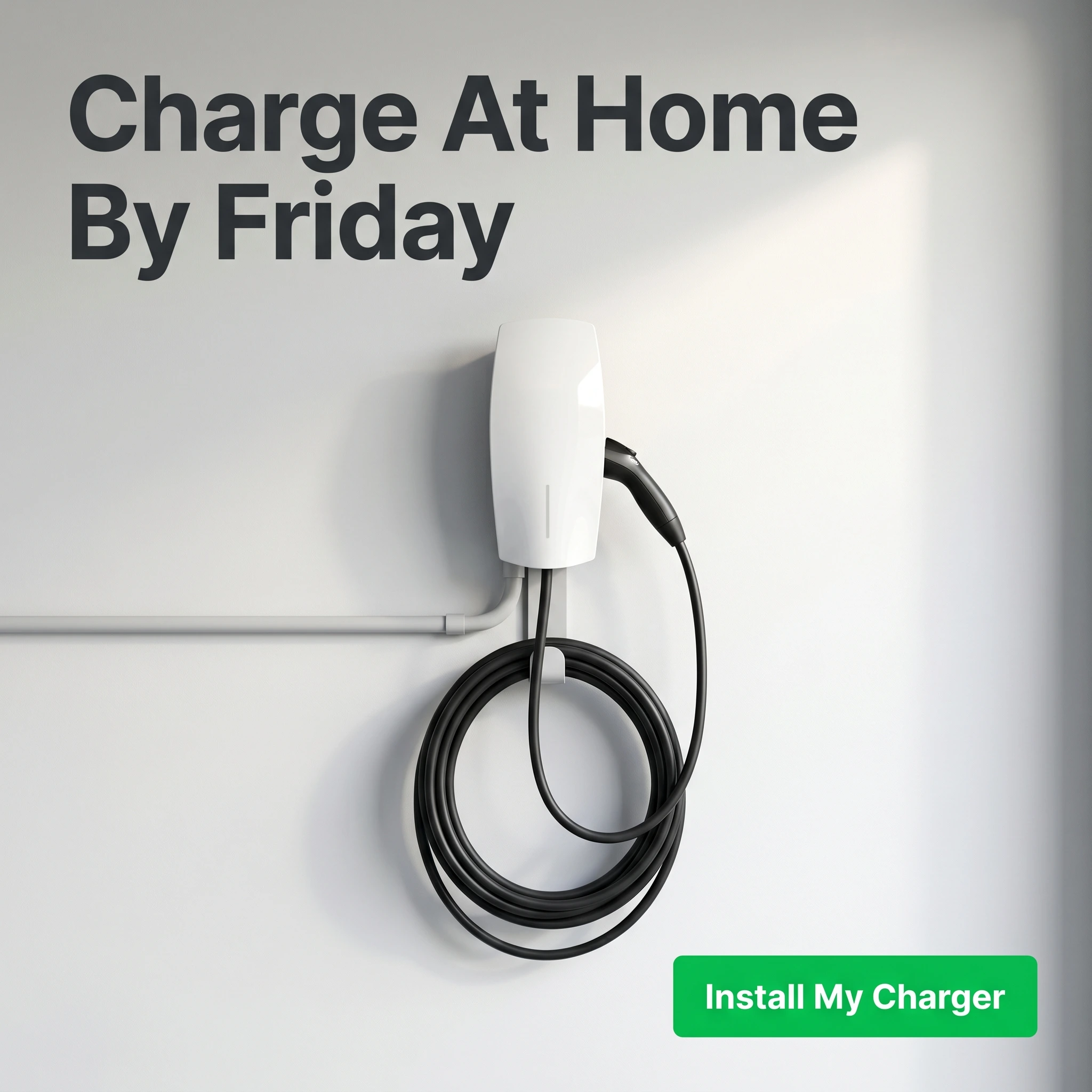
The format & angle. Brightwire Electrical’s install hero: a sleek home EV charger mounted on a clean garage wall, good light, one focal point. Convenience and a modern dream outcome.
Who it targets. Cold and warm EV owners and buyers — the household that just got an electric car and is tired of public chargers.
The hook. “Charge At Home By Friday.” It names the want and a fast timeline — wake up to a full battery, soon.
Why it works. EV charger installs are a growing, high-margin job, and the buyer is motivated by a concrete daily convenience, not electrical specs. Naming the outcome and a near timeline reaches people who’d scroll past an amperage rating, and the clean install photo shows exactly what they’ll get on their wall. It’s an aspirational, modern angle that positions the electrician as current, not just a repair service.
Steal it. Photograph a clean EV charger install in a tidy garage, one focal point. Headline the convenience and a fast timeline, and send the click to an EV charger page that addresses the panel-capacity question buyers always have.
3. The fuse-box before/after ad
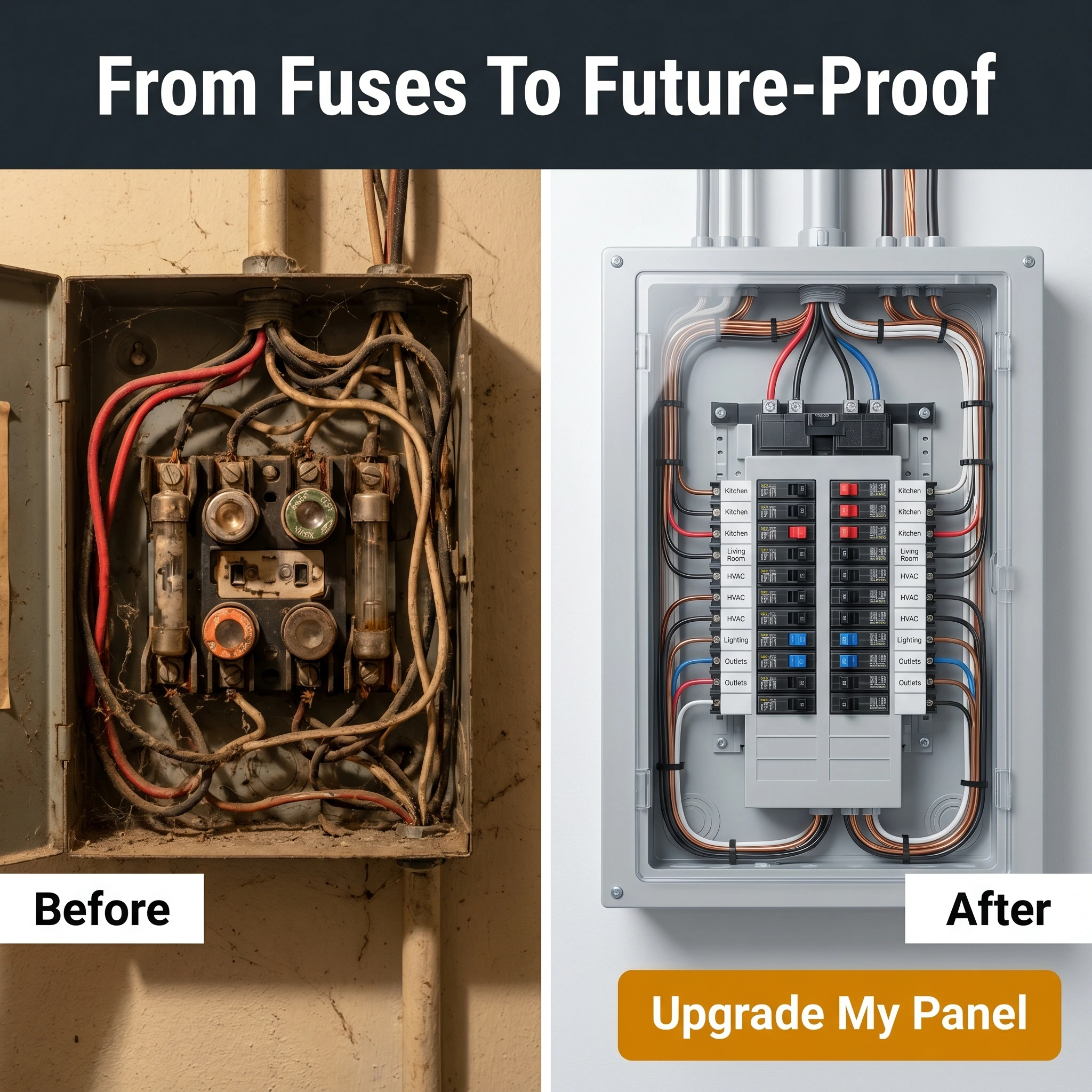
The format & angle. Northcurrent Electric’s split: a dusty, outdated fuse box on the left; a clean, labeled modern breaker panel on the right. The trade’s natural before/after.
Who it targets. Warm homeowners with old electrical systems — people who recognize the left half as the scary box in their basement.
The hook. “From Fuses To Future-Proof.” It frames the upgrade as readiness for modern electrical demand, not just a repair.
Why it works. A panel upgrade is an invisible, easy-to-defer purchase until the old box is shown beside a clean new one — then the contrast makes the upgrade feel overdue. The before/after proves workmanship (neat labeling, tidy wiring) without a claim, pre-selling the quality of the install. Reframing it as “future-proof” connects to the homeowner’s real situation: more devices, EVs, and load than the old system was built for.
Steal it. Shoot every panel upgrade’s before and after from the same spot — make it a crew habit. Headline the future-readiness angle, since “your house wasn’t wired for today’s load” is a more motivating frame than “your panel is old.”
4. The no-surprise testimonial ad

The format & angle. Sparkhaven Electric pairs a homeowner with a review card — five stars, a real review count, and a pricing-relief quote. Trust, aimed at billing fear.
Who it targets. Warm homeowners comparing electricians — people sold on the need but wary of being overcharged.
The hook. “On Time, No Surprise Bill.” Two words about punctuality and two about price — the homeowner’s top two worries after safety.
Why it works. Homeowners can’t judge electrical competence, so at the comparison stage they judge whether they’ll be respected and not gouged. A testimonial about an honest final bill, backed by a visible review count, directly answers the fear of the inflated invoice that haunts trade-service hiring. It turns transparent pricing — hard to prove in a brand claim — into something a real customer vouches for.
Steal it. Mine your reviews for pricing and punctuality language — “exactly the quote,” “no surprises,” “showed up on time” — and build the card around the most specific one, with your live review count beneath it.
5. The free safety inspection offer ad

The format & angle. Circuit & Co.’s lead-capture push: typography-led, the free offer and the deadline dominant, a confident color block — no photo competing with the message. Low-friction lead generation.
Who it targets. Cold and warm homeowners with a low-grade electrical worry but no specific job in mind — the people the safety ad got thinking.
The hook. “Free Safety Inspection This Month.” Zero-risk value plus a real deadline that nudges the worrier to act now.
Why it works. A free inspection is the lowest-commitment way into a home, and it routinely surfaces the higher-ticket work — the outdated panel, the overloaded circuit, the EV-charger opportunity. It delivers value before any commitment and lets the homeowner experience the electrician’s competence and honesty firsthand. The typography-only format reads as a genuine offer, and the month deadline adds enough urgency to move the procrastinator.
Steal it. Make the free offer and the deadline the two biggest elements, run it to capture early-funnel leads, and train techs to document and quote the real issues they find. The inspection is the foot in the door; the panel upgrade or EV install is the job.
Wire up all five
A safety scare, an EV upgrade, a panel transformation, a no-surprise review, and a free inspection — five hooks for five homeowner mindsets. Running the spread beats reusing a winner because Meta’s delivery places distinct creatives with distinct homeowners, and on a tight local audience any single ad’s frequency climbs week over week until response drops off.
Prospect cold with the safety UGC and EV hero, retarget warm with the before/after and testimonial, and let the free inspection open the door to the bigger panel and rewiring work. Swap creative on a schedule so the same households aren’t seeing the same ad for a third week running.
Producing that much branded creative between service calls is the constraint. Zendux spins up static ad variants in your brand colors with AI and bulk-launches them across ad sets in less time than a panel swap takes.