5 Window Replacement Ad Examples That Sell Upgrades
Break down 5 window replacement ad examples that sell upgrades — a draft-relief UGC ad, a light-filled comfort hero, a foggy-pane before/after, a lifetime-warranty testimonial, and a buy-2-get-1 offer.
Window replacement ad examples that sell upgrades all do one thing first: translate a spec sheet into a feeling a homeowner already has — the cold draft, the fogged glass, the bill that climbs every winter. Nobody scrolls Facebook wanting argon-filled double-pane units; they want the drafty seat to stop being drafty. This is a long-cycle, high-ticket purchase, so the five teardowns that follow trace the arc a window buyer walks — from a winter annoyance, through months of consideration, to a financed or rebate-timed yes — each a different format pinned to a different claim.
Key takeaways
- Sell the symptom, not the spec — drafts, noise, fog, and high bills convert the homeowner that “low-E glass” never reaches.
- The cycle is long, so creative builds recognition and the financing or rebate offer closes it; judge campaigns on consultations, not same-day sales.
- Warranty is the trust anchor — a lifetime or transferable warranty in the creative answers the buyer’s biggest fear about a five-figure purchase.
- A spread beats a single winner — the cold-room sufferer, the daylight dreamer, the fogged-pane researcher, and the rebate-watcher are different households; one ad per segment lets delivery seat each in front of its own person.
What makes a great window replacement ad
The buyer is a homeowner in an older house living with a daily annoyance: a room that never warms up, glass that fogs between the panes, street noise through single-pane sashes, or condensation on the sill every morning. They’ve usually tolerated it for years. Great window creative attaches to one of those symptoms per ad and makes it the headline — because the felt problem is what stops the scroll, not the product category.
Two principles do the heavy lifting. First, show the outcome, not the order form: light pouring into a room, a quiet interior, a clean finished install photographed like a home tour. The U-factor belongs on the landing page. Second, carry one idea per frame — the restraint that defines every strong static ad layout — because a homeowner scrolling at lunch gives you a single reading second. A window ad that crams in energy savings, warranty, financing, and noise reduction lands none of them.
The economics reward patience. Replacement windows are a five-figure ticket with a consideration window measured in months, so the math is forgiving on a per-lead basis — one closed job can underwrite a long stretch of spend — but unforgiving on attribution if you expect week-one returns. The right yardstick is cost-per-consultation, not cost-per-click: even at the roughly $18–$30 impression cost a high-consideration exterior product draws on Meta, a booked in-home appointment pencils out well under what the same homeowner costs on search, where every franchise in the metro bids up window keywords. That means two things: retarget the people who engaged but didn’t book, and treat seasonal rebate windows and financing offers as the conversion events that close a pipeline the comfort ads filled. Geography matters too — a tight radius keeps frequency on homes your installers can reach and keeps “local” honest.
| Ad | Format | Angle | Funnel stage | Best for |
|---|---|---|---|---|
| Draft-by-the-window UGC | UGC | Pain relief | Cold | Drafty older-home markets |
| Whole-room light hero | Hero | Comfort dream | Cold/warm | Premium install upsells |
| Foggy-pane split | Before/after | Us-vs-the-old-way | Warm | Failed-seal replacement demand |
| Lifetime-warranty testimonial | Testimonial | Trust/credibility | Warm | Companies with strong reviews |
| Buy-2-get-1 rebate offer | Offer | Price/urgency | Cold/warm | Seasonal financing pushes |
1. The draft-by-the-window UGC ad
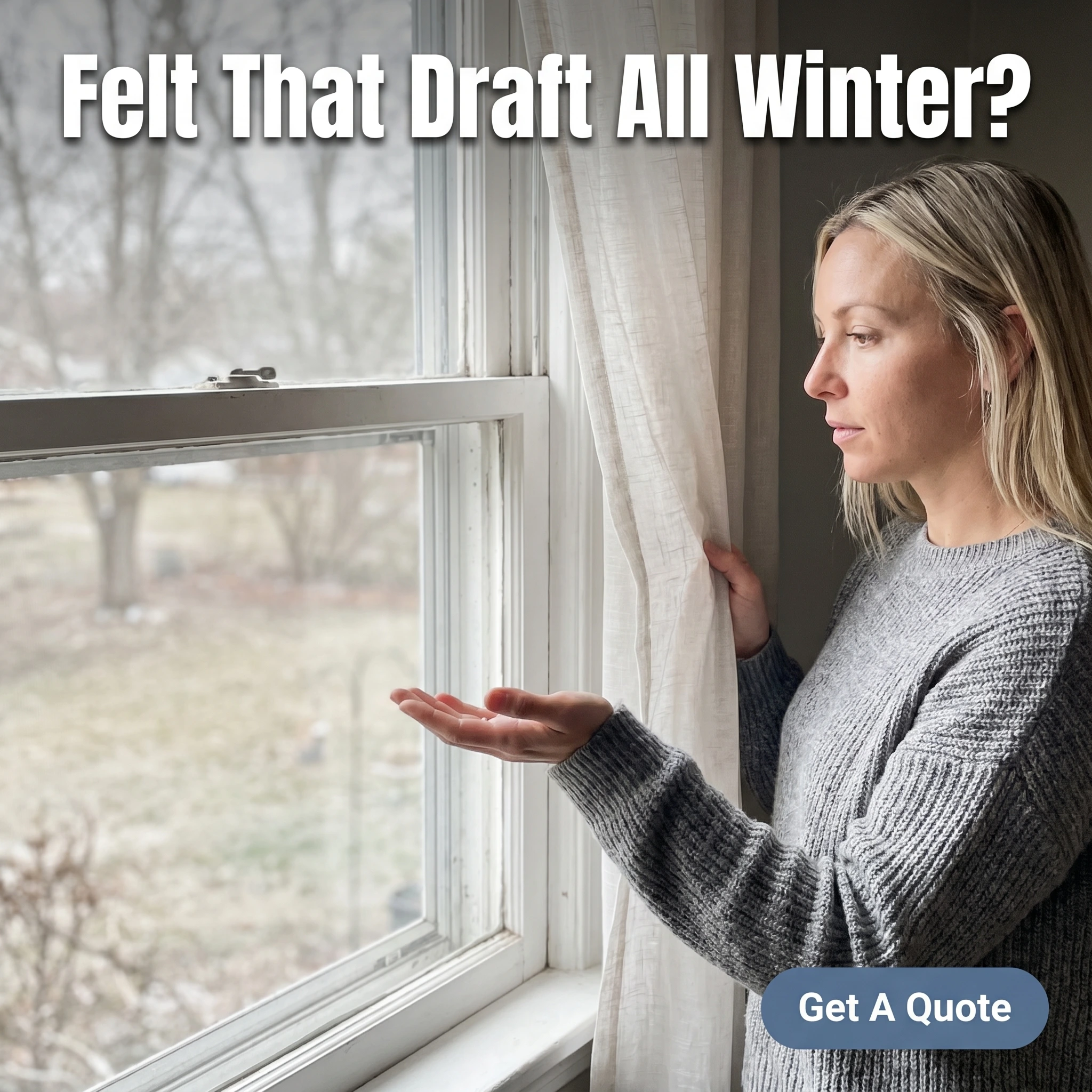
The format & angle. A Clearpane Windows scene shot like a homeowner grabbed it on her phone: hand held up near the edge of an old window, curtain barely stirring, a tired single-pane sash. Pain relief, named out loud.
Who it targets. Cold homeowners in older housing stock — not shopping yet, but quietly annoyed every time they sit by that window.
The hook. “Felt That Draft All Winter?” It asks the question the buyer has already answered for themselves a hundred times, which is what earns the stop.
Why it works. The candid, slightly imperfect frame reads like a neighbor’s post, not a campaign, and the gesture — a hand testing the cold air — is a universal proof of the problem everyone with old windows has done themselves. It sells nothing in the image except recognition, and recognition is what makes a long-cycle buyer follow the page instead of scrolling past. The draft is invisible; showing someone feeling for it makes it real.
Steal it. On your next install, photograph the homeowner (with permission) testing the draft on their old window before you pull it. Write the headline as the question your customers ask you on every estimate, and keep the framing phone-camera plain.
2. The whole-room light hero ad
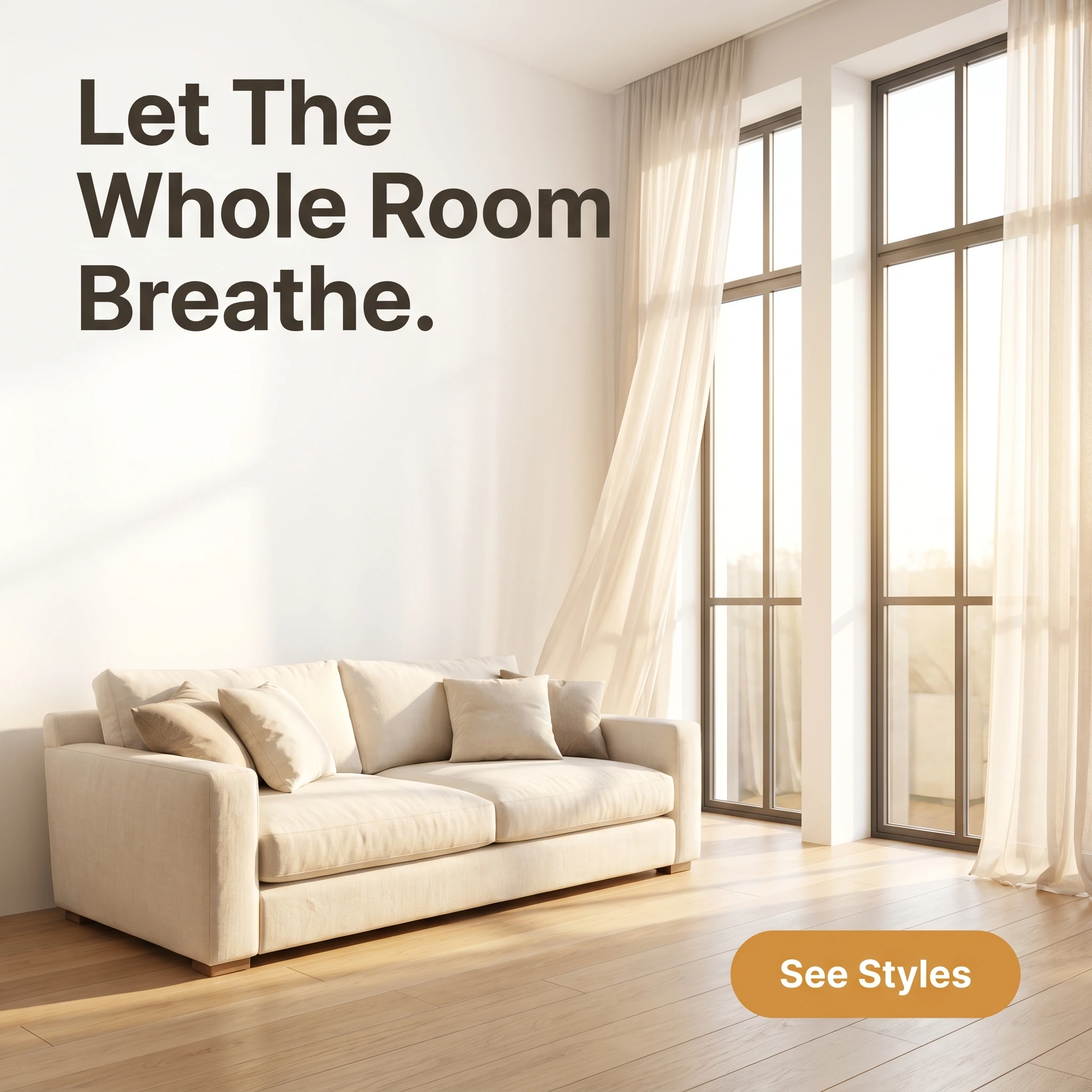
The format & angle. Daylight Window Co.’s install hero: a living room flooded with morning light through wide new windows, magazine-clean, no people. The dream outcome — a brighter, calmer, quieter room.
Who it targets. Cold and warm homeowners imagining the upgrade — the “this room always feels dark and stuffy” household researching over months.
The hook. “Let The Whole Room Breathe.” No glass jargon; the felt transformation in four words, comfort and air and light at once.
Why it works. Replacement buyers don’t shop for windows — they shop for how a room will feel afterward. Selling the atmosphere instead of the frame reaches people who’d scroll past a spec without blinking. The pristine interior also answers a quiet second worry on a five-figure job: what the finished install will actually look like in the home for the next twenty years. It’s a patient ad, built for the long consideration window rather than the immediate click.
Steal it. Photograph your cleanest finished install in real morning light, styled like a home tour, and headline the feeling your customers describe — brighter, quieter, calmer — not the product line. Save the energy data for the consultation.
3. The foggy-pane split ad
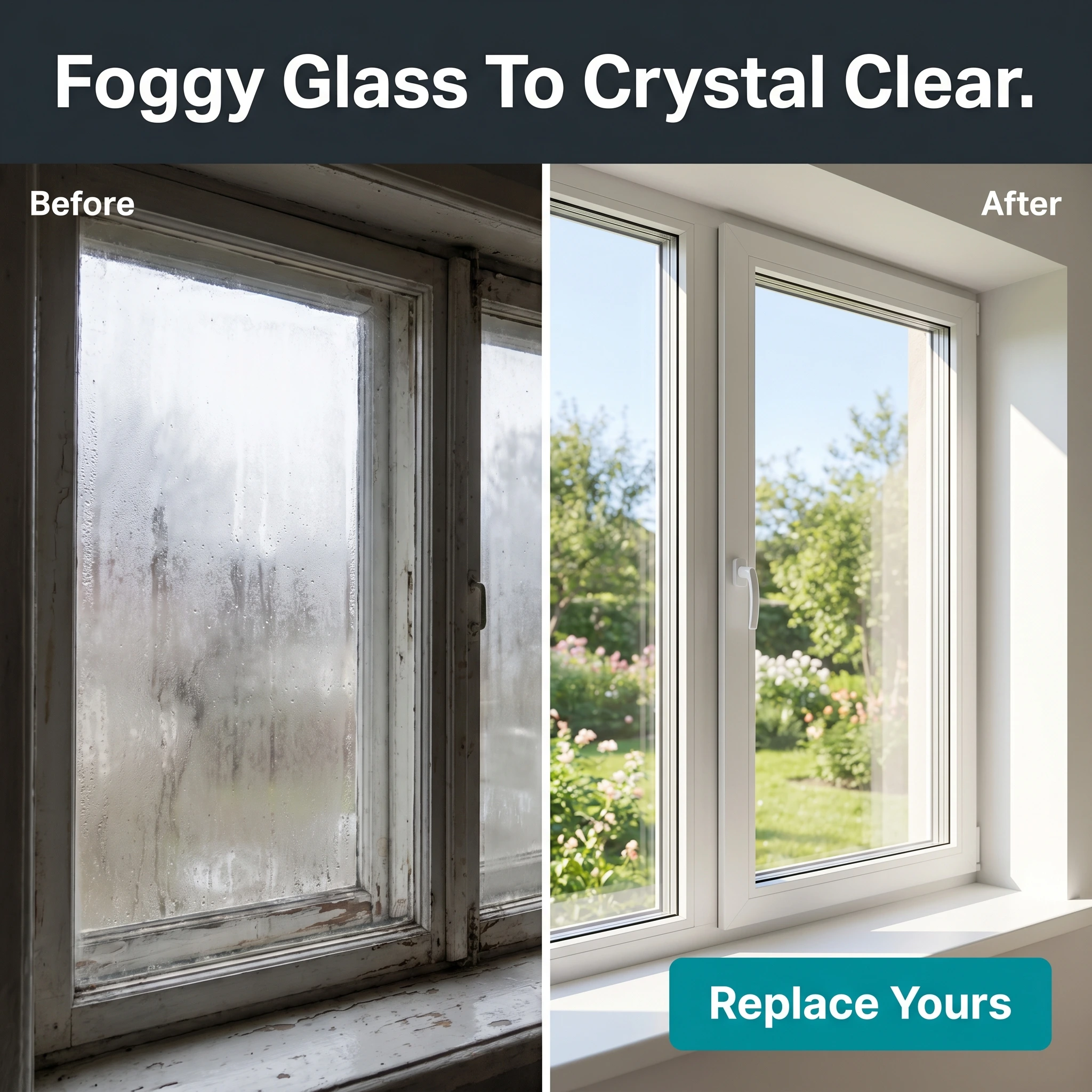
The format & angle. Sterling Sash Co.’s transformation in one frame: a cloudy, condensation-streaked old window with a failed seal on the left; a crisp, clear new pane with a clean modern profile on the right. Us-versus-the-old-way, made literal.
Who it targets. Warm homeowners who can see the problem every day — the failed-seal household whose windows fog up no matter how often they wipe them.
The hook. “Foggy Glass To Crystal Clear.” The exact before-and-after every owner of a failed-seal window pictures the moment they read it.
Why it works. Fogged glass between the panes is the one window failure a homeowner can’t fix themselves and can’t ignore — it’s visible from the street and from the couch. This format converts that daily irritation into a deadline by showing the relief side by side. Same-window splits carry built-in credibility too: matching frames and sightlines make it obviously one home, not a stock composite. The format rewards honesty — exaggerate the after and the comments will say so.
Steal it. Shoot the same window from the identical position before you pull the failed unit and after the new one is in. Lead with the most common failure your market has — fog, drafts, or stuck sashes — and let the contrast carry the argument.
4. The lifetime-warranty testimonial ad

The format & angle. Paneworks Exteriors: a homeowner at his front door, new windows soft-focus behind him, a quote card with five gold stars and “1,200+ local reviews.” Trust, told as longevity.
Who it targets. Warm comparison shoppers — homeowners holding two or three quotes, deciding which company they’ll let into their house.
The hook. “Still Perfect, Twelve Years Later” — a review fragment that measures the purchase in years of staying right, not in the day it was installed.
Why it works. A finished-install photo proves a company can hang a window; it says nothing about whether that window still seals in ten years — the only question a comparison shopper actually has. A durability story fills that gap, speaking directly to the buyer’s core fear about a five-figure, once-in-a-generation purchase: that it won’t last. “Local reviews” rather than generic reviews keeps stacking the permanence signal, and the visible count turns one anecdote into a distribution. The lifetime warranty this implies is the trust anchor the whole category leans on.
Steal it. Comb your reviews for ones that mention elapsed time — “five years on,” “still sealed tight,” “no fog yet” — and let that line headline the card, with your live local review count sitting just below it. Photograph the customer at home with the windows in frame.
5. The buy-2-get-1 rebate offer ad

The format & angle. Glaslund Windows’ seasonal push: bold type, one bundle, one deadline, a deep-teal background, no photo. Price and urgency, with a financing line underneath.
Who it targets. Cold and warm homeowners during a rebate or end-of-season window — the people the comfort ads warmed up, now given a reason to book the consultation this month.
The hook. “Buy 2 Windows, Get 1 Free.” The bundle does the math homeowners hate doing, and the offer reframes a daunting whole-house number into a per-window value.
Why it works. Window replacement stalls on sticker shock and the sense that the whole project has to happen at once. A buy-2-get-1 bundle plus a financing figure breaks the five-figure wall into something a household can decide on this season, and the typography-only format reads as a local promotion rather than a national franchise campaign. Tie it to a real seasonal rebate deadline and the urgency is checkable, not manufactured — which is what separates a working offer from “limited time” wallpaper.
Steal it. Build the offer around a real rebate or manufacturer promotion with an actual end date, add a monthly financing figure beneath it, and run it to the audiences your comfort and before/after ads already engaged. Rotate the creative before ad fatigue erodes it.
Put all five in the showroom
A draft complaint, a light-filled room, a fog-to-clear flip, a twelve-year review, and a seasonal bundle — five window replacement ads with nothing in common but the logo on them. Diversity like that is what pays off under Andromeda, Meta’s retrieval overhaul: with a deeper creative pool to draw from per impression, it can route the cold-room ad to the homeowner shivering by the seat and the rebate offer to the one ready to sign, instead of forcing one all-purpose window ad onto every profile. The slower-decision exterior trades all share this rhythm — the garage door ad examples and roofing ad examples teardowns cover the curb-appeal and repair-urgency angles that sit next to this one.
Sequence the five deliberately. Run the draft UGC and the light hero broad as the always-on pipeline that fills the top of the funnel, reserve the foggy-pane split and the warranty testimonial for retargeting the homeowners who engaged but didn’t book, and time the buy-2-get-1 offer to land inside a real rebate window. Decide how many concepts to refresh each cycle deliberately rather than by gut — the how-many-creatives-to-test guide covers the cadence — and keep the home services ad examples breakdown handy for the cross-trade patterns.
Spinning up that many genuinely different concepts each season is where most window shops stall. Zendux clears it: it drafts static ad variants in your company’s colors and logo and pushes them live across your ad sets in less time than it takes to schedule one in-home estimate.
Fill your consultation calendar →
Want to generate winning window replacement ads? Start using Zendux AI