Bathroom Remodeling Ad Examples: 5 That Book Jobs
Five bathroom remodeling ad examples built to book jobs — a done-in-days UGC ad, a spa-shower hero, a tub-to-walk-in-shower before/after, a clean-install testimonial, and a fixed-quote offer.
Bathroom remodeling ad examples that book jobs win on a promise the kitchen trades can’t make: a finished bathroom in days, not months — clean, fixed-price, and done right. This is a faster, smaller-ticket, higher-intent purchase, so the creative leans on speed, safety, and a serene result rather than a year of dreaming. The five concepts below — a done-in-days reveal, a spa upgrade, a tub-to-walk-in conversion, a clean-install proof, and a fixed-quote offer — each answer a different reason this buyer acts, in a visibly different format.
Key takeaways
- Speed is the headline advantage — “new bathroom in days” is true for tub-to-shower work and beats any “quality craftsmanship” line for a higher-intent buyer.
- Two buyers, not one — the aging-in-place safety shopper (walk-in shower, grab bars, slip-resistance) and the spa upgrader (freestanding tub, rainfall shower) need different ads.
- A fixed quote kills the biggest objection — surprise change-orders are the dread; one up-front price converts better than “free estimate.”
- Clean install is a selling point — licensed installers, dust control, and a tidy finish reassure a buyer letting a crew into the most private room in the house.
- One concept can’t serve safety, spa, and certainty shoppers at once — each needs its own ad; a lone repeated winner shrinks your booked estimates under Meta’s delivery.
What makes a great bathroom remodeling ad
The bathroom buyer is closer to ready than the kitchen buyer. The trigger is concrete and often pressing: a leaking or moldy shower pan, a cramped dated bath, a mobility change that makes the tub dangerous, or a primary suite that should feel like a retreat but doesn’t. Because the ticket is smaller — frequently $8,000 to $25,000 — and the work can finish in days, the window is short. The ad’s job is to move a high-intent shopper from “I should deal with this” to a booked in-home estimate, fast.
There are really two buyers, and the best accounts speak to both with separate creative. The aging-in-place shopper wants safety: a curbless walk-in shower, grab bars, slip-resistant flooring, a place to sit — and reassurance the install won’t take over the house. The spa upgrader wants serenity: a freestanding soaking tub, a rainfall shower, a room that photographs like a boutique hotel. A single “bathroom remodel” message tuned to neither underperforms both; the angle has to match the motive.
The proof that matters is speed, cleanliness, and a fixed number. With a modest ticket and a half-decided buyer, a bathroom click sits at the lower, $8–$18 end of the home-service CPM range, and speed-to-call is the metric. But the objections are specific: how long will my house be torn up, will the price change, can I trust these people in my most private room? The winners answer with one provable claim each — “done in 4 days,” “one fixed price,” “licensed installers, daily cleanup” — the checkable-claim habit behind the best static ads. Kitchens run on a longer, design-led, financing-heavy cycle; the kitchen remodeling ad examples breakdown covers that bigger-ticket playbook.
| Ad | Format | Angle | Funnel stage | Best for |
|---|---|---|---|---|
| Done-in-days reveal UGC | UGC | Speed/convenience | Cold | Tub-to-shower and quick-turn shops |
| Spa-shower hero | Service hero | Dream outcome (serenity) | Cold/warm | Premium primary-bath renovators |
| Tub-to-walk-in split | Before/after | Safety/accessibility | Warm | Aging-in-place specialists |
| Clean-install testimonial | Testimonial | Trust/credibility | Warm | Shops with strong reviews |
| Fixed-quote offer | Offer | Price/value (certainty) | Cold/warm | Filling the estimate calendar |
1. The done-in-days reveal ad
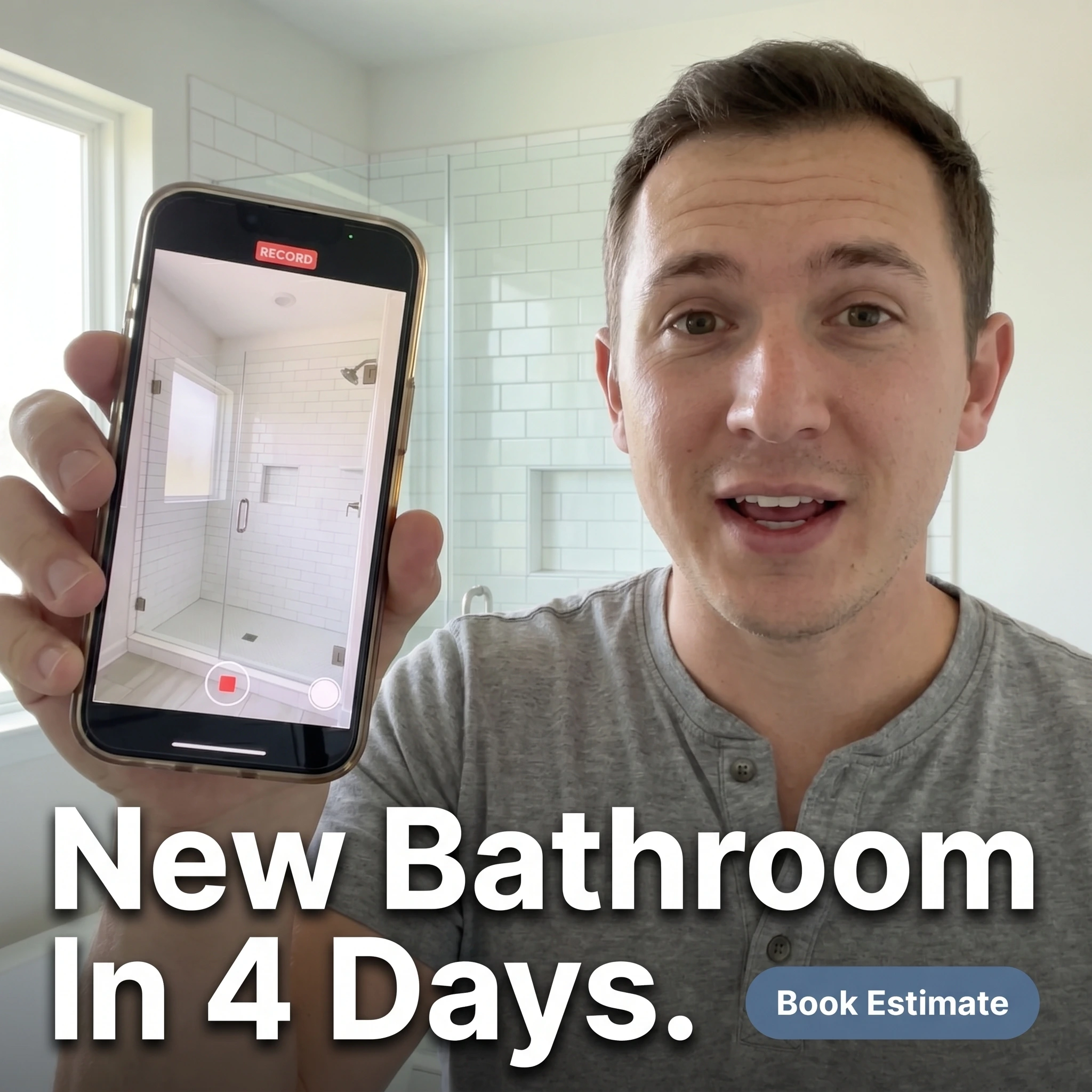
The format & angle. Tilehaven Bath Co., shot like a homeowner’s own brag clip: a man holding his phone up to show off a just-finished walk-in shower, bright bathroom light, slightly handheld framing. Speed and convenience, in the buyer’s own voice.
Who it targets. Cold homeowners with a dated or failing bathroom who assume a remodel means weeks of chaos — the speed promise reframes the whole project.
The hook. “New Bathroom In 4 Days.” A specific number, not “fast” — it tells the buyer exactly how little disruption to expect.
Why it works. Speed is the bathroom trade’s true differentiator, and the biggest unspoken objection is dread of a torn-apart house. A candid reveal that pairs a real finished room with a four-day claim attacks that objection head-on while borrowing the credibility of a friend’s post. The exact number does the persuading — “4 days” is checkable and memorable where “quick remodel” evaporates.
Steal it. On a quick-turn job, have the homeowner film a 15-second phone walkthrough on completion day and state the real timeline out loud. Put the true number in the headline — only claim the days you can actually hit, because the specificity is the whole point.
2. The spa-shower hero ad
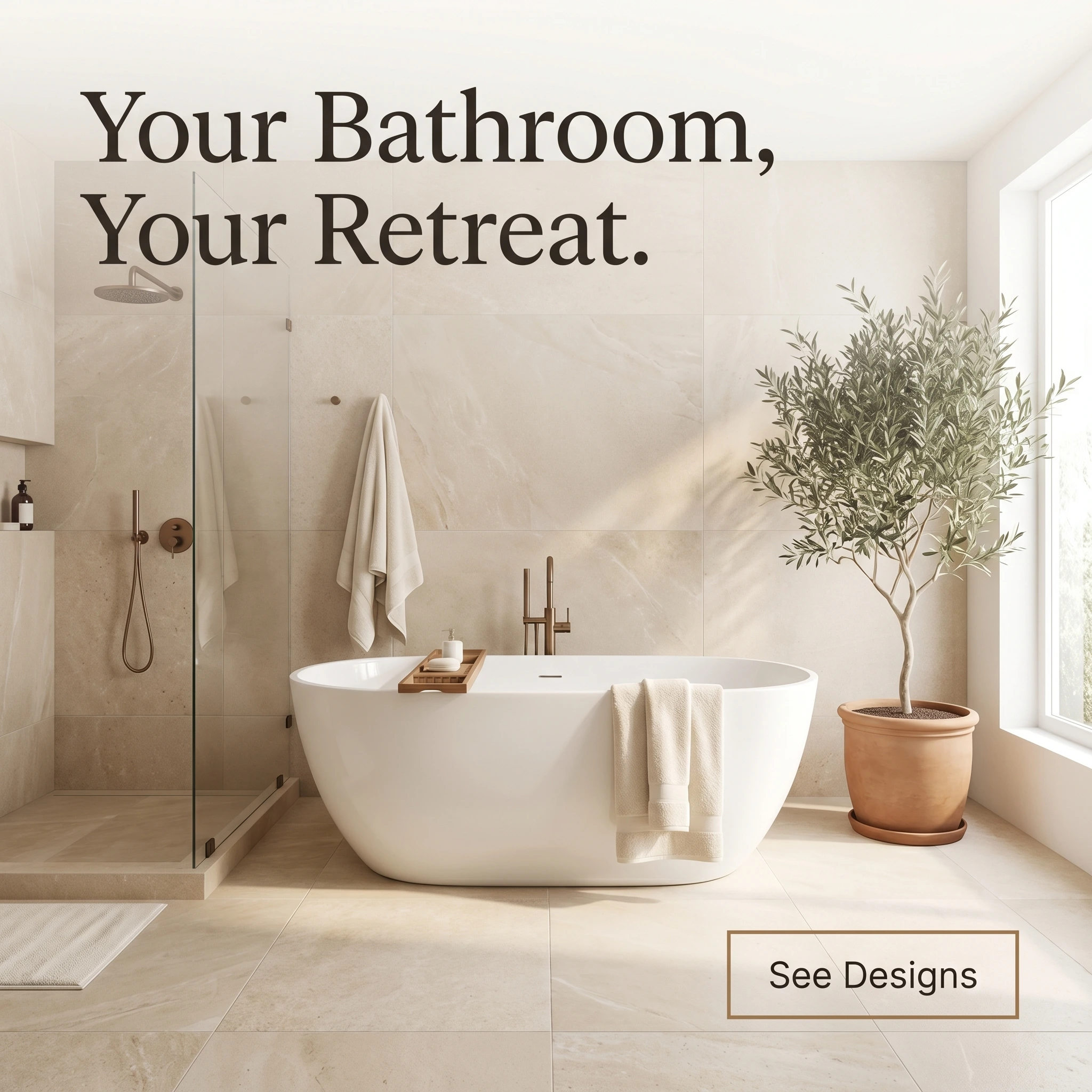
The format & angle. Porcelain & Co.’s signature hero: a calm, light-filled primary bathroom with a freestanding soaking tub, a glass rainfall shower, large-format stone tile, and a single plant, shot like a boutique-hotel spread. Dream outcome — but the dream is serenity, not status.
Who it targets. Cold and warm homeowners upgrading a primary suite, the ones who want their bathroom to feel like the end of a long day rather than a utilitarian box.
The hook. “Your Bathroom, Your Retreat.” It names the feeling — escape, calm — instead of the tile spec or the fixture brand.
Why it works. The spa buyer is purchasing a mood, and a serene, uncluttered hero shot delivers it faster than any feature list. The freestanding tub and rainfall shower are instantly legible shorthand for “high-end primary bath,” which pre-qualifies the lead toward a real budget. Framing the room as a personal retreat names the emotional payoff this buyer wants, and the magazine-grade calm quietly signals the price tier so casual clicks self-select out.
Steal it. Photograph your most serene completed primary bath at soft daylight, stage it nearly empty, and headline the feeling your clients describe — “retreat,” “spa,” “exhale” — not the materials. Move the tile and fixture details to the landing page.
3. The tub-to-walk-in split ad
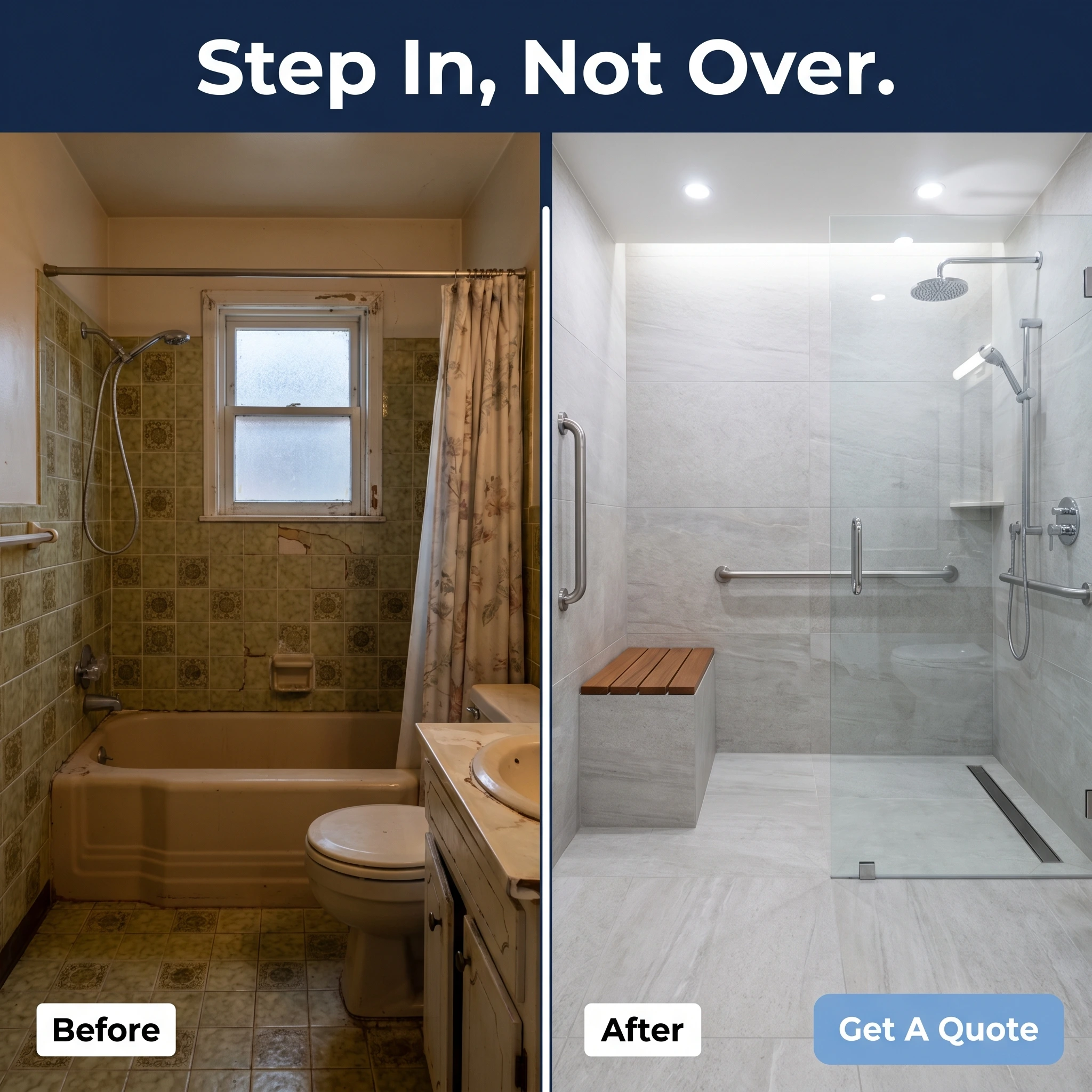
The format & angle. Riverbend Bath Remodel’s accessibility transformation: a cramped old step-over tub-shower on the left; a bright curbless walk-in shower with a built-in bench, grab bars, and slip-resistant flooring on the right. The safety-driven before/after this category owns.
Who it targets. Warm homeowners thinking about aging in place — for themselves or a parent — who find stepping over a tub wall harder and riskier than it used to be.
The hook. “Step In, Not Over.” Five words that name the daily risk and the relief in one breath.
Why it works. Accessibility is an emotional, safety-first decision, and the split frame makes the danger of the old tub visible next to the calm of the new walk-in. The right half pre-sells exactly what this buyer screens for — grab bars, a bench, a curbless entry, no slick surfaces — without a word of jargon. “Step In, Not Over” reframes the purchase from “remodel” to “stop worrying about a fall,” the real motive. This is the angle that most separates bathroom advertising from the kitchen trade.
Steal it. Shoot a real tub-to-walk-in conversion from the same spot, before and after, and make sure the grab bars, bench, and curbless entry are clearly visible in the after. Headline the safety benefit in plain language, not “ADA-compliant” — say what it does for the person.
4. The clean-install testimonial ad
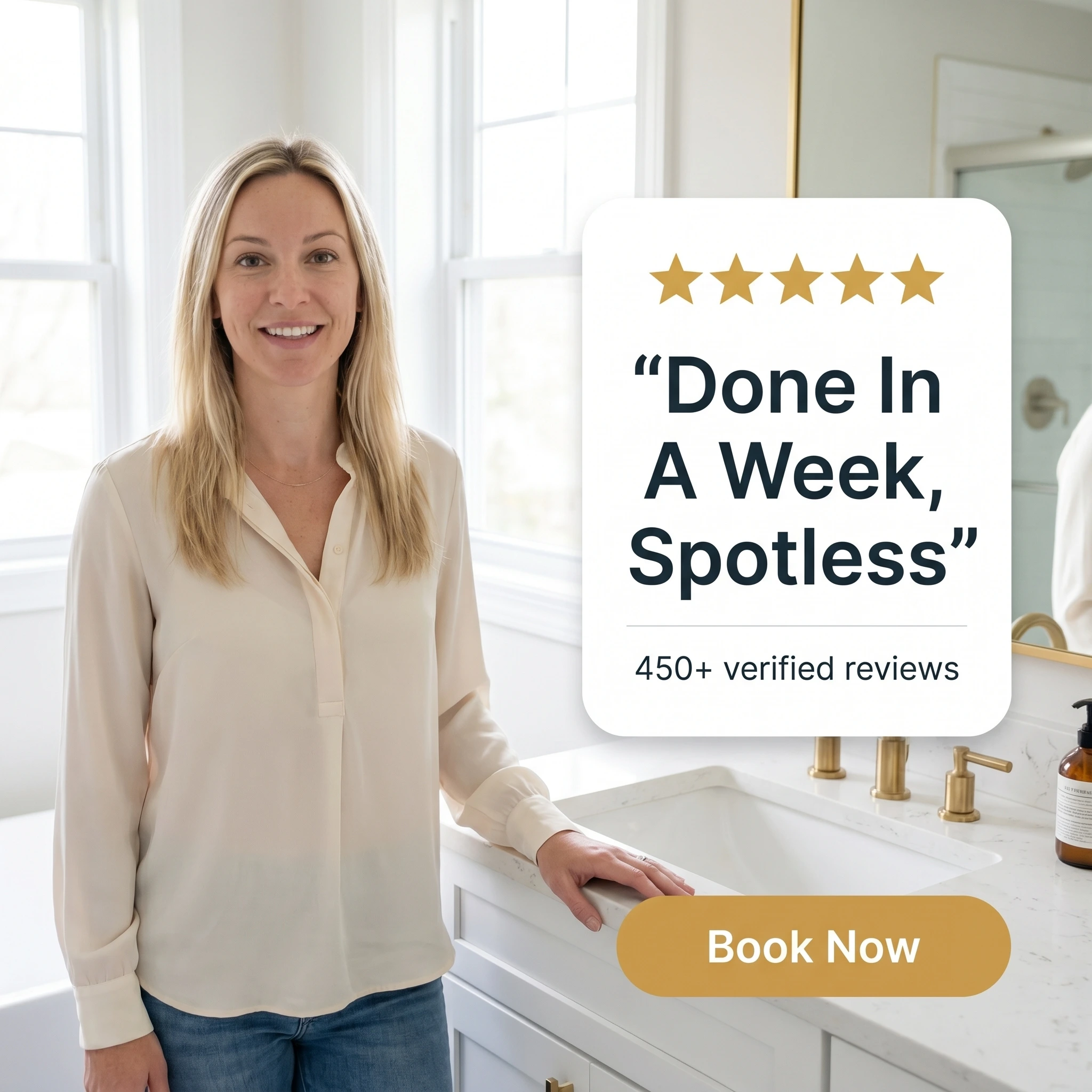
The format & angle. Lumenbath Studios: a homeowner standing in her finished bathroom beside a quote card, five gold stars, “450+ verified reviews.” Trust, told as speed plus cleanliness.
Who it targets. Warm audiences — estimate requesters and site visitors comparing two or three local remodelers before letting a crew into their home.
The hook. “Done In A Week, Spotless” — a review fragment that answers the two questions every bathroom buyer asks: how long, and how messy.
Why it works. No shopper can inspect your waterproofing from a photo, so they fall back on what a review can prove: that you were fast and left the place spotless. A testimonial that lands both sticks where “great work, highly recommend” slides off. The review count turns one story into a pattern, and licensed-installer signals matter more here than anywhere — it’s the most private room you’re asking a stranger to gut. It puts reviews you already own to work as reach.
Steal it. Pull the review where a client raved you were “fast,” “tidy,” or “respectful,” put it on the card, run your live review count below, and shoot the customer in the bathroom you finished.
5. The fixed-quote offer ad

The format & angle. Stonewater Baths’ certainty play: bold type on a deep-navy field, one promise, a low-commitment ask, no photo. Price and value — but the value is certainty, not a discount.
Who it targets. Cold and warm homeowners who have been burned by, or are afraid of, contractor change-orders — the offer sells predictability before it sells a bathroom.
The hook. “One Fixed Quote. No Surprises.” It targets the category’s sharpest objection: the fear that the price will creep once the walls are open.
Why it works. Surprise costs are the most-told horror story in remodeling, and a fixed-quote promise neutralizes it in five words. Leading with certainty rather than a percentage off respects a higher-intent buyer who is comparing trustworthiness, not hunting for a coupon. The typography-only layout reads as a straight local promise instead of an agency campaign, and “no surprises” is the line that gets screenshotted and sent to a spouse. For more on building the lines that ride on top of creative like this, see how to write Facebook ad copy at scale.
Steal it. If you can quote a fixed price after one visit, say so in the ad and make the ask tiny — book a free in-home estimate. Honor the quote, because the promise only works if the reviews back it up; one change-order complaint undoes the whole angle.
Put all five on the van
A speed reveal, a spa dream, a safety conversion, a clean-install review, and a fixed-quote promise — five bathroom remodeling ads aimed at distinct buyers and motives. Meta’s delivery has grown ruthless about matching each ad to the right person, given real options: the safety conversion for the fall-worried, the spa hero for the retreat-seeker. Five near-identical “fast bathroom” headlines starve that engine; five true angles feed it.
Run the two buyers in parallel: point the tub-to-walk-in conversion and clean-install testimonial at older or family-stage audiences, the spa hero and fixed-quote offer at primary-suite upgraders, with the done-in-days UGC seeding both. Rotate creative before ad fatigue flattens the winners, and when a winning ad returns, reuse its post ID so its banked engagement carries over instead of zeroing out. Other home trades share these mechanics; the home services ad examples breakdown maps the cross-trade patterns.
The wall isn’t knowing you need both a safety and a spa version — it’s finding the time to build separate sets while the crew is booked. Zendux clears it: AI-generated static ad variants in your company’s look, bulk-launched across ad sets in minutes.
Book more bathroom estimates with better creative →
Want to generate winning bathroom remodeling ads? Start using Zendux AI