Garage Door Ad Examples: 5 Ads That Earn the Click
Break down 5 garage door ad examples that earn the click — a same-day spring-repair UGC ad, a curb-appeal hero, a facade before/after, a quiet-operation testimonial, and a smart-opener offer.
Garage door ad examples that earn the click work two different jobs at once: rescue the homeowner whose door just failed, and seduce the one whose tired door is dragging down the whole front of the house. One buyer needs a tech today; the other is browsing a top-ROI exterior upgrade. The five teardowns ahead straddle both jobs — the same-day repair save and the curb-appeal sell — each a separate format with its own single claim.
Key takeaways
- Two buyers, two playbooks — a broken-spring emergency wants speed and safety; a replacement shopper wants the facade payoff and a quieter, smarter door. Because they share nothing, a few pointed ads out-earn one all-purpose creative — delivery can match emergency and upgrade to the right person only if you supply both.
- Speed is the repair hook — a same-day, specific-failure promise converts the homeowner staring at a door that won’t open this morning.
- The door is the face of the house — a new garage door covers a third of most facades, so before/after curb-appeal ads carry obvious proof.
- Decisions are fast and cheap here — unlike windows or a roof, garage door jobs close quickly, so concrete offers shorten the click-to-booking gap.
What makes a great garage door ad
The buyer arrives in one of two states. The first just discovered a problem — a snapped spring, a door off its track, a dead opener, a door that won’t close and left the house exposed overnight. That homeowner wants one thing: someone competent, today, who makes the door safe. The second has no emergency. Their door works, but it’s faded, dented, or dated, dragging down a facade they otherwise like — or they’re prepping to sell and have read that a new garage door returns more at resale than almost any other exterior project.
Two principles cover both. First, match the creative to the mode: repair ads lead with speed, a named failure, and safety; replacement ads lead with the transformed front and the felt upgrades — quiet operation, a smartphone opener, real security. Blur the two and you reach neither. Second, show the door, not a stock house: a real panel, a real facade, an actual tech at a track. And let each ad make a single point — speed, or the facade, or the quiet motor — never all three; that focus is what every strong static ad layout is built on, since a homeowner mid-scroll gives you one reading second.
The economics sit between an impulse buy and a major renovation. A repair is a few hundred dollars and a same-week decision; a new door is a four-figure project a homeowner can still green-light in days, not the months a window or roof takes. Judge repair ads on booked calls within the week and replacement ads on quote requests, but expect the whole funnel to move faster than the slower exterior trades. Impression costs for this work sit at the low end of what home services see on Meta — roughly $10–$18 for a repair audience that converts in days — and on the urgent side the job goes to whoever rings back first, so speed-to-call matters as much as the click that produced it.
| Ad | Format | Angle | Funnel stage | Best for |
|---|---|---|---|---|
| Broken-spring same-day UGC | UGC | Repair urgency | Cold | Repair-heavy shops |
| Door-makes-the-house hero | Hero | Curb-appeal status | Cold/warm | New-door installers |
| Same-house facade split | Before/after | Curb-appeal transformation | Warm | Replacement-focused crews |
| Quiet-enough testimonial | Testimonial | Trust/reliability | Warm | Shops with strong reviews |
| Smart-opener install offer | Offer | Price/security value | Cold/warm | Opener & upgrade pushes |
1. The broken-spring same-day UGC ad
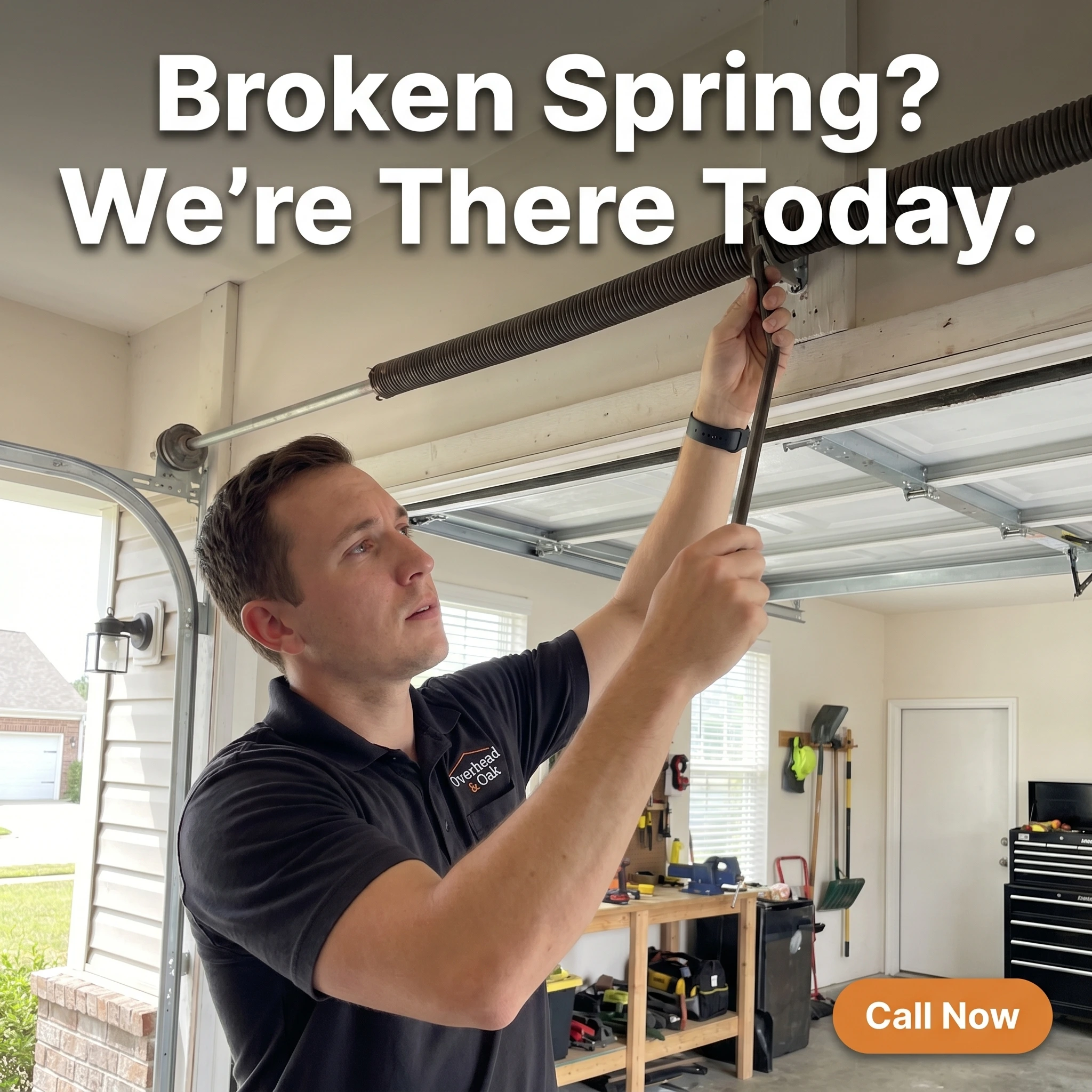
The format & angle. An Overhead & Oak tech up close at the torsion spring above an open garage door, winding bars in hand, shot like the homeowner snapped it when help arrived. Repair urgency, shown rather than promised.
Who it targets. Cold homeowners across the service area — most aren’t in crisis today, but a broken spring is a when-not-if event, and this is the ad they remember the morning it won’t budge.
The hook. “Broken Spring? We’re There Today.” The question diagnoses the exact failure; the second half answers the only thing that matters in that moment — when.
Why it works. A snapped spring is loud and immobilizing — the door is suddenly too heavy to lift and unsafe to force. Naming that specific failure makes the ad feel addressed to the person living it, not to “garage door needs.” The candid frame of a tech at the spring is proof of competence in a way a “24/7” badge never is. It earns the save now and the call later, when the spring goes.
Steal it. Photograph your tech mid-repair on a real spring call (homeowner’s okay first), keep the phone-camera look, and headline the exact failure plus your response time. Run it steady and low-budget — it pays off on the day demand appears.
2. The door-makes-the-house hero ad
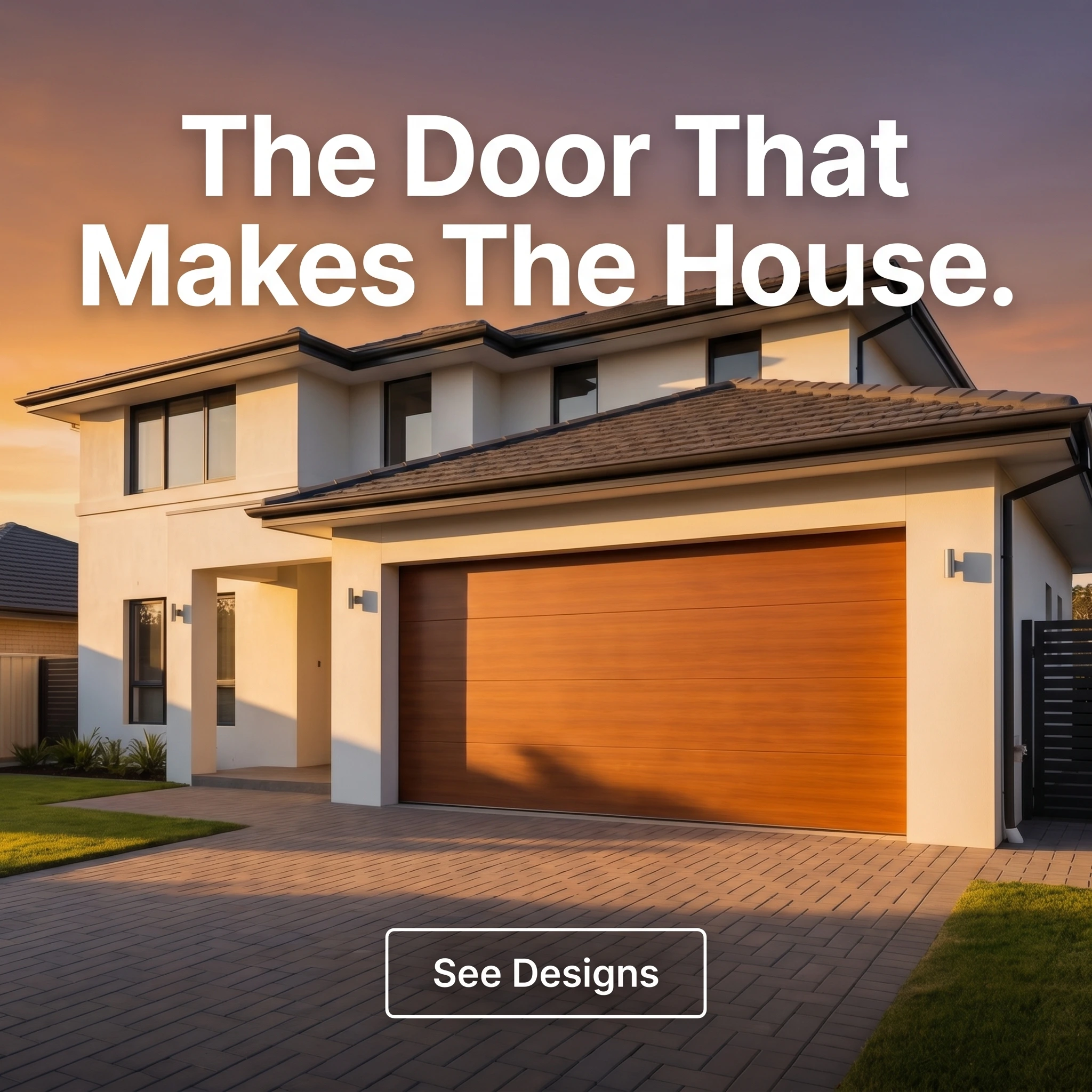
The format & angle. Liftwell Garage Doors’ install hero: a clean modern home front at golden hour, a handsome new door anchoring the facade, magazine-clean, no people. Curb-appeal status as the dream outcome.
Who it targets. Cold and warm homeowners who like their house but not their door — and sellers eyeing the cheapest way to lift the front before listing.
The hook. “The Door That Makes The House.” It reframes the garage door from a utility panel into the facade’s centerpiece, which is what it actually is on most homes.
Why it works. The garage door is often the single largest element on a home’s front elevation, so upgrading it changes the whole impression more than its price suggests. Selling that — the house looking finished — reaches the buyer who’d scroll past a panel-construction spec. The pristine golden-hour shot also answers what the door will look like for the next twenty years. It’s a patient ad built for the browse, not the emergency.
Steal it. Photograph your best recent install at golden hour, framed to show the whole front of the house. Headline the payoff your customers describe — “it finished the house” — and save panel options for the landing page.
3. The same-house facade split ad
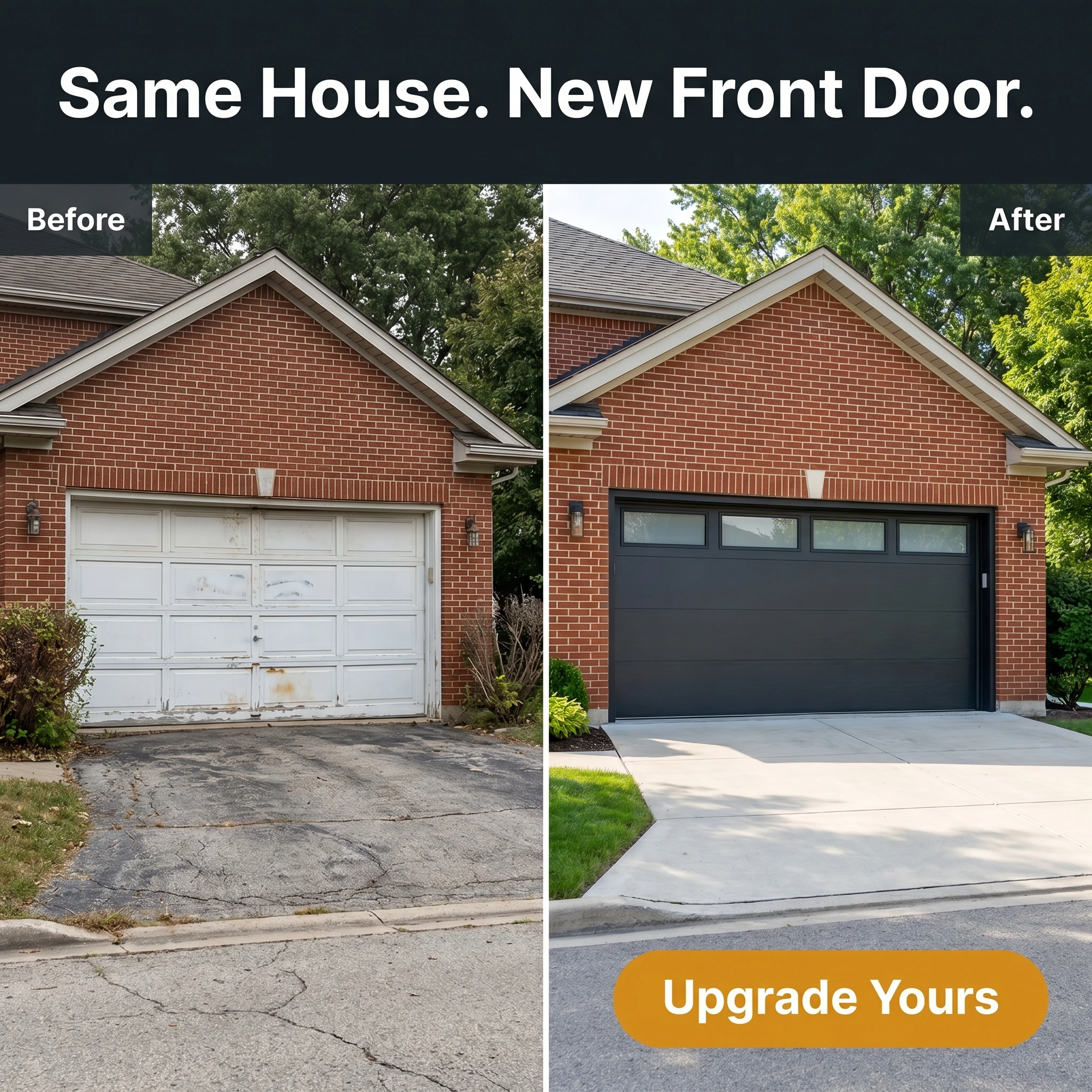
The format & angle. Castlebar Doors’ facade flip in one frame: a faded, dented old door on the left; a sleek new panel on the same house on the right. The curb-appeal transformation the category is famous for.
Who it targets. Warm homeowners who already know their door looks tired — the audience that winces at the left half because it’s parked in their driveway.
The hook. “Same House. New Front Door.” Five words that reframe the garage door as the front door of the house, before-and-after in a single read.
Why it works. Nothing sells a garage door like the same house with a better one — the transformation is dramatic precisely because the door is so large and so visible from the curb. Matching rooflines, brick, and driveway on both sides make it obviously one home, not a stock composite, which is the credibility this format lives or dies on. It converts a vague “we should do something about that door” into a concrete picture of the result.
Steal it. Shoot before and after from the identical curb position on your next replacement — make it a crew habit. Pick the install where the contrast is most dramatic, and let the two halves carry the argument.
4. The quiet-enough testimonial ad

The format & angle. Curbline Garage Co.: a homeowner in her driveway, a new door soft-focus behind her, a quote card with five gold stars and “880+ local reviews.” Trust, told through the upgrade nobody expects to feel.
Who it targets. Warm comparison shoppers — homeowners holding two or three quotes for a new door or opener, deciding which company to let onto the property.
The hook. “Quiet Enough To Sleep Over” — a review fragment about the bedroom above the garage finally not shaking at 6 a.m., a benefit no spec sheet conveys.
Why it works. Two doors look identical in a photo; what separates the installers is how the door behaves once it’s living on the house, and that shows up only in a customer’s account. A quiet belt-drive opener under a bedroom is a daily, felt improvement, and a peer naming it lands harder than “smooth, reliable operation” ever could. “Local reviews” rather than generic reviews stacks the permanence signal, and the count turns one homeowner’s relief into a pattern a skeptic can trust.
Steal it. Pull the review that names a small everyday win — “quiet,” “smooth,” “didn’t wake the baby” — and make it the line on the card, since lived detail out-pulls craftsmanship claims a stranger can’t check. Photograph a real customer in their driveway, door in frame, live review count on the card.
5. The smart-opener install offer ad

The format & angle. Ironbay Garage Doors’ upgrade push: bold type, one price, one product, a deep-charcoal background with a phone-control motif, no photo. Price and security value, with a low-friction entry point.
Who it targets. Cold and warm homeowners who don’t need a new door yet but would happily fix an old opener — and the security-minded buyer who wants to know the door is closed from anywhere.
The hook. “Smart Opener Installed: $199.” A fixed price on a concrete product — the bundle does the math homeowners hate, and “installed” removes the do-it-yourself dread.
Why it works. A new door is a four-figure decision; a smart opener is a yes-this-weekend purchase that gets a homeowner to transact now and into the door conversation later. Productizing it at a flat installed price converts a vague “we should upgrade the garage” into a checkout, and the security angle — close and check the door from your phone — names an anxiety the category rarely does.
Steal it. Price the installed opener at your break-even plus margin, name the security benefit in one supporting line, and run it to the audiences your hero and before/after ads already engaged. Refresh the color monthly — offers fatigue fastest of any local format, so rotate before ad fatigue erodes it.
Put all five on the route sheet
A same-day rescue, a facade upgrade, a dramatic before/after, a quiet-opener review, and a smart-opener deal — five garage door ads with nothing in common but the company behind them. That range is the whole point: a repair emergency and a curb-appeal daydream are opposite states of mind, and only a lineup that covers both meets the panicked homeowner over a snapped spring and the unhurried one picturing a new front. One catch-all door ad pleases neither; five pointed ones let Meta match each to its buyer. The other exterior trades run on parallel logic — the window replacement ad examples and roofing ad examples teardowns cover the energy and storm-season angles beside this one.
Sequence the five deliberately. Keep the broken-spring UGC always-on as the low-budget memory ad that captures repair demand the day it appears, run the hero and the facade split broad for the replacement pipeline, reserve the quiet-operation testimonial for retargeting quote-holders, and time the smart-opener offer to a real promotion. Repair and replacement rarely fatigue in sync, which is its own argument for running several distinct concepts at once — see the home services ad examples breakdown for cross-trade patterns, and set your refresh cadence with the how-many-creatives-to-test guide.
The hard part is producing that many distinct concepts and keeping them fresh — and that is what Zendux takes off your plate: it generates static ad variants in your company’s branding and launches them across your ad sets in bulk, quicker than a tech can swap a broken spring.
Want to generate winning garage door ads? Start using Zendux AI