Food Delivery Ad Examples: 5 Ads That Drive Orders
Five food delivery ad examples that drive orders — a doorstep UGC ad, a craveable food hero, an empty-fridge-vs-full-plate split, an on-time review, and a free-delivery offer.
Food delivery ads drive orders when they hit a hungry person at the right moment with the meal they want and the speed they need it. The decision is impulsive and time-sensitive — someone’s hungry now, choosing between cooking, going out, or tapping an app — so the ad has to spark the craving and promise it arrives fast. These five fictional food delivery ad examples each run a different angle in a different layout — a doorstep UGC moment, a craveable food hero, an empty-fridge-versus-full-plate split, an on-time testimonial, and a first-order offer.
Key takeaways
- Craving is the hook — a craveable dish in the first frame beats any logo for a hungry scroller.
- Speed is the promise — a concrete ETA like “in under 30 minutes” converts the impulse before it fades.
- Day-part the delivery — lunch, the dinner rush, and late-night cravings each want their own creative and schedule.
- First order is the conversion — a free-delivery or discount offer removes the barrier to a new customer’s first tap.
What makes a great food delivery ad
The buyer is making one of the most impulsive decisions in commerce: what to eat in the next hour. That impulsiveness is the opportunity — no long consideration cycle — but it means the ad has to land appetite instantly. A blurry container or a logo-first design loses to the next post. The first frame is the whole pitch, which is why food shows up so often in high-performing Meta ads examples by format.
Then the ad needs to answer “how fast.” Delivery is bought on speed as much as taste, so a concrete ETA does more than “fast delivery.” Reliability matters too: a customer burned by a cold, late order won’t reorder, which makes on-time proof a real conversion lever. A single craveable focal point carries all of this — the same principle behind the best static ads.
Timing is the multiplier. The same audience wants different things at noon, at 6 p.m., and at 10 p.m., so the creative and the schedule have to match the hunger window. And acquiring a first-time user almost always takes an offer. The five concepts below cover the craving, the speed, the reliability, and the first order.
| Ad | Format | Angle | Funnel stage | Best for |
|---|---|---|---|---|
| Doorstep UGC | UGC | Speed/convenience | Cold | App & local delivery |
| Craveable food hero | Hero | Craving/dream | Cold/warm | Signature dishes |
| Empty-fridge-vs-full-plate split | Comparison | Us-vs-cooking | Warm | Busy weeknight users |
| On-time testimonial | Testimonial | Trust/reliability | Warm | Reliability-led services |
| First-order offer | Offer | Price/value | Cold | New customer acquisition |
1. The doorstep UGC ad
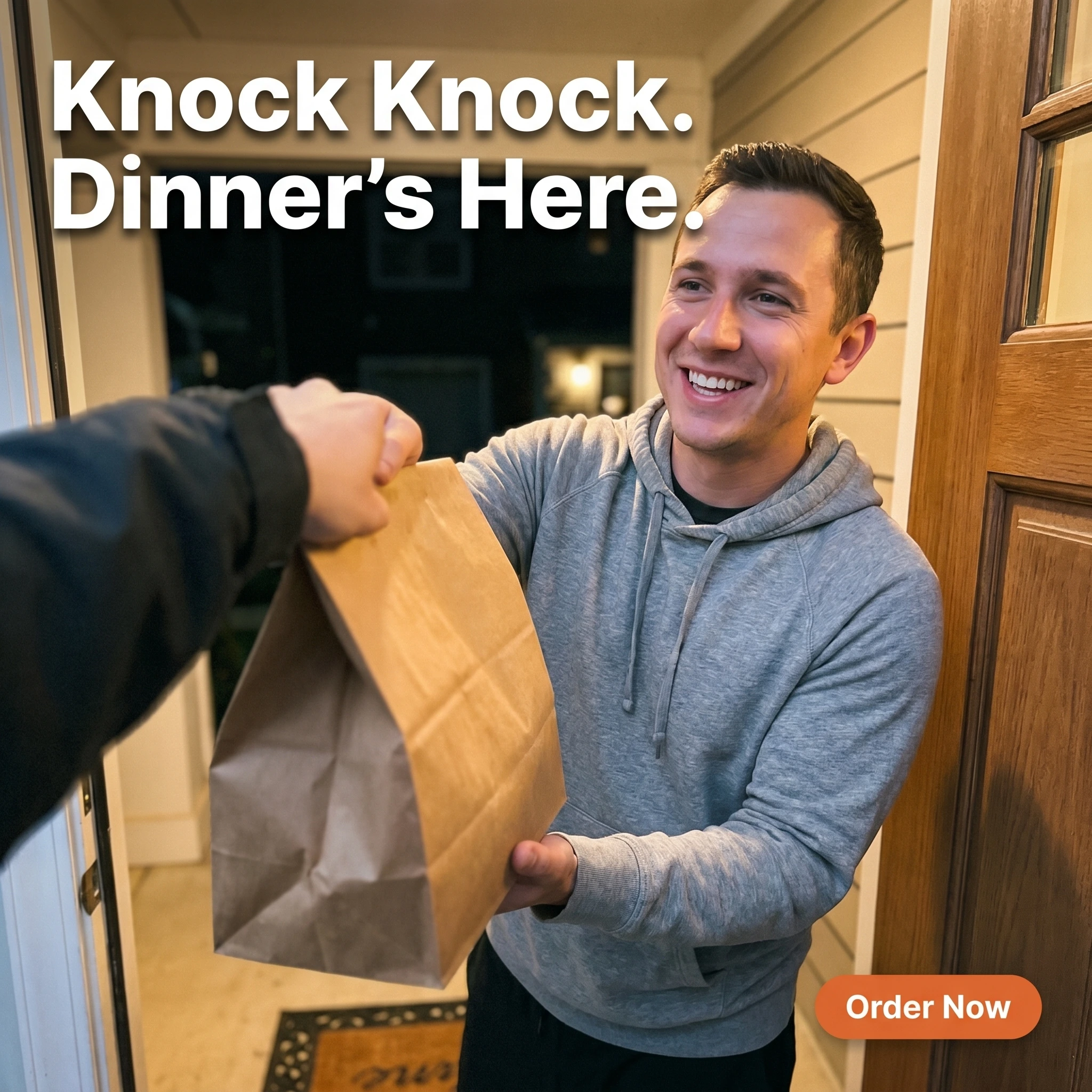
The format & angle. A Dashbite customer taking a warm takeout bag at his door in the evening, shot like a real delivery moment. Speed and convenience.
Who it targets. Cold local scrollers deciding how to handle dinner tonight without cooking.
The hook. “Knock Knock. Dinner’s Here.” It dramatizes the payoff — food arriving — in a friendly, scroll-stopping line.
Why it works. The doorstep handoff reads as a real customer’s night, not a brand ad, which earns trust and a cheap click. The image sells the entire value proposition in one frame: you do nothing, food shows up. The playful headline gives it personality, and the everyday setting makes the convenience feel real rather than promised.
Steal it. Shoot the actual handoff at the door in natural evening light, phone-camera style, and headline the arrival moment. Send the click straight to the order flow or app install, not a menu wall.
2. The craveable food hero ad
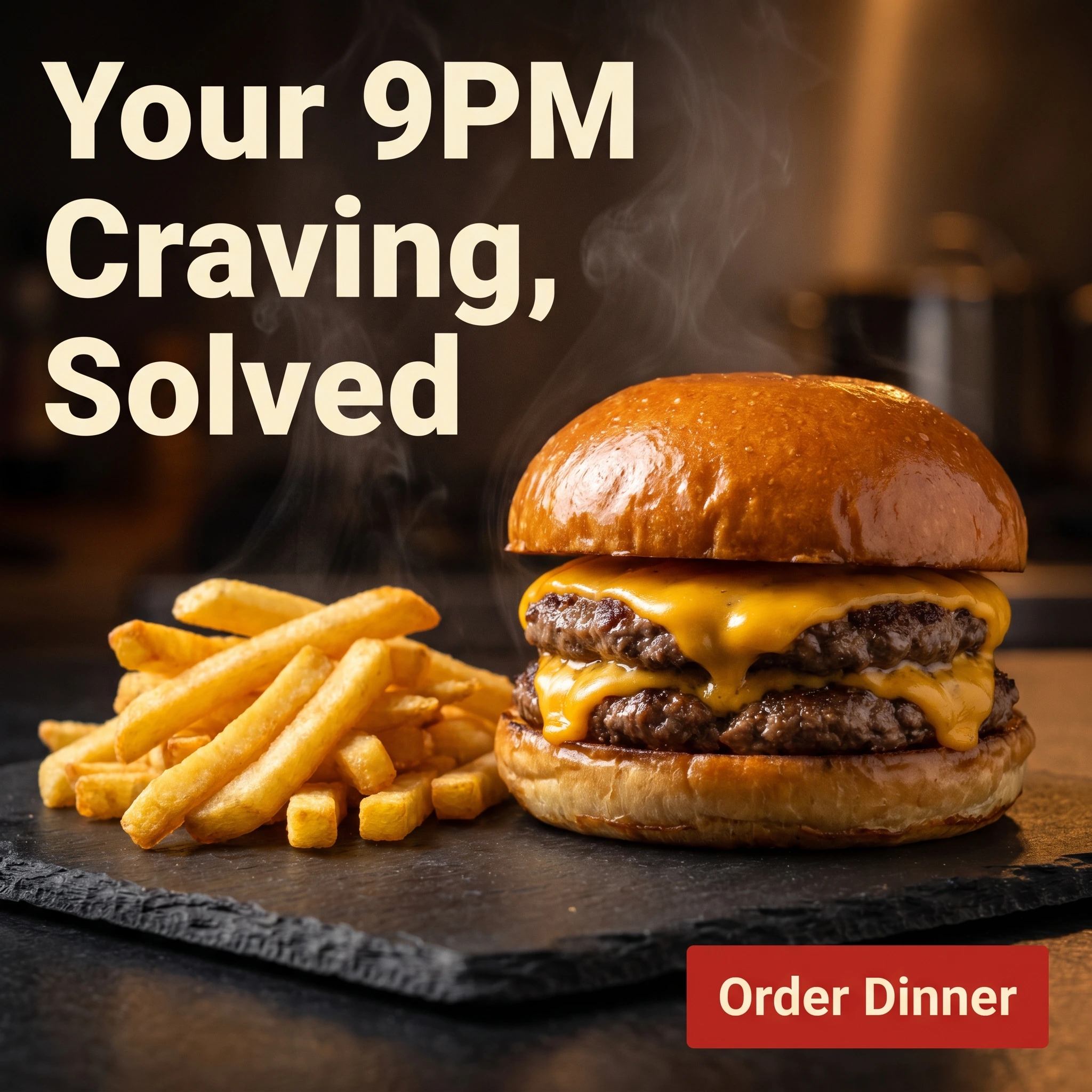
The format & angle. Forkly’s signature shot: a juicy cheeseburger and golden fries, steam rising, dramatic light, no people, one focal point. Craving and dream.
Who it targets. Cold and warm scrollers with a specific craving — the “I want a burger right now” moment.
The hook. “Your 9PM Craving, Solved.” It names a precise time and feeling, which beats a generic “order food.”
Why it works. A tight, well-lit food hero is pure appetite — the melt and the steam do the selling no adjective can match. Naming the late-night window targets a high-intent craving moment when people are most likely to order out. It’s built to earn the cheap click in a high-intent craving window, leaving the first-order deal to close the new ones later.
Steal it. Shoot your most craveable dish close, in hard light that shows texture, with nothing competing in frame. Tie the headline to a specific craving and time of day, then day-part the ad to deliver in that window.
3. The empty-fridge-vs-full-plate split ad
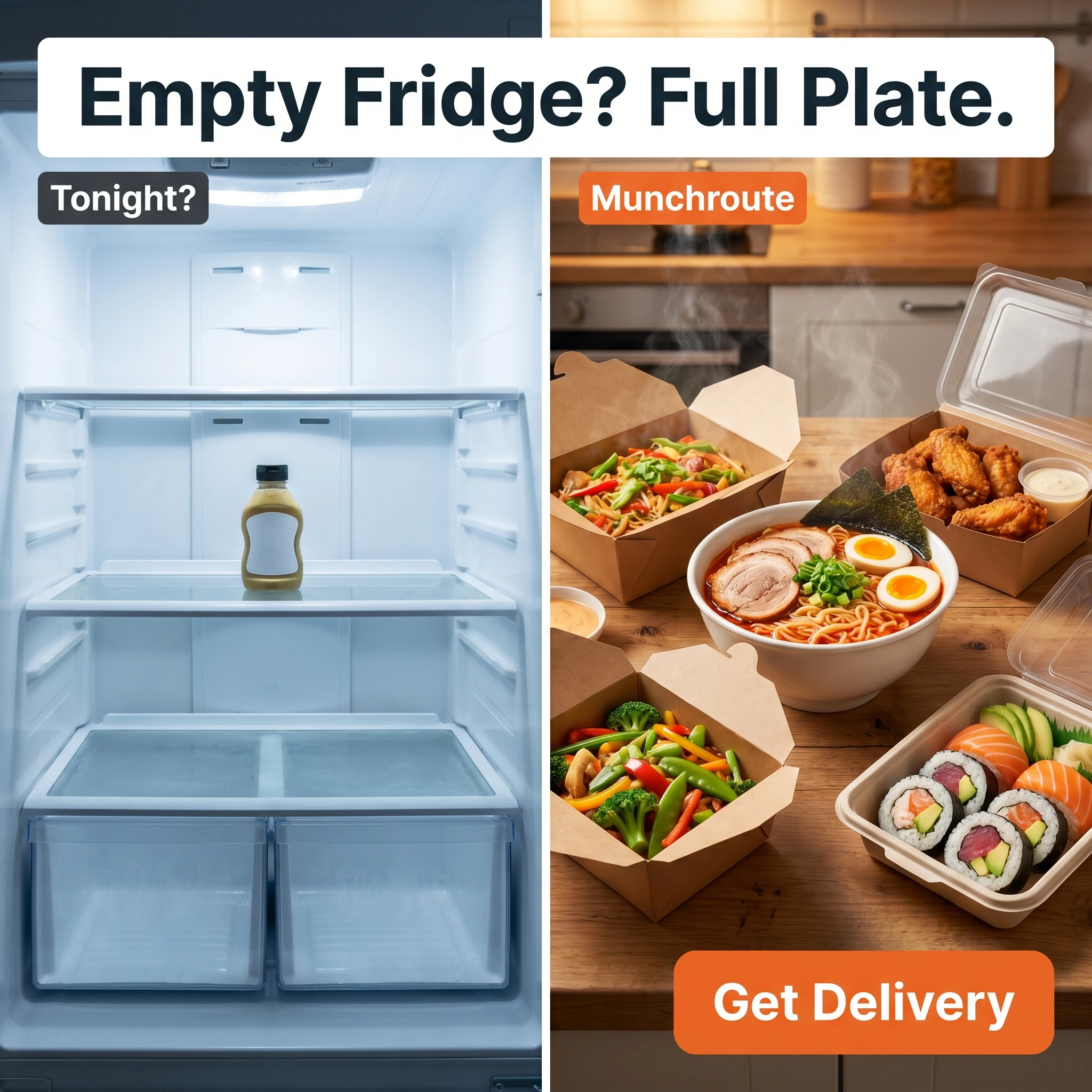
The format & angle. Munchroute’s split: a sad, near-empty fridge on the left, a hot delivered meal spread on the counter on the right. Us-versus-cooking.
Who it targets. Warm weeknight users staring into an empty fridge with no plan and no energy to cook.
The hook. “Empty Fridge? Full Plate.” It names the exact problem and the fix in three words each.
Why it works. Everyone recognizes the empty-fridge moment, so the left half lands instantly; the hot meal on the right makes delivery feel like the obvious rescue. The comparison reframes the choice from “cook or order” to “nothing or this,” which converts the tired weeknight user. Aimed at warm traffic, it’s a reliable workhorse for the dinner-rush window.
Steal it. Shoot a bleak-into-the-soul empty fridge beside a generous delivered spread, label each side, and keep the headline to the problem-and-fix beat. Schedule it for the late-afternoon “what’s for dinner” panic.
4. The on-time testimonial ad
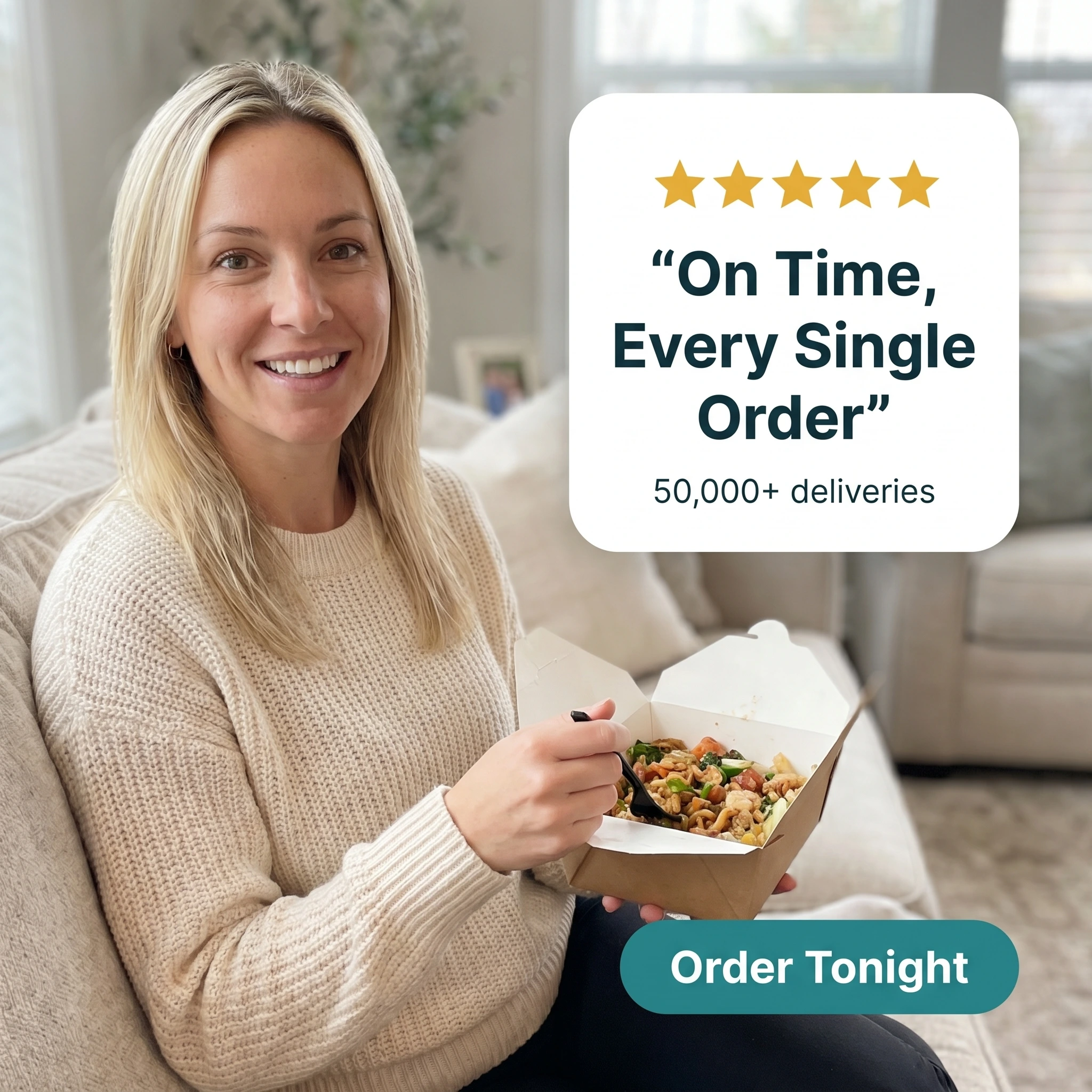
The format & angle. Snackdash pairs a relaxed customer eating at home with a review card — five stars and a delivery count. Trust and reliability.
Who it targets. Warm users who’ve been burned by late, cold deliveries and want a service they can count on.
The hook. “On Time, Every Single Order.” It targets the category’s biggest failure point — late delivery — and promises the opposite.
Why it works. Reliability is the unglamorous thing that actually drives reorders, and a customer vouching for it answers the fear a late competitor created. The visible delivery count proves consistency at scale. Putting “on time, every order” in a customer’s voice carries more weight than the service claiming its own speed, and it converts the warm user comparing apps.
Steal it. Find the review that praises speed or reliability, build a card around the verbatim quote with a real customer photo and your live order count, and run it to people who engaged but haven’t ordered.
5. The first-order offer ad
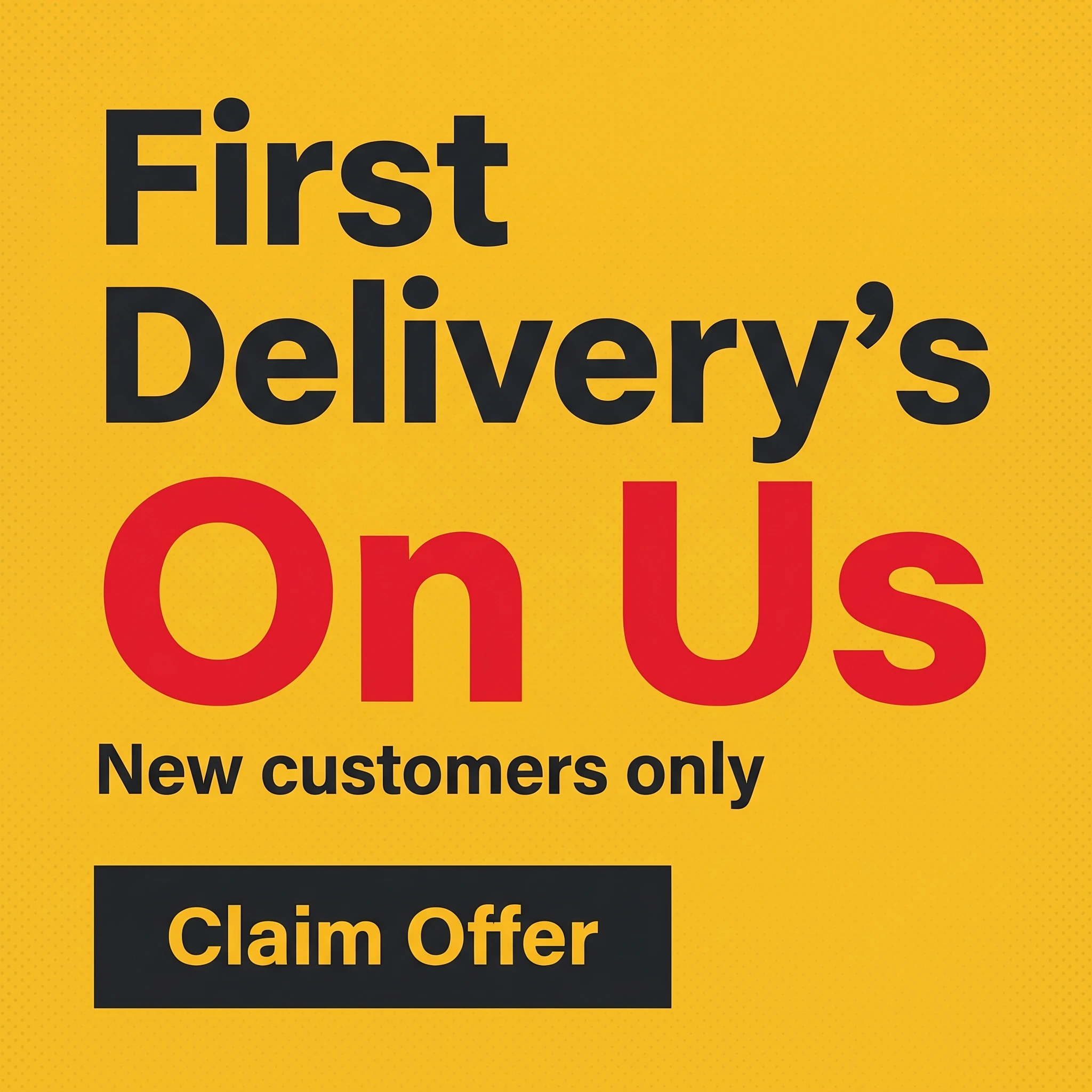
The format & angle. Plately’s acquisition play: typography-led, the free-delivery offer dominant on bold mustard, no food competing. Price and value.
Who it targets. Cold first-time users who need a push to try a new delivery service.
The hook. “First Delivery’s On Us.” A concrete, zero-risk incentive to place a first order.
Why it works. The first order is the hardest and most valuable conversion in delivery — reorders follow once the habit forms — so the whole offer exists to remove the last excuse. Free delivery kills the fees, the most common reason people abstain, and “new customers only” keeps the spend on acquisition. Type-led, it reads as a true deal and closes everyone the craving and reliability ads warmed up.
Steal it. Make the offer the biggest element, skip the food photo so the deal reads instantly, and target cold local audiences. Pair it with a retargeting flow so the second order isn’t discounted away.
Cover every hunger window
Speed, a craving, a no-cook-tonight contrast, a reliability rave, and a first-order deal — five reasons a hungry scroller taps order. With Andromeda weighing many more ads per auction, a varied set lets Meta serve the late-night craver the food hero and the new user the first-order offer, instead of leaning on one burger shot for everyone.
Day-part the delivery: craveable heros and UGC run across the hunger windows, the comparison and testimonial convert the undecided, and the first-order offer acquires cold users. Rotate dishes and offers often so a tight local audience never burns out on one frame.
Producing that much craveable creative is the bottleneck. Zendux produces static ad variants with AI and bulk-launches them across ad sets, so a fresh slate is ready before the dinner rush. Running a kitchen? The restaurant ad examples breakdown pairs with this; for planned, healthy meals, see the meal prep ad examples.