5 Meal Prep Ad Examples That Win Subscribers
Five meal prep ad examples that win subscribers — a grab-and-go UGC ad, a macro-balanced hero, a takeout-vs-prep cost split, a habit review, and a first-box offer.
Meal prep ads win subscribers by selling the outcome busy people actually want: healthy meals handled for the week, with zero cooking and zero decisions. The buyer isn’t hungry right now — they’re tired of cooking, tracking macros, or burning money on takeout, and the ad has to promise a system that fixes that for good. These five fictional meal prep ad examples each run a different angle in a different layout — a grab-and-go UGC moment, a macro-balanced hero, a takeout-versus-prep cost split, a habit testimonial, and a first-box offer.
Key takeaways
- Sell the system, not a meal — subscribers buy a week of solved decisions, not a single dinner.
- Lead with the real benefit — no cooking, dialed macros, or money saved beats a generic “healthy food” claim.
- Make the value concrete — cost-per-meal versus takeout converts the price-conscious buyer.
- Lower the first-box risk — a first-week discount turns a curious scroller into a trial subscriber.
What makes a great meal prep ad
The buyer’s pain isn’t hunger — it’s the recurring weekly grind of deciding, shopping, cooking, and cleaning, usually while trying to eat well or hit a goal. The product that wins removes that whole loop, so the ad has to sell the system, not a plate. “Your week, handled” is a stronger promise than “delicious meals,” because it speaks to the actual job the subscriber is hiring you for.
Different buyers want different proof. The fitness-minded subscriber cares about macros and protein; the exhausted professional cares about time and no dishes; the budget-watcher cares about cost versus takeout. One ad can’t carry all three without going vague, which is why a spread of distinct angles wins — and why structuring those tests cleanly matters, the focus of ABO vs. CBO creative testing.
Meal prep audiences are also narrow and local-ish, so creative fatigues fast as the same people see it again and again; refreshing creative faster keeps acquisition costs down. Keep the framing on convenience, nutrition, and value rather than appearance. The five concepts below cover the system, the nutrition, the value, the habit, and the trial.
| Ad | Format | Angle | Funnel stage | Best for |
|---|---|---|---|---|
| Grab-and-go UGC | UGC | Convenience/time | Cold | Busy professionals |
| Macro-bowl hero | Hero | Health/nutrition | Cold/warm | Fitness & macro buyers |
| Takeout-vs-prep cost split | Comparison | Value/us-vs-takeout | Warm | Budget-conscious users |
| Habit testimonial | Testimonial | Trust/results-adjacent | Warm | Retention-focused brands |
| First-box offer | Offer | Price/value | Cold | Trial acquisition |
1. The grab-and-go UGC ad
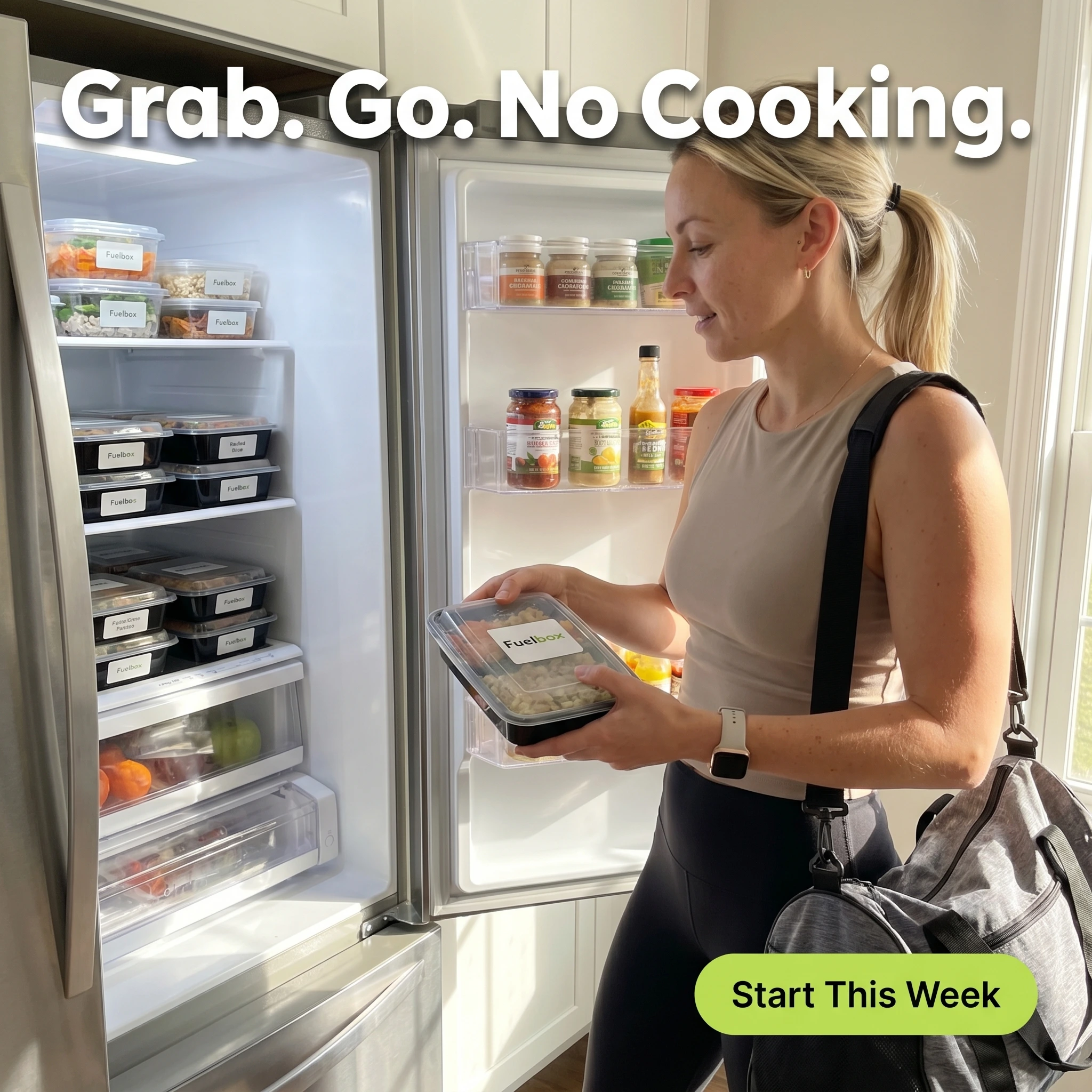
The format & angle. A Fuelbox subscriber grabbing a pre-portioned container from a stocked fridge, gym bag on her shoulder, shot like a real weekday morning. Convenience and time.
Who it targets. Cold busy professionals who want to eat well but have no time to cook or plan.
The hook. “Grab. Go. No Cooking.” Three short beats that sell the entire convenience promise.
Why it works. The candid kitchen scene reads as a real subscriber’s routine, not a brand ad, which earns trust and a cheap click. The stocked fridge shows the system at work — a week already handled — and the clipped headline mirrors how fast the product fits into a hectic morning. Convenience is the widest-appeal angle, so it’s a strong cold prospecting ad.
Steal it. Shoot a real grab-from-the-fridge moment in everyday light with the week’s meals visible, and headline the speed and the no-cooking benefit. Send the click to the plans page, not a long how-it-works explainer.
2. The macro-bowl hero ad
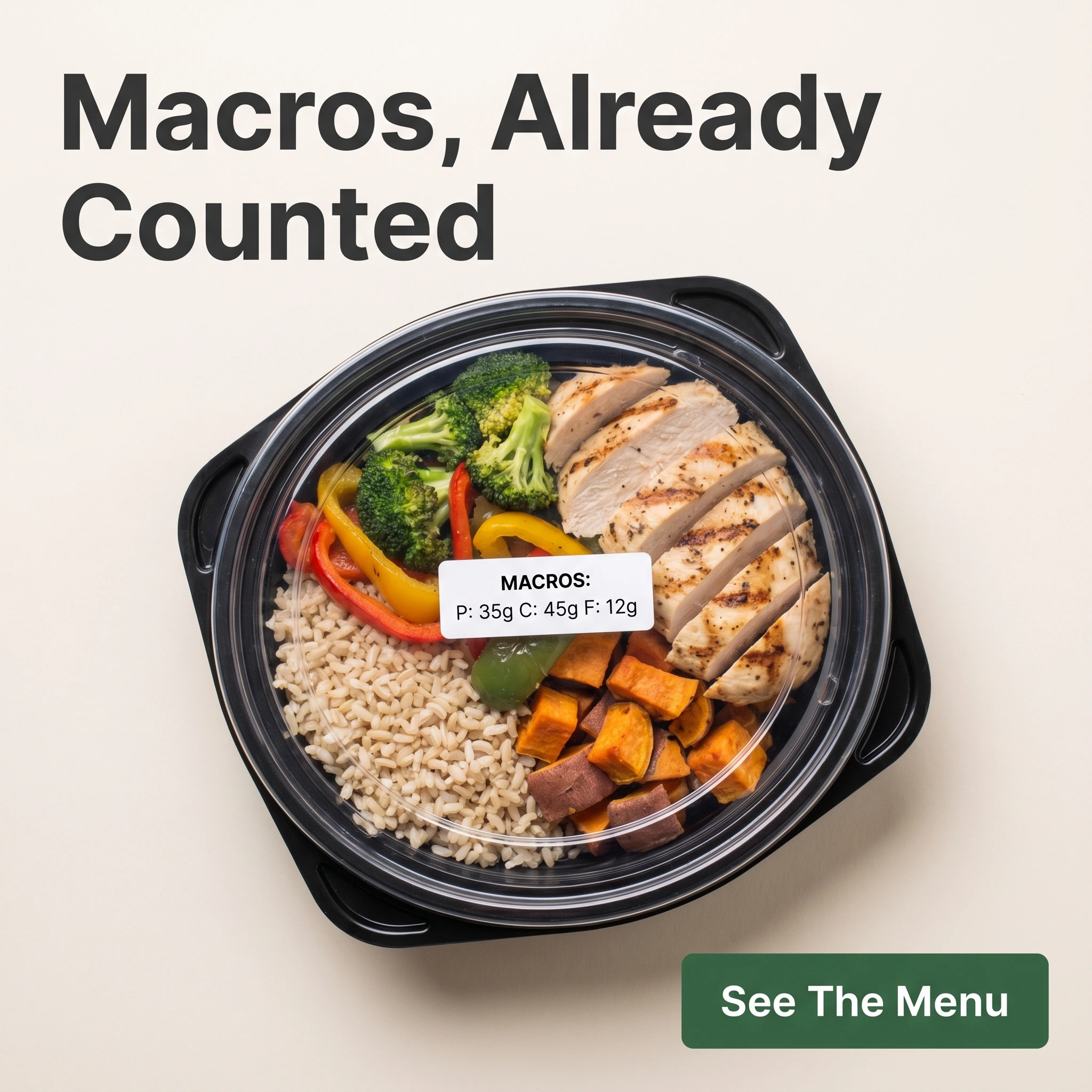
The format & angle. Macromeals Co.’s nutrition hero: a balanced bowl of grilled chicken, rice, and roasted vegetables with a small macro label, no people, one focal point. Health and nutrition.
Who it targets. Cold and warm fitness and macro-tracking buyers who plan meals around their numbers.
The hook. “Macros, Already Counted.” It removes the most tedious part of eating for a goal.
Why it works. A clean, colorful bowl signals fresh and healthy at a glance, and the macro angle speaks directly to a buyer who’s been weighing chicken on a kitchen scale. “Already counted” sells the real relief — the tracking is done for them — which is the convenience that fitness buyers value most. It’s a prospecting ad that qualifies the audience by motivation.
Steal it. Shoot a genuinely balanced meal at its freshest, keep one small macro callout for credibility, and headline the work you’ve removed. Point fitness-intent audiences at a menu filtered by their goal.
3. The takeout-vs-prep cost split ad
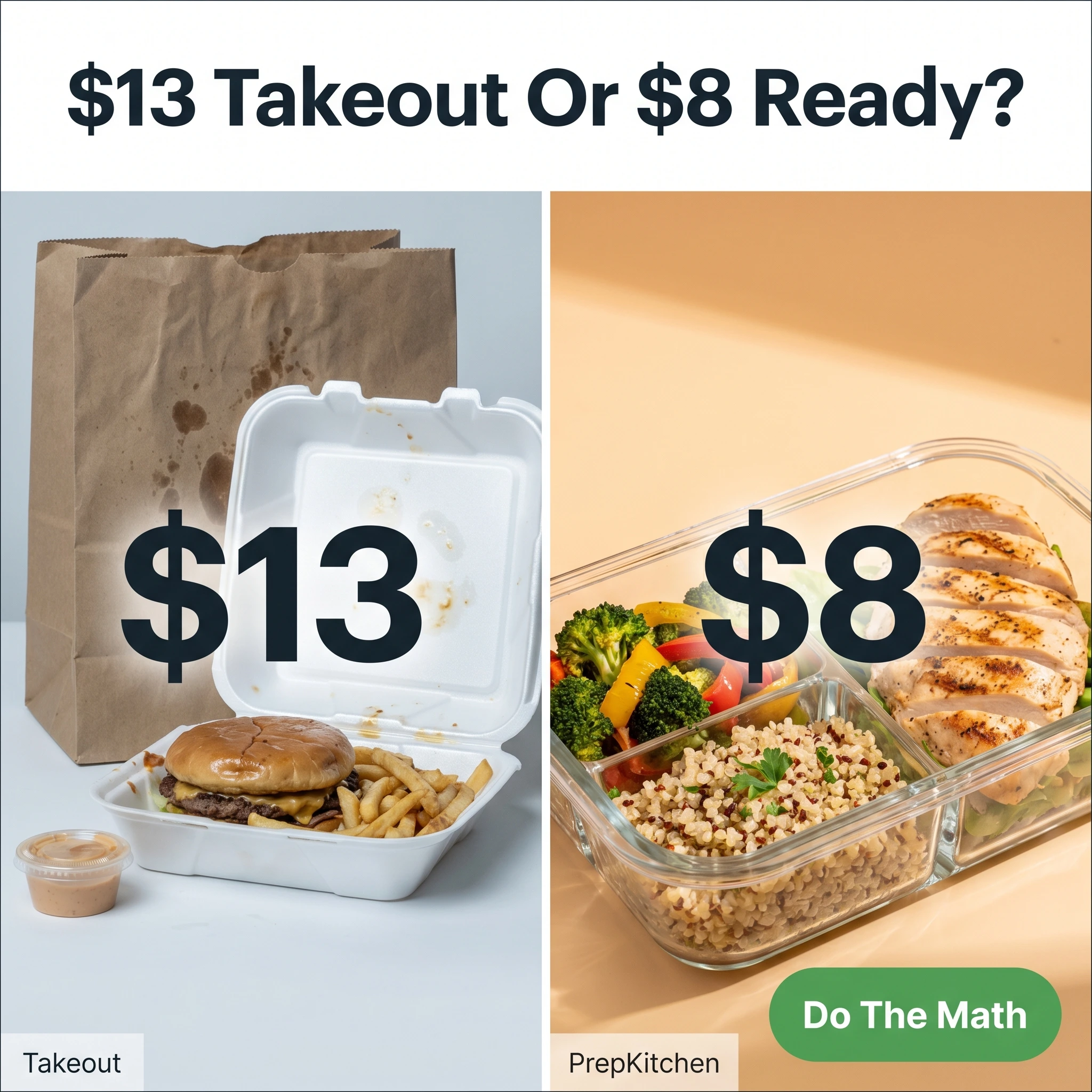
The format & angle. PrepKitchen’s split: a greasy takeout clamshell at $13 on the left, a fresh prepped container at $8 on the right. Value and us-versus-takeout.
Who it targets. Warm, budget-conscious users who order out too often and feel the cost.
The hook. “$13 Takeout Or $8 Ready?” It makes the value comparison a simple, daily math problem.
Why it works. The price tags turn an abstract “save money” claim into concrete numbers, and the visual contrast makes the prepped meal look like the smarter, fresher choice. It reframes the spend from “another subscription” to “cheaper than what you’re already doing.” Aimed at warm traffic that’s been weighing it, the cost case converts the price-driven buyer.
Steal it. Put a typical takeout order beside your per-meal price with honest numbers, label each side, and retarget people who visited your pricing page. Keep the math real — inflated savings claims read as a gimmick to this buyer.
4. The habit testimonial ad
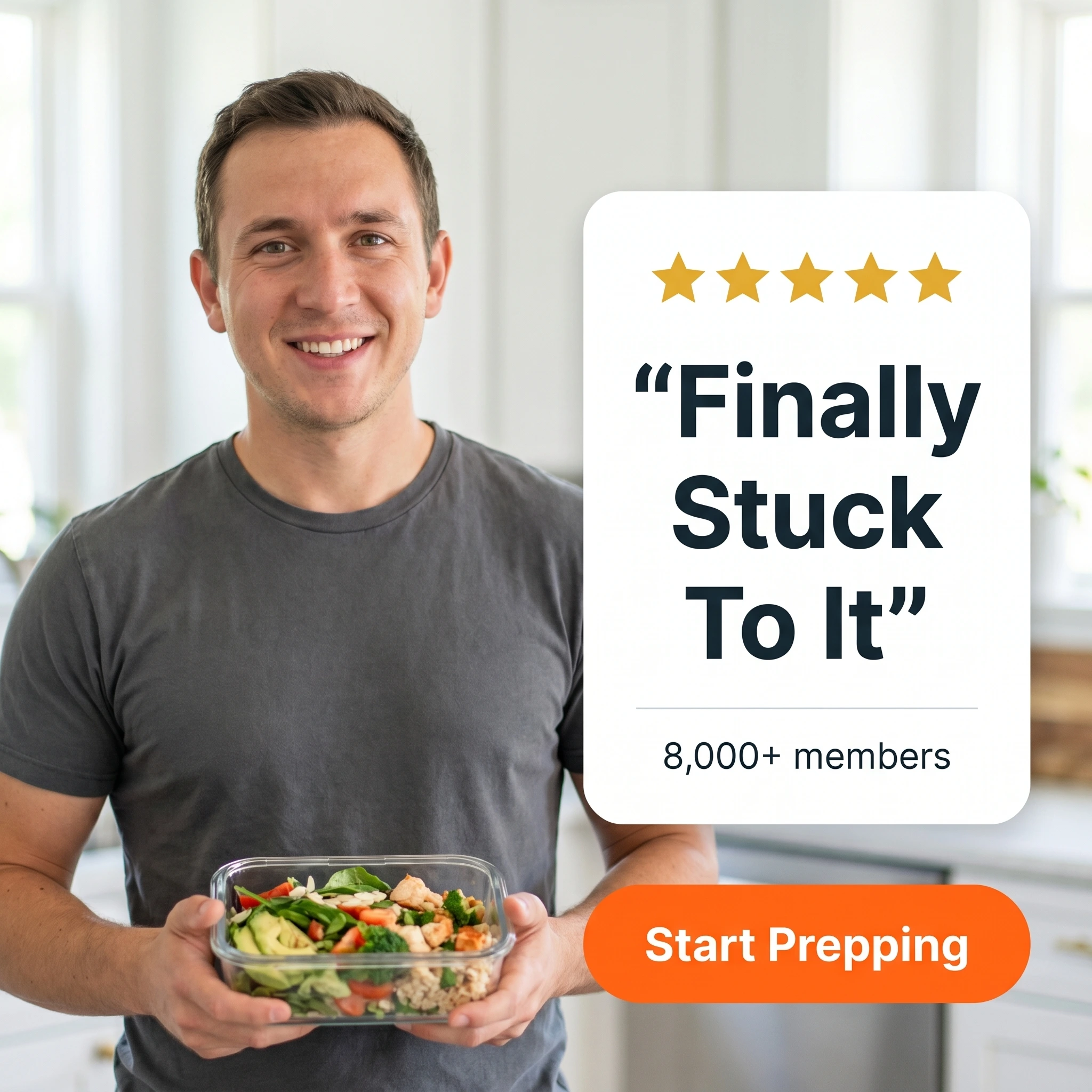
The format & angle. Freshstack pairs a happy member in his kitchen with a review card — five stars and a member count. Trust and results-adjacent proof.
Who it targets. Warm users who’ve tried and quit other plans and doubt they’ll stick with this one.
The hook. “Finally Stuck To It.” It speaks to the real failure point — consistency — without making a body or weight claim.
Why it works. Most people have abandoned a health kick, so a peer saying this one finally stuck addresses the deepest objection: “I won’t keep it up.” Framing the win as a habit rather than a transformation keeps it credible and on the right side of Meta’s health-ad rules. The member count adds proof, and the customer’s voice carries trust the brand can’t claim itself.
Steal it. Choose a review about consistency or how easy the routine is to maintain, build a clean card with five stars and your live member count, and run it to people who engaged but didn’t subscribe. Keep the framing on behavior, not appearance.
5. The first-box offer ad

The format & angle. Nourish Lab’s trial play: typography-led, the discount dominant on deep teal, no food competing. Price and value.
Who it targets. Cold first-timers curious about meal prep but unwilling to commit at full price.
The hook. “First Box, 50% Off.” A concrete, low-risk entry point to try the service.
Why it works. The trial is the hardest conversion in any subscription, so a half-price first box exists to make starting nearly costless. “Cancel anytime” removes the commitment fear that stalls signups, and once the first box proves the convenience, retention does the rest. The plain layout reads as a real deal — which is why the trial offer is the workhorse of meal prep acquisition.
Steal it. Make the discount and “cancel anytime” the biggest elements, skip the food clutter, and target cold audiences and recent non-converters. Build a strong onboarding flow so trial subscribers stick past the discounted box.
Plan a full week of ads
Convenience, dialed nutrition, real savings, a habit-that-stuck rave, and a low-risk first box — five reasons a busy scroller subscribes. The macro-tracker, the time-strapped professional, and the budget-watcher each sign up for a different reason, so the set wins trials a single “healthy meals” ad would leave on the table.
Run the grab-and-go UGC and macro hero to prospect, the cost comparison and testimonial to convert warm researchers, and the first-box offer to win the trial. Refresh menus and reviews often so a tight retargeting audience never fatigues — and keep the framing on convenience and value, not appearance.
Producing that much creative is the real constraint for a meal prep brand. Zendux builds on-brand static variants with AI and ships them to all your ad sets in one go, so a full slate is ready before the next menu drops. For on-demand cravings instead of planned weeks, the food delivery ad examples breakdown pairs with this; for goal-driven audiences, see the fitness ad examples.