5 Restaurant Ad Examples That Fill Tables
Five restaurant ad examples that turn local scrollers into bookings — a craveable UGC ad, a dish hero, a fresh-vs-frozen split, a review card, and a happy-hour offer.
Restaurant ads that fill tables win on one thing above all: they make a hungry local person picture the meal and give them a reason to act before the craving fades. Appetite stops the scroll; a clear, local, time-bound ask books the table. Below are five fictional ads — a craveable UGC moment, a hero dish, a fresh-versus-frozen comparison, a review card, and a happy-hour offer — each running its own angle in its own layout.
Key takeaways
- Appetite is the hook: a craveable shot in the first frame beats any logo or tagline for a hungry scroller.
- Local radius is the targeting — a great food ad shown 40 miles away is wasted; tighten the radius to real travel distance.
- One clear ask per ad — book, order, see the menu, claim the deal — converts better than generic awareness.
- Day-part your offers: brunch, lunch, and happy-hour creatives hit when the intent to eat is actually live.
What makes a great restaurant ad
The buyer is making one of the most impulsive decisions in commerce: where to eat, often within the next few hours. That impulsiveness is a gift — there’s no months-long consideration cycle — but it means the ad has to land appetite instantly. A blurry plate or a logo-first design loses to the next post. The first frame is the entire pitch.
Then the ad needs a job. “We’re open” is not a reason to act; “book your weekend table,” “order in 20 minutes,” or “half-price apps until 6” is. Match the ask to the moment — a brunch ad at 9 a.m. Saturday, a happy-hour ad at 4 p.m. weekday — and the impulse converts. The visual-first, local nature of this niche is why restaurants show up so often in Meta advertising examples by industry.
Production quality is itself a quality signal here — diners read a sharp, well-lit dish as a sharp, well-run kitchen. But polish without appetite is decoration, the same trap the best static ads avoid by leading with a single craveable focal point. The five concepts below cover the angles that fill a calendar.
| Ad | Format | Angle | Funnel stage | Best for |
|---|---|---|---|---|
| Brunch moment UGC | UGC | Experience/crave | Cold | Brunch & weekend spots |
| Smoked-brisket hero | Dish hero | Craft/quality | Cold/warm | BBQ, steak, signature dishes |
| Fresh-vs-frozen split | Comparison | Us-vs-old-way | Warm | Pizzerias & made-from-scratch |
| Best-tacos testimonial | Testimonial | Trust/social proof | Warm | Highly-reviewed local spots |
| Happy-hour offer | Offer | Value/urgency | Cold/warm | Slow-daypart traffic |
1. The brunch-moment UGC ad
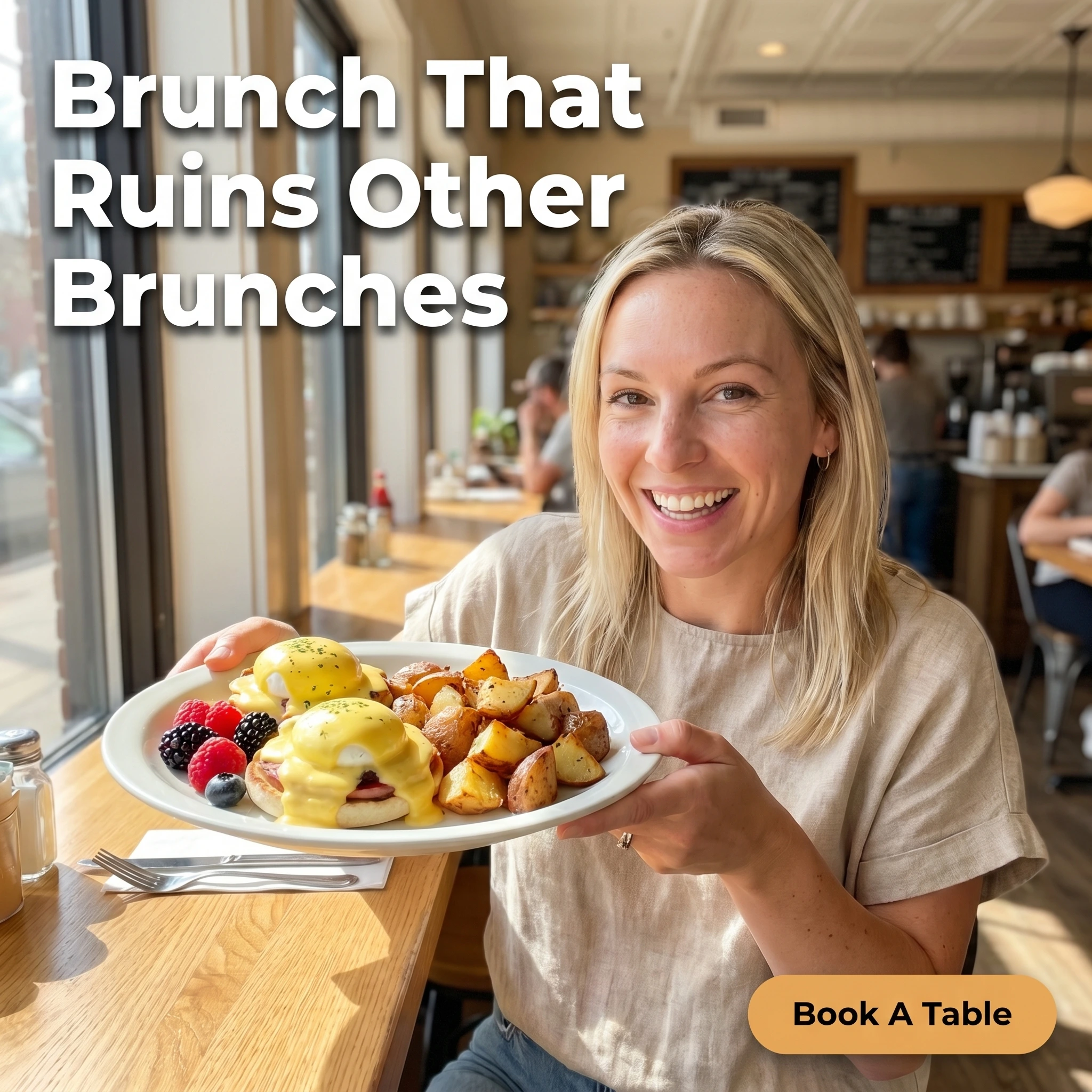
The format & angle. A Tavola Nine diner at a sunny table, lifting a loaded brunch plate toward the camera like she’s about to post it. Shot like a real guest’s photo. Experience and crave over polish.
Who it targets. Cold local scrollers deciding where to go this weekend — the brunch-plans crowd within easy travel distance.
The hook. “Brunch That Ruins Other Brunches.” Playful, confident, and it frames the meal as a standard the rest of the city can’t meet.
Why it works. A guest-style photo reads as a recommendation, not an ad, which is exactly how restaurant discovery actually spreads. The candid framing and natural light trigger appetite without looking staged, and the cocky headline gives the post a shareable line. For a hungry weekend scroller, that combination converts to a booking faster than any branded plate shot.
Steal it. Capture your signature brunch plate in real window light at a real table, phone-camera style. Headline it with a line a delighted regular might actually say, then send the click to your reservation page.
2. The smoked-brisket hero ad
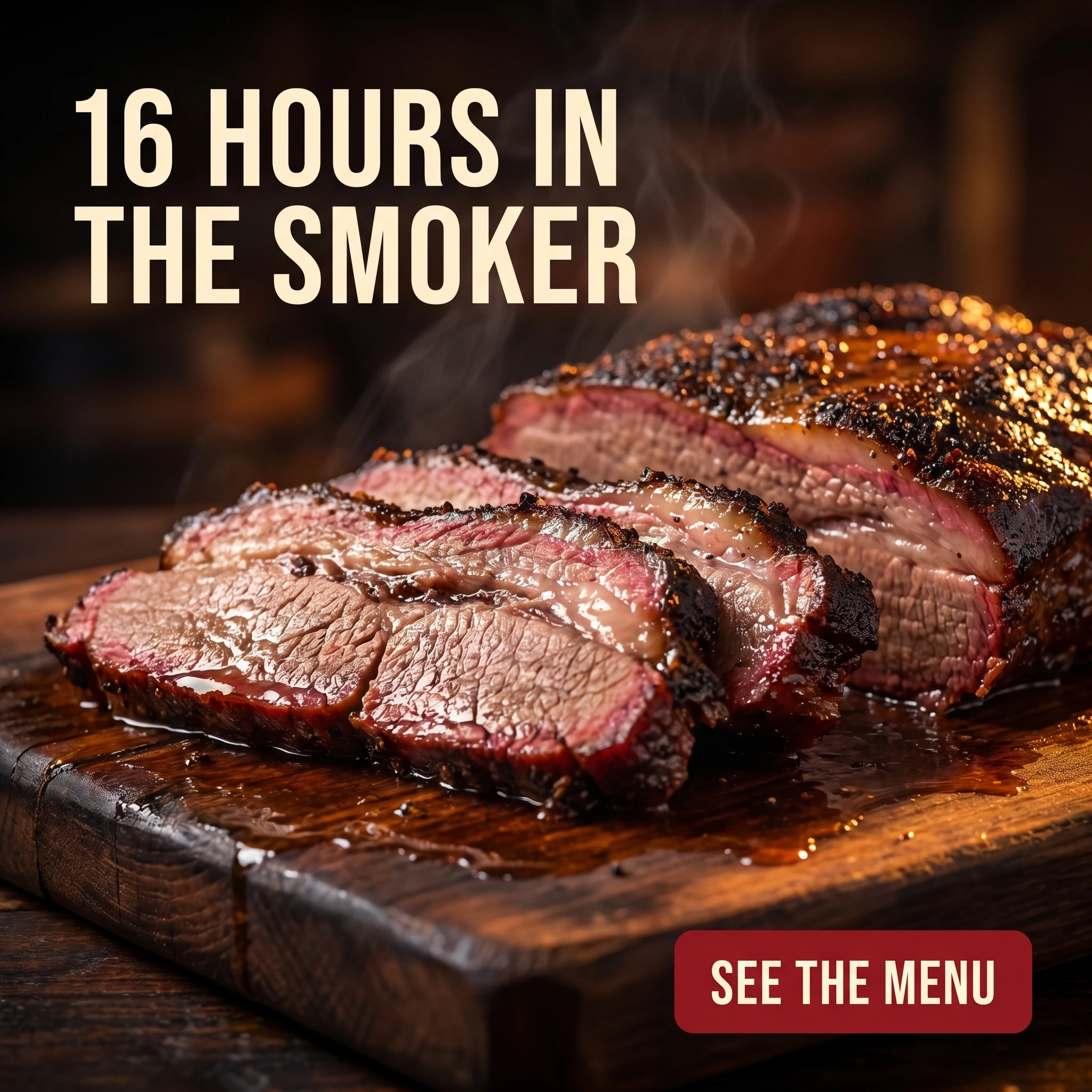
The format & angle. Smokehaus Six’s signature shot: a close, glistening slice of brisket showing the smoke ring and bark, dramatic light, one plate, one focal point. Craft and quality.
Who it targets. Cold and warm diners who chase a specific craving — the “I want barbecue tonight” searcher and the weekend planner.
The hook. “16 Hours In The Smoker.” A number that signals effort and authenticity, the things barbecue buyers actually judge on.
Why it works. A tight, well-lit hero of a single dish is pure appetite — the smoke ring and bark do more selling than any adjective. Pairing it with a specific process number (“16 hours”) communicates craft, which is the trust currency in slow-food categories where “authentic” is overused. It pulls craving-driven diners who already know what they want and just need to choose where to get it.
Steal it. Shoot your signature dish close, in hard light that shows texture, with nothing else competing in frame. Headline the one process detail that proves the work — hours, temperature, technique — not a generic “delicious.”
3. The fresh-vs-frozen split ad
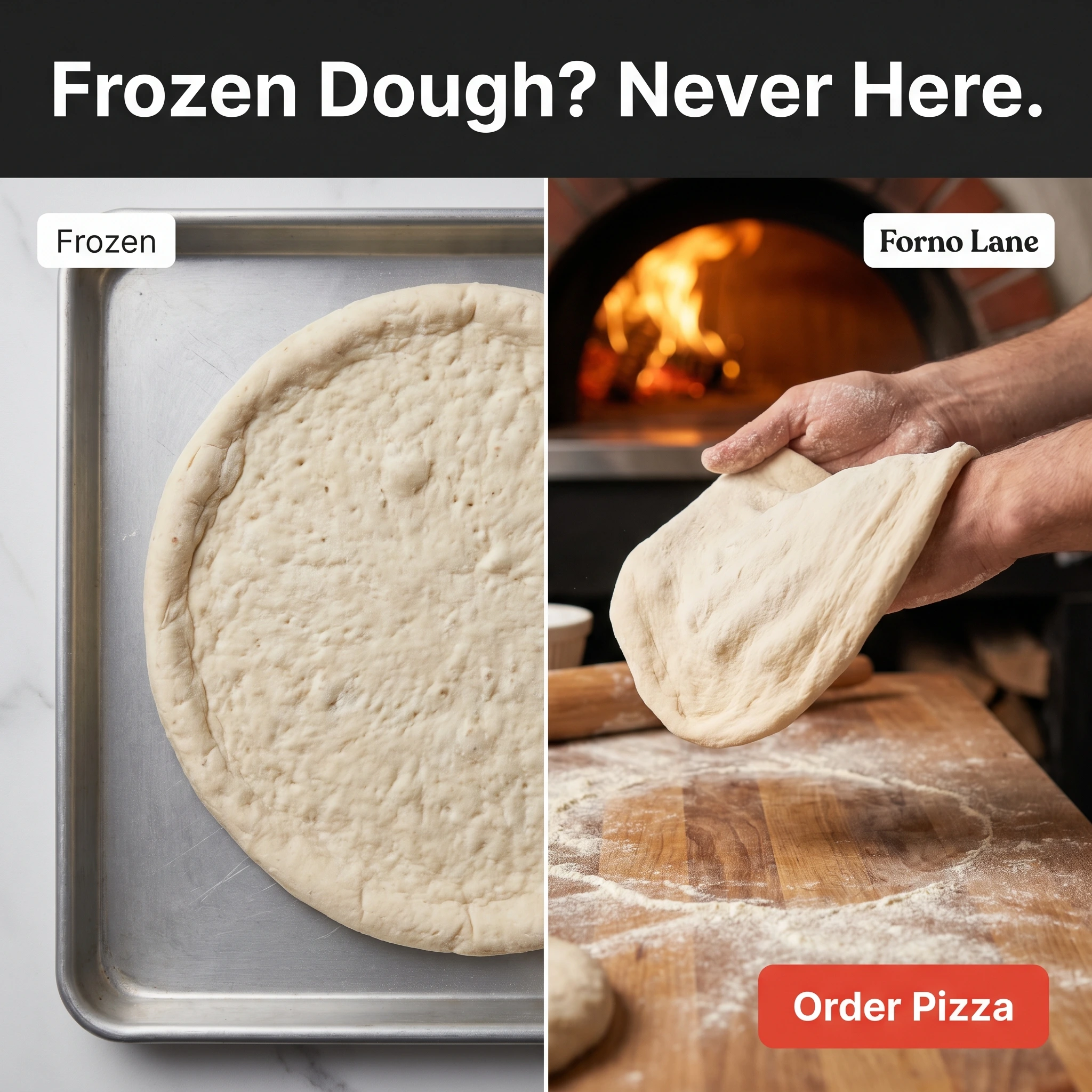
The format & angle. Forno Lane’s split: a sad pre-made frozen crust on the left, hands stretching fresh dough on the right. Us-versus-the-chain-way.
Who it targets. Warm local diners who care about quality and have been burned by mediocre chain pizza — the made-from-scratch seeker.
The hook. “Frozen Dough? Never Here.” It names the category’s dirty secret and positions the restaurant as the exception.
Why it works. The comparison format works because every pizza eater has had the disappointing frozen-crust version, so the left half lands instantly. Contrasting it with hands working real dough makes the right half feel like a reward and proves the craft claim visually instead of asserting it. It converts warm diners who already suspect the local chain isn’t worth it and want a reason to switch.
Steal it. Photograph your actual prep — hands in the dough, the wood fire, fresh ingredients — beside the mass-produced version it replaces. Let the contrast carry it; keep the headline to one sharp line about what you refuse to do.
4. The best-tacos testimonial ad
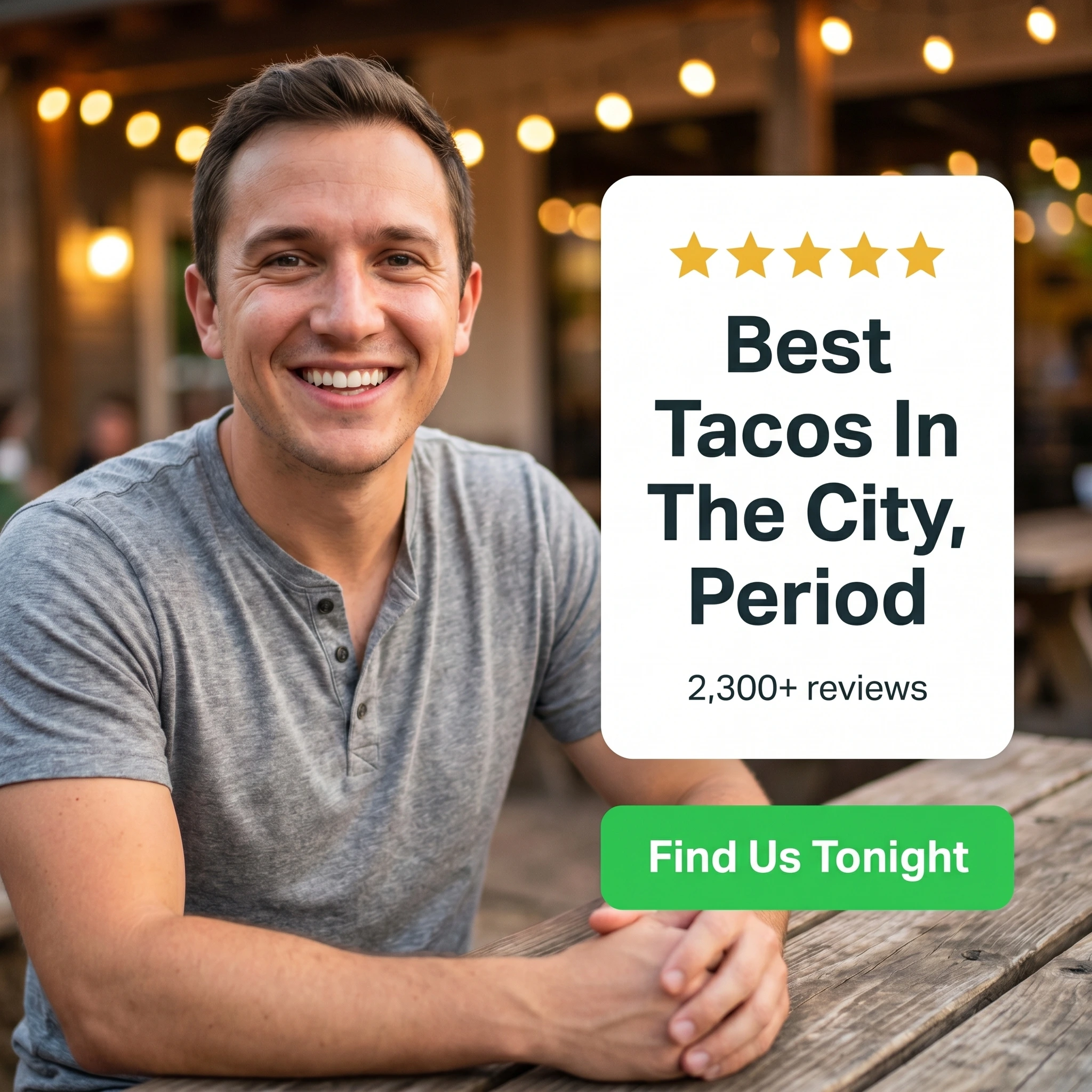
The format & angle. Casa Verde pairs a happy regular with a review card — five stars, a real review count, and a no-hedge quote. Trust and social proof.
Who it targets. Warm diners comparing a few local options — people who’ve heard of the spot and need the nudge that it’s worth the trip.
The hook. “Best Tacos In The City, Period.” A superlative in a customer’s voice, which lands harder than the restaurant saying it about itself.
Why it works. Where-to-eat decisions are heavily social — people trust other diners over the establishment. A confident review with a visible count converts that into “everyone says this place is the one,” which is the deciding input when two options look similar. Putting the claim in a customer’s mouth dodges the credibility problem a restaurant has when it brags about itself.
Steal it. Find your most quotable five-star review, build the card around it with your live rating count, and use a real customer photo. Keep the quote verbatim — the slightly raw phrasing of a real review is what makes it believable.
5. The happy-hour offer ad
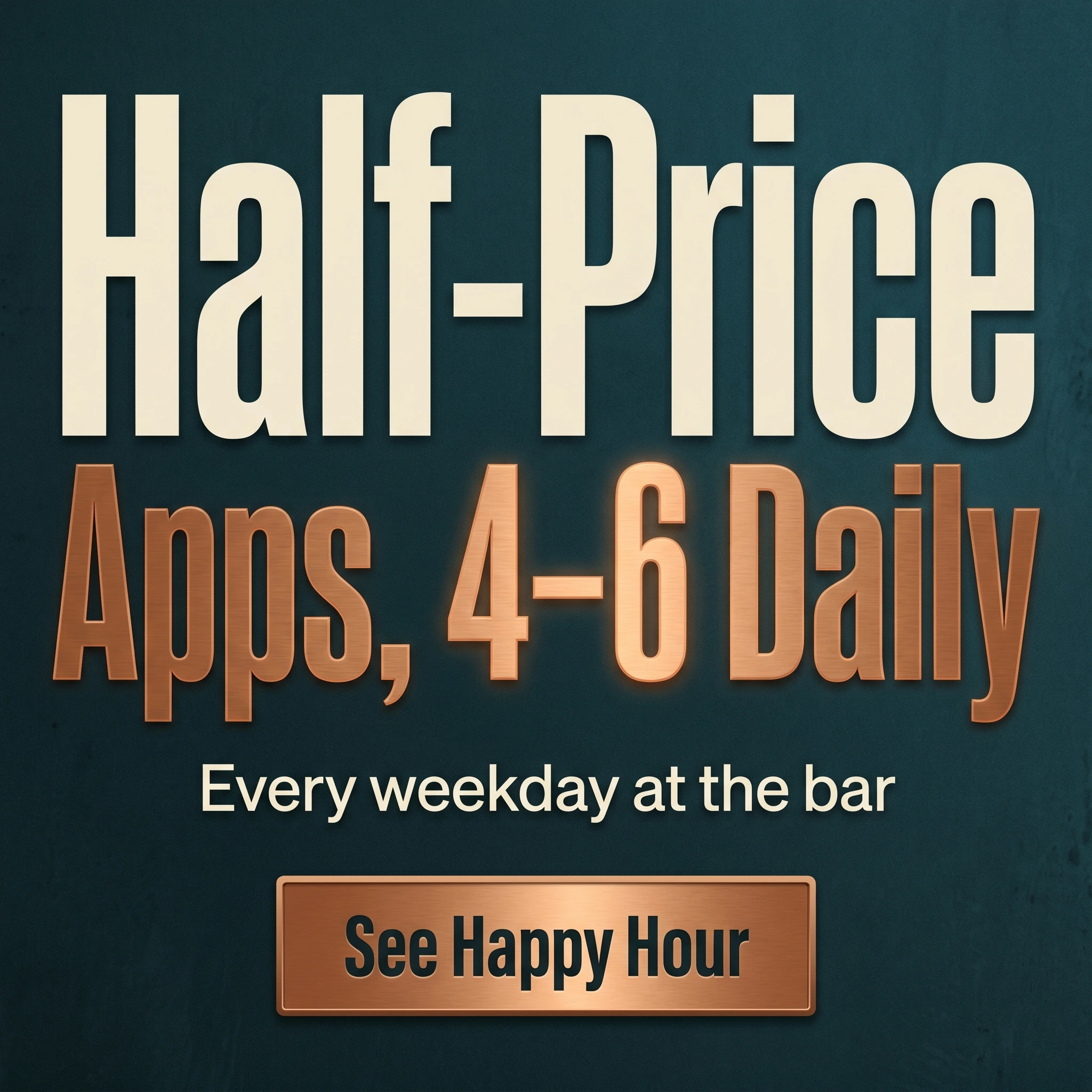
The format & angle. The Copper Spoon’s slow-daypart push: typography-led, the deal and the window dominant, a warm color block — no plate competing with the message. Value and urgency.
Who it targets. Cold and warm locals deciding on after-work plans — the deal-aware crowd looking for a reason to stop in.
The hook. “Half-Price Apps, 4–6 Daily.” A clear discount and a specific daily window that tells the diner exactly when to show up.
Why it works. A typography-only offer reads as a genuine local deal, not a brand campaign, and the explicit time window turns a vague “sometime” into a plan for today. Day-parting the creative to run in the early afternoon hits people right as they decide where the evening goes. It’s the concept that turns dead 4-to-6 hours into covers and pulls in the price-sensitive diners the other ads can’t.
Steal it. Make the deal and the daily window the two biggest elements, run the ad in a tight radius scheduled to deliver before happy hour starts, and rotate the featured special so regulars don’t tune it out.
Serve the full menu of ads
Crave, craft, a quality contrast, a rave, and a deal — five reasons a hungry local picks you tonight. Feeding Meta that range pays off because its Andromeda retrieval engine sifts far more ads per auction than the old system did, matching each angle to the diners it suits instead of spending the budget on five near-identical plates.
Schedule by appetite: discovery heros and UGC all day, the comparison and review to nudge the undecided, the happy-hour deal delivered in the hours right before service. Rotate dishes and offers with the season so the feed matches the kitchen and the creative never wears out on a small local audience.
Shooting and writing that much every week is the bottleneck. Zendux turns out on-brand static creatives with AI and bulk-launches them across ad sets, so a fresh week of craveable concepts is ready before the dinner rush.