Personal Trainer Ad Examples: 5 Ads Worth Stealing
Five personal trainer ad examples that book clients on Meta: a coach UGC, a studio hero, a performance-stat callout, a client review, and a free-session offer.
Personal trainer ad examples that book real clients sell the coach’s judgment and accountability, not a body transformation — both because that’s what a coaching client is paying for, and because Meta’s personal-health policies restrict before/after imagery and “fix your flaw” framing. A trainer isn’t selling access to equipment; they’re selling a person who builds the plan and makes sure it happens. The five fictional ads below each prove that value a different way, in a different format, so Meta can match each to the client it fits.
Key takeaways
- You’re selling a guide, not a gym. The trainer’s credibility and accountability are the product — lead with the human.
- Performance and adherence beat physiques. Reps, strength, and “I finally stuck with it” convert skeptics and stay inside Meta’s health policies.
- Higher cost per lead is fine. One coaching client is worth many memberships, so qualify hard and optimize for booked consults, not cheap clicks.
- Five distinct angles give the auction five client types to find — personalization, accountability, proof, adherence, and a low-risk first step.
What makes a great personal trainer ad
The buyer isn’t a beginner looking for a gym — it’s someone who has tried gyms, apps, and willpower and watched all three fail. They’ve concluded the missing ingredient is someone watching. That’s the insight a trainer’s ads should sell against.
Two principles, plus a constraint.
Make the trainer the hero. People hire a coach the way they hire any expert — on trust in the individual. A recognizable face, a clear point of view, and visible expertise do more than any gym backdrop. The ad should feel like meeting the coach.
Prove the mechanism, not the miracle. The believable promise isn’t a dramatic body change; it’s that this time it sticks. Accountability, custom programming, and weekly check-ins are the mechanism, and a client’s words are the proof. Tight, specific copy carries this — worth studying how to write ad copy and headlines at scale before you launch.
The constraint is compliance. Meta restricts body-transformation before/afters and negative self-image framing, so the usual before/after slot here becomes a performance-stat callout — progress measured in pull-ups, not pounds. If you sell floor access and memberships rather than one-on-one coaching, the buyer is different enough that the gym ad examples lineup is the better template; the broader fitness ad examples set covers studios and classes.
| Ad | Format | Angle | Funnel stage | Best for |
|---|---|---|---|---|
| Coach-to-camera UGC | UGC | Expertise/personalization | Cold | Trainers building a personal brand |
| Brand-hero coach | Hero | Accountability | Cold/warm | Premium one-on-one studios |
| Pull-up progress callout | Stat callout (swapped before/after) | Proof of method | Cold/warm | Online and hybrid coaching |
| Adherence testimonial | Testimonial | Trust/adherence | Warm | Coaches with strong client reviews |
| Free first session offer | Offer | Price/low risk | Warm/retargeting | Booking consults and assessments |
1. The coach-to-camera UGC ad
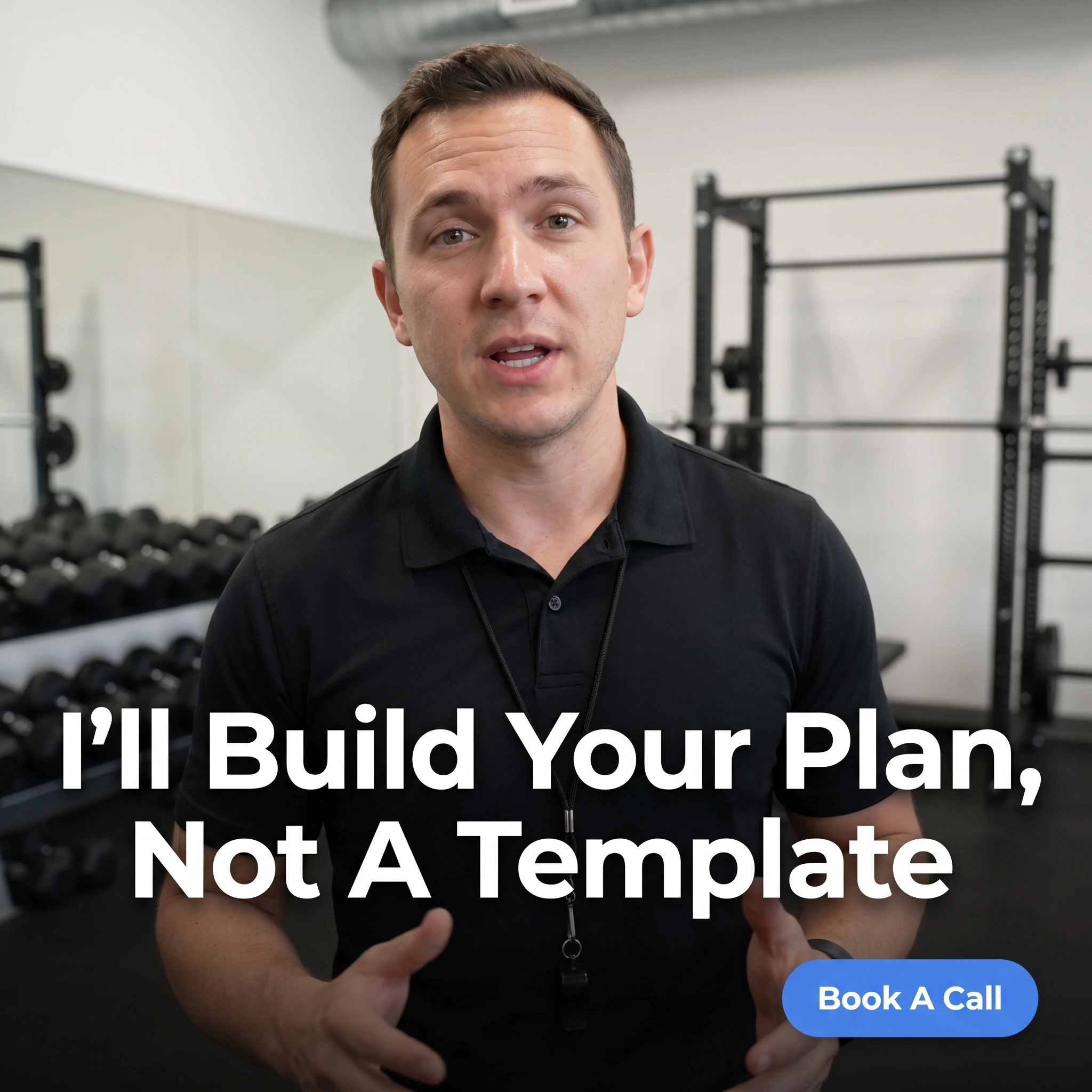
The format & angle. A phone-video still from Cole Marsh Coaching: the trainer talking straight to camera on the gym floor, mid-sentence. Expertise and personalization, delivered face-first.
Who it targets. Cold prospects who’ve failed with generic apps and cookie-cutter plans — people who suspect the problem was the one-size-fits-all approach.
The hook. “I’ll Build Your Plan, Not A Template.” A direct shot at every app they’ve already quit.
Why it works. Coaching is bought on trust in the person, and talking-head UGC introduces that person in the only format the feed reads as honest. The promise of a custom plan answers the exact reason their last attempt failed. Slightly imperfect framing signals a real coach, not an agency.
Steal it. Film yourself on a phone explaining how you’d approach a typical client’s goal — no script, real gym noise. Headline the personalization. People hire the coach they feel they’ve already met.
2. The brand-hero coach ad

The format & angle. Method Personal Training’s polished hero: the coach standing in a clean private studio against a bold backdrop, studio-lit and composed. Accountability, sold as professionalism.
Who it targets. Cold and warm prospects shopping for premium one-on-one coaching — buyers willing to pay for structure and attention.
The hook. “Your Coach Checks In Weekly.” The accountability mechanism stated as a promise.
Why it works. Where the UGC ad feels like a friend, this one feels like hiring a professional — the polish signals the price point and pre-qualifies the click. “Checks in weekly” names the specific thing missing from every solo attempt: someone who notices when you skip. One coach, one focal point, no body in frame.
Steal it. Shoot a clean portrait in your training space against one strong color, dressed like the expert you are. Headline the accountability ritual — the check-in, the weekly review — that clients can’t give themselves.
3. The pull-up progress callout ad
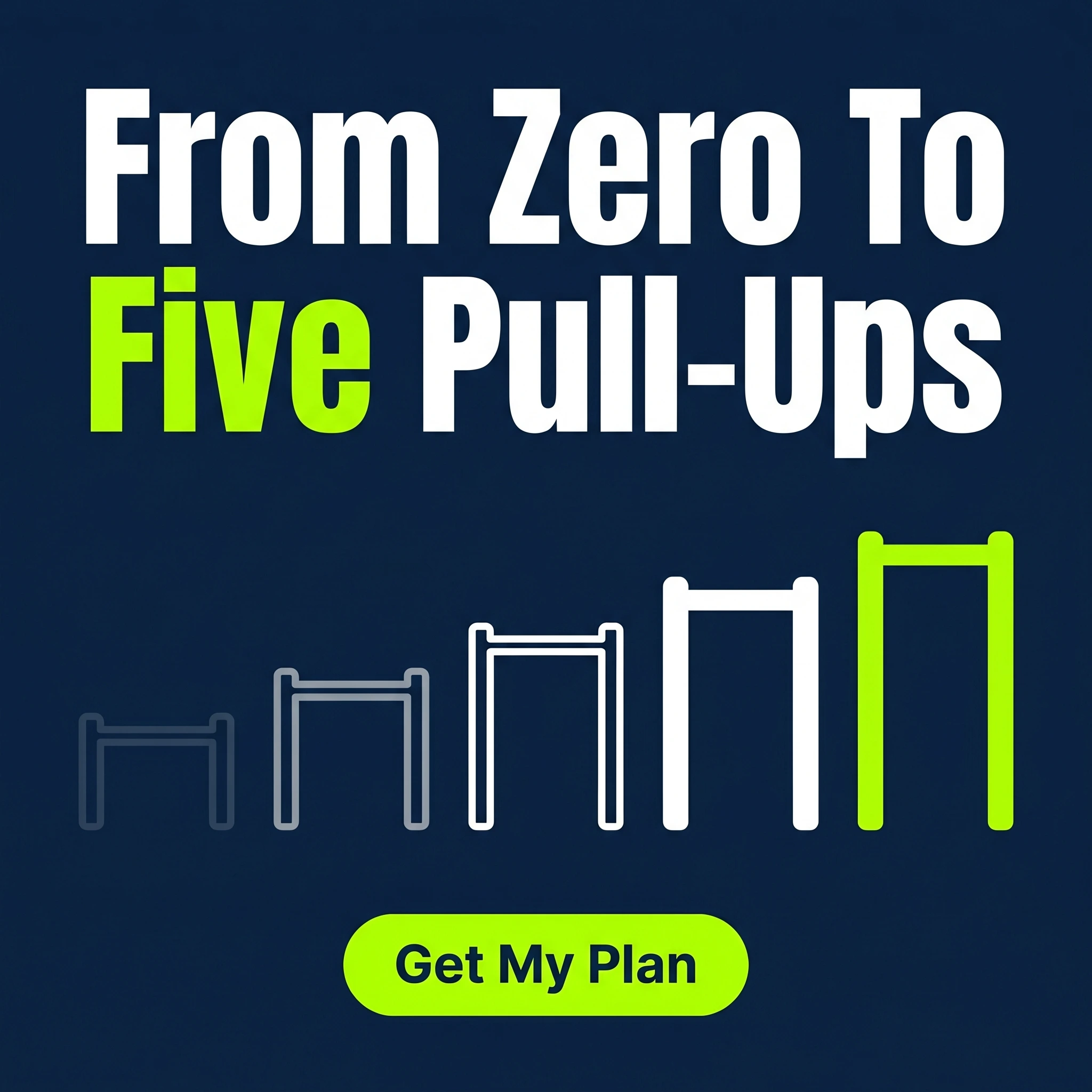
The format & angle. Tempo Strength Coaching runs a typography callout with a simple rising progress graphic. This slot is normally a before/after — swapped because body-transformation splits violate Meta’s personal-health policies. The transformation shown is a capability, not a body.
Who it targets. Cold and warm prospects who want a concrete, measurable result and distrust vague “get in shape” promises.
The hook. “From Zero To Five Pull-Ups.” A specific, earnable milestone anyone can picture.
Why it works. Performance goals are both more motivating and more compliant than appearance goals — nobody gets rejected for showing pull-ups. A capability milestone reframes coaching as skill-building rather than punishment, which appeals to the achievement-minded client. With no body in frame, the ad is policy-bulletproof.
Steal it. Pick a measurable client win — pull-ups, a first 5K, a deadlift number — and make it the headline over a clean progress graphic. Numbers you can stand behind beat any before/after you can’t run.
4. The adherence testimonial ad

The format & angle. Pace & Form Coaching’s testimonial card: a relaxed client after a session, a quote card with five stars and “120+ clients coached.” Trust, focused on the thing clients actually fear.
Who it targets. Warm prospects who’ve booked-then-bailed before — people whose doubt isn’t the trainer, it’s themselves.
The hook. “First Plan I Ever Stuck With.” The outcome that matters more than any physical one.
Why it works. Every prospect who’s quit a program privately fears they’ll quit again. A peer saying this was the one that stuck speaks straight to that fear, and frames the win as adherence — which is both what they want and what Meta’s policies allow. The client count signals a track record, not a one-off.
Steal it. Ask clients why they kept going this time, not what they lost. Photograph a real client relaxed after training, add a count of clients coached, and let the words carry the proof.
5. The free first session offer ad
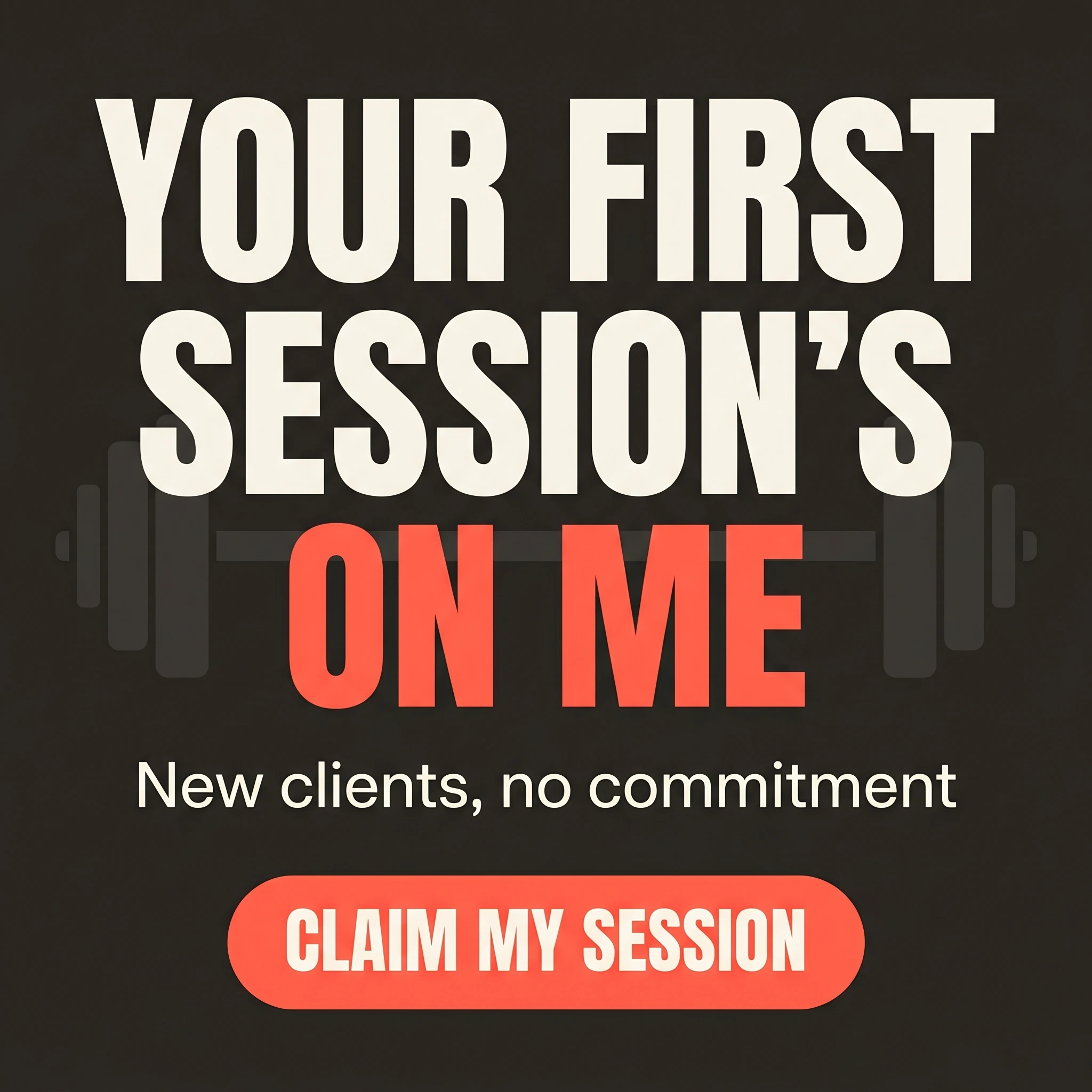
The format & angle. Groundwork PT’s typography offer: a bold headline on a clean dark background, one supporting line, a button. Risk-reversal as the whole message.
Who it targets. Warm and retargeting audiences — people who’ve met the coach and need one low-stakes step to commit.
The hook. “Your First Session’s On Me.” A free trial of the relationship, not just the workout.
Why it works. The real barrier to hiring a trainer isn’t the monthly rate — it’s not knowing if you’ll click with this person. A free first session lets both sides find out, which converts fence-sitters who’d never buy a package cold. “No commitment” removes the fear of a hard upsell. Typography-only ships fast and stands out among gym photos.
Steal it. Offer the first session free to warm traffic only, name “no commitment” in the support line, and treat the session as a sales conversation in disguise. The goal is a booked slot, not a click.
Book the calendar, not just clicks
A face, a studio, a progress chart, a client’s words, and a free first session — five trainer ads with no overlap in look or claim. That diversity is what Meta’s auction rewards: its delivery now sifts far more creative per impression, matching each angle to a different client mindset, where five variations on one promise would compete for the same handful of people.
For a solo trainer, the move is to launch all five, see which angle books consults that turn into clients — not just cheap leads — then rebuild next month from the winner plus two new angles. Keep the free-session offer always-on for warm traffic, and judge everything by cost per booked client, because that’s the only number that pays your rent.
The hard part is producing enough distinct creative to feed that system without a design hire. Zendux generates on-brand static variants with AI and bulk-launches them across your ad sets — so one coach runs the testing volume of a studio with a marketing department behind it.
Book out your coaching calendar →
Want to generate winning personal trainer ads? Start using Zendux AI