5 Gym Ad Examples That Fill Memberships
Five gym ad examples built to win local members on Meta: a 24/7 UGC shot, an equipment hero, a no-contract comparison, a no-judgment review, and a $0-down offer.
Gym ad examples that fill memberships sell access and friction-removal, not transformations — both because that’s what gets locals through the door, and because Meta’s personal-health policies restrict body-focused before/afters and “fix your flaw” framing. The five fictional ads below each dismantle a different reason someone hasn’t joined yet — hours, contracts, intimidation, price — and every one uses a different format, so the auction can match each objection to the people who hold it.
Key takeaways
- Friction is the real objection. Hours, contracts, enrollment fees, and gym anxiety decide sign-ups more than motivation ever does.
- Body-transformation creative is a policy trap — Meta restricts before/afters and flaw-framing, so this lineup swaps that slot for a no-contract comparison.
- Real members beat fitness models. An ordinary person on the floor lowers intimidation; a cover physique raises it.
- Five distinct angles give the auction five member profiles to find — a single “best” ad quietly caps your lead flow.
What makes a great gym ad
The growth audience for a gym isn’t the gym rat — they already train somewhere. It’s the person who’s been meaning to join for months and keeps talking themselves out of it. Their blockers are practical and emotional at once: no time, locked into nothing, worried they’ll look like they don’t belong.
That points to two principles, plus a constraint.
Sell the logistics, because the logistics are the objection. “Open 24 hours,” “no contract,” “$0 to start” — these answer the actual questions running through a non-joiner’s head. Equipment and amenities matter, but only once the friction is gone.
Cast real members, not athletes. The unspoken fear is social: will I be the most out-of-shape person there? An approachable, ordinary member in the creative answers that visually, where a sculpted model makes it worse.
The constraint is compliance. Meta’s personal-health policies restrict body-transformation before/afters and any creative implying the viewer is inadequate, so the classic before/after slot here becomes a no-contract comparison — a transformation of the deal, not the body. For how other regulated niches handle this, the breakdowns in Meta advertising examples by industry are a useful reference. (And if you coach clients one-on-one rather than sell floor access, the buyer is different enough that the personal trainer ad examples lineup will fit better.)
| Ad | Format | Angle | Funnel stage | Best for |
|---|---|---|---|---|
| Midnight-floor UGC | UGC | Convenience/access | Cold | 24/7 gyms near shift workers |
| Open-floor equipment hero | Hero | Amenities/no-wait | Cold | Gyms with new or ample equipment |
| No-contract comparison | Comparison (swapped before/after) | Us-vs-the-old-way | Cold/warm | Month-to-month memberships |
| No-judgment testimonial | Testimonial | Trust/belonging | Warm | Welcoming community gyms |
| $0-down offer | Offer | Price/low risk | Warm/retargeting | Membership conversion pushes |
1. The midnight-floor UGC ad
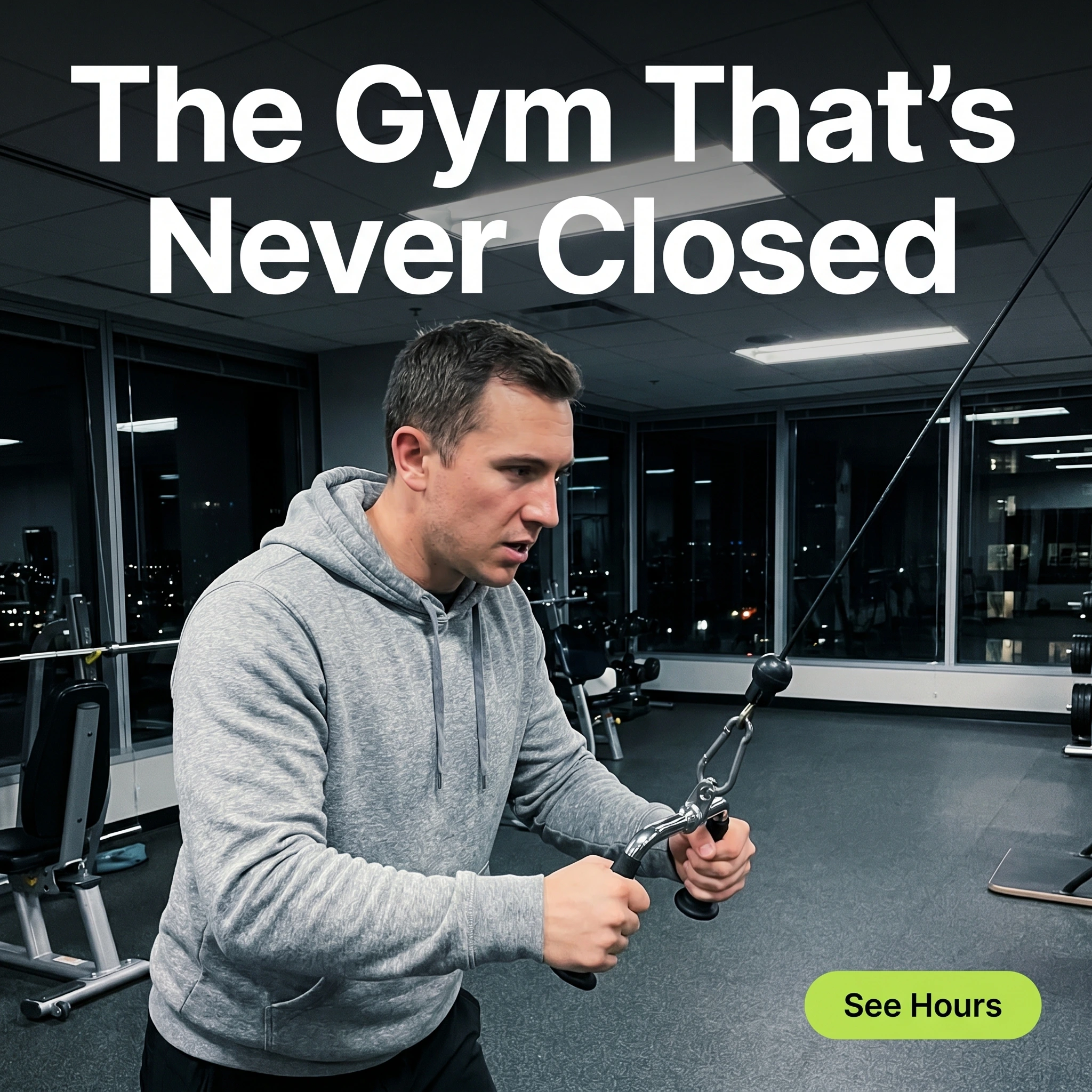
The format & angle. A grainy phone shot from Bayline Fitness: one member mid-set on an empty floor, city dark through the window. Access as the entire selling point.
Who it targets. Cold prospects with non-standard schedules — shift workers, nurses, parents, anyone whose “I don’t have time” really means “not during your hours.”
The hook. “The Gym That’s Never Closed.” A promise about when, which is the objection underneath the time excuse.
Why it works. The empty late-night floor is proof, not a claim — it shows the access instead of asserting it. UGC styling makes it read as a member’s flex rather than the gym’s pitch, and it sidesteps body imagery entirely. The whole ad is policy-safe logistics with an aspirational edge.
Steal it. Have a real night-owl member shoot a quick phone photo mid-workout at 11 p.m., dark windows visible. Headline the access, not the burn, and run it tight around shift-heavy neighborhoods.
2. The open-floor equipment hero ad
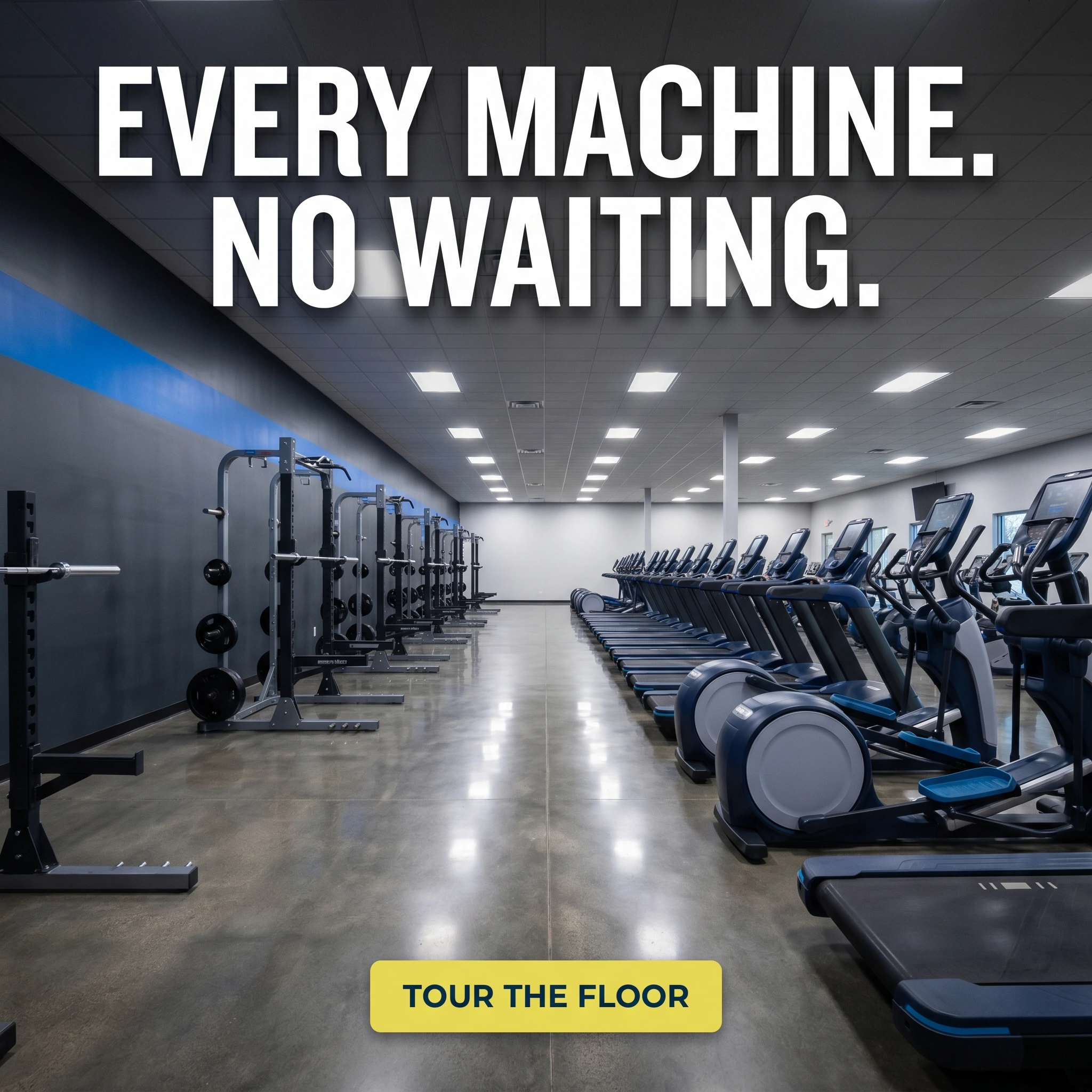
The format & angle. Granite Row Gym’s floor, shot like a showroom: rows of clean machines in deep perspective, no crowd, no people. Amenities sold through spaciousness.
Who it targets. Cold shoppers comparing gyms, especially refugees from packed budget chains where every machine has a line.
The hook. “Every Machine. No Waiting.” A jab at the most universal gym complaint.
Why it works. An uncrowded floor signals the thing budget chains can’t promise — room to actually train. The clean, single-focal composition reads at thumbnail size, and the premium look quietly justifies a higher price than the $10 competitor. Showing equipment, not bodies, keeps it clear of personal-health policy.
Steal it. Shoot your floor at its emptiest — early morning, lights up — down a long line of equipment for depth. Headline the no-wait promise that your busier competitors can’t make.
3. The no-contract comparison ad
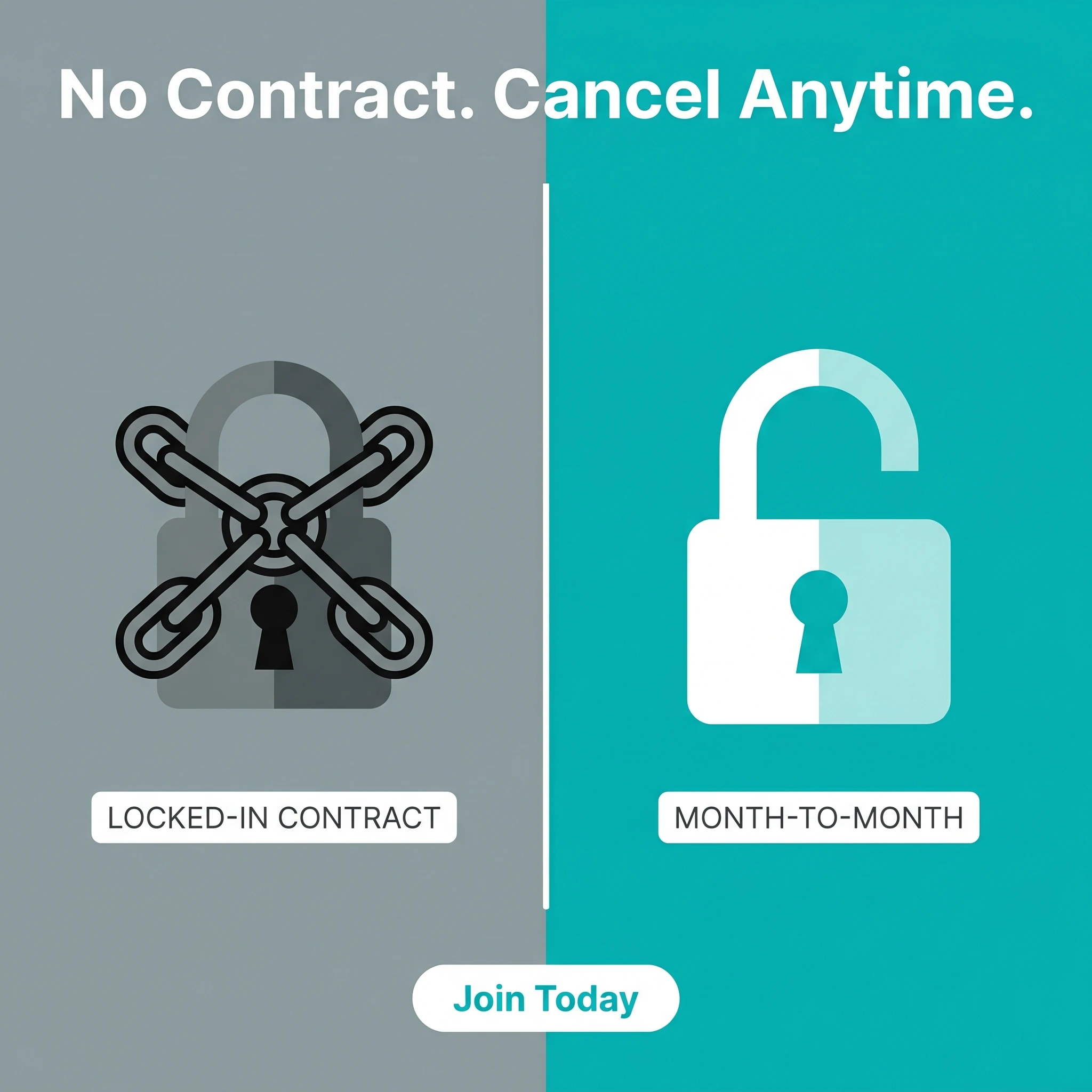
The format & angle. Open Door Fitness runs a clean split: a padlock-and-chain “locked-in contract” on the left, an open padlock “month-to-month” on the right. This slot would normally be a before/after — swapped here because body-transformation splits violate Meta’s personal-health policies. The transformation shown is the contract terms, not a physique.
Who it targets. Cold and warm shoppers burned by a past gym that wouldn’t let them quit — a huge, resentful segment.
The hook. “No Contract. Cancel Anytime.” The single biggest unspoken fear in the category, named and removed.
Why it works. Contract dread is the industry’s inherited reputation problem; addressing it head-on flips the gym from “another trap” to “the honest one.” The split format argues visually without a body in frame, so it’s bulletproof on policy. The padlock metaphor lands before the words are even read.
Steal it. Contrast your terms against the old way — locked vs. open, year vs. month — in a clean two-panel layout. Make “cancel anytime” the headline; it’s worth more than any discount.
4. The no-judgment testimonial ad
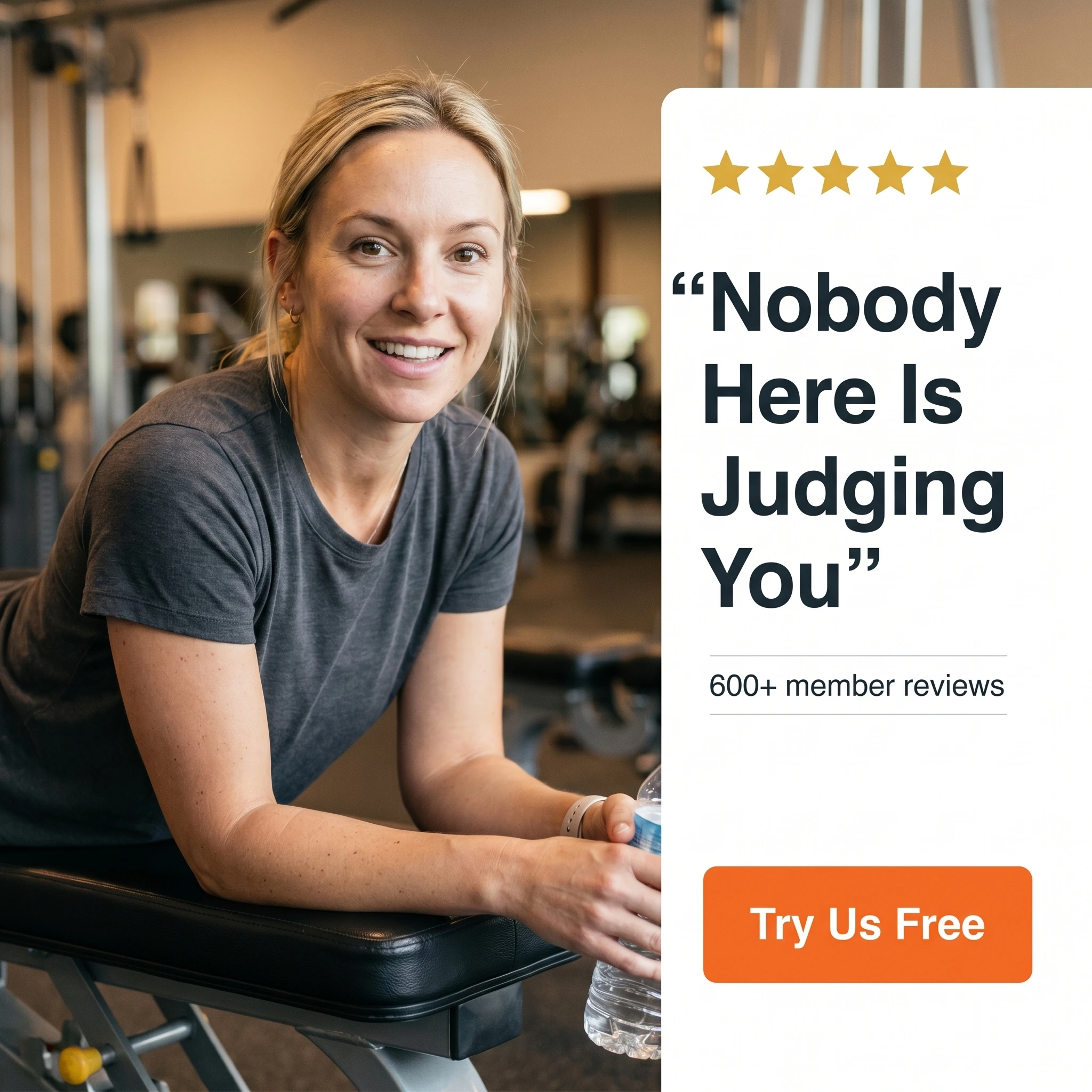
The format & angle. Westgate Strength’s testimonial: a relaxed, ordinary member resting on a bench beside a quote card, five stars, “600+ member reviews.” Belonging, told by a peer.
Who it targets. Warm traffic stuck at the door-fear stage — people who clicked, looked, and decided they’re “not ready” to be seen.
The hook. “Nobody Here Is Judging You.” Reassurance about the environment, not a comment on the viewer’s body.
Why it works. The blocker for new members is social, not physical, and a relaxed everyday member answers it the moment the ad loads. The quote reframes the gym as a place rather than a test — which both converts the anxious middle and keeps the creative clear of body-image policy. The review count turns one person’s comfort into a crowd’s.
Steal it. Photograph an ordinary member mid-rest, not mid-PR — approachability is the casting brief. Pull a quote about how the room feels, add the review count, and aim it at warm traffic.
5. The $0-down offer ad

The format & angle. Pulsefield Gym’s typography offer: a huge “$0” on electric blue, a no-contract supporting line, a button. The deal is the visual.
Who it targets. Warm and retargeting audiences — people who’ve seen the gym and need the last excuse removed.
The hook. “Join For $0 Down.” The enrollment fee is the quiet deal-killer, and zero erases it.
Why it works. Most gym hesitation dies at “what’s it cost to start?” Leading with zero down clears that hurdle, and “no contract, cancel anytime” stacks a second risk-reversal on top. Typography-only ships in an afternoon and pops in a feed full of gym selfies. It’s a closer, not an introducer — which is why it belongs on warm audiences.
Steal it. Make the “$0” the focal point, name the contract relief in the support line, and show it only to people who’ve already met your brand. Swap the background color when results dip — promo ads fade fastest.
Fill the floor, not the feed
A late-night floor, an empty machine line, an open padlock, a relaxed member, and a zero — five gym ads with nothing in common but the logo. Meta’s delivery is built to reward that: it can weigh far more creative per auction than it used to, so each angle reaches the locals it resonates with, while five versions of one idea crowd into the same pocket and fatigue together.
The practical move for a single-location gym: launch all five this month, watch which angle drives booked tours and joins rather than cheap clicks, then build next month from the winner plus two new angles. Keep the $0-down offer always-on for warm traffic and rotate the rest. The gyms growing on paid social right now ship fresh creative weekly, not once a quarter — and they track cost per joined member, not cost per lead.
Production is the bottleneck. Zendux builds on-brand static variants with AI and bulk-launches them across your ad sets in one sitting — enough output to keep five angles live without a marketing hire.
Want to generate winning gym ads? Start using Zendux AI