Car Dealership Ad Examples: 5 Ads Worth Stealing
Five car dealership ad examples that drive showroom traffic — a no-haggle UGC ad, an inventory hero, a trade-in pitch, a financing testimonial, and a deadline offer.
Car dealership ads that fill the showroom win on one thing the category is short on: trust shown before the buyer ever walks in. Inventory and price earn the click; a believable, low-pressure promise earns the lead. What follows is five fictional-but-realistic ads — a no-haggle UGC handoff, an inventory hero, a trade-in pitch, a financing testimonial, and a month-end offer — no two sharing a layout or a claim.
Key takeaways
- Dealership distrust is the conversion tax: creative that signals no-pressure, transparent buying lowers it before the buyer arrives.
- Give one low-friction ask per ad — value a trade, get pre-approved, see a payment — not “come to the showroom.”
- Trade-in and financing are Meta’s best lead engines, because they’re decisions buyers research quietly before they ever visit.
- Run five distinct angles so Meta can match each to the right in-market buyer instead of bidding your own near-duplicates against each other.
What makes a great car dealership ad
The buyer is somewhere on a months-long path: idly browsing, actively shopping, or ready to sign. Search captures the active shopper typing a model name. Meta owns the long middle — the people forming opinions about which dealership to trust and which offer to act on. That’s where most of the margin decision gets made, because by the time someone searches your inventory, they’ve usually already picked who they’ll buy from.
The proof that matters is anti-sleaze. Every car ad fights the showroom stereotype — the haggle, the four-hour close, the surprise fees. Creative that names and defies that experience (“no haggle,” “approved in minutes,” a real customer’s relief) converts because it speaks to the actual fear. Generic “huge selection, great prices” copy reads as exactly the dealership the buyer is wary of. The same trust-first discipline runs through the broader Meta ad examples library; auto just has a steeper distrust curve to climb.
Keep one promise and one ask per ad. A trade-in valuation, a pre-approval, a payment figure — each is a small commitment that hands Meta a clear conversion event and the buyer a reason to engage now. The five concepts below cover the angles that matter.
| Ad | Format | Angle | Funnel stage | Best for |
|---|---|---|---|---|
| No-haggle key handoff UGC | UGC | Us-vs-old-way | Cold | Trust-led stores |
| Weekend inventory hero | Service hero | Dream/aspiration | Cold/warm | New & used inventory pushes |
| Trade-in value split | Comparison | Price/value | Warm | Trade-in lead capture |
| Approval testimonial | Testimonial | Credibility/trust | Warm | Subprime & financing focus |
| Month-end offer | Offer | Urgency/price | Cold/warm | End-of-month sales targets |
1. The no-haggle key handoff UGC ad

The format & angle. A Rivermark Auto salesman handing keys to a customer on the lot, shot like a phone snap a happy buyer posted. The whole point is how ordinary and relaxed it looks. Us-versus-the-old-dealership-way.
Who it targets. Cold local buyers who dread the dealership experience more than they dread the price — most of them.
The hook. “No Haggle. No Hassle.” Two short claims that attack the two things buyers hate most about car shopping.
Why it works. The candid handoff is proof of a painless transaction, not a promise of one — no staged showroom, no glossy banner. In a category defined by buyer suspicion, a relaxed real-moment photo does what a price never can: it signals the experience will be easy. That lowers the activation energy to engage, and the anti-haggle hook gives skeptics permission to trust this store over the stereotype.
Steal it. Get permission to photograph a real delivery moment on the lot with a phone. Headline the specific friction your store removes — no haggle, no doc fees, no four-hour wait — in plain, short words.
2. The weekend inventory hero ad
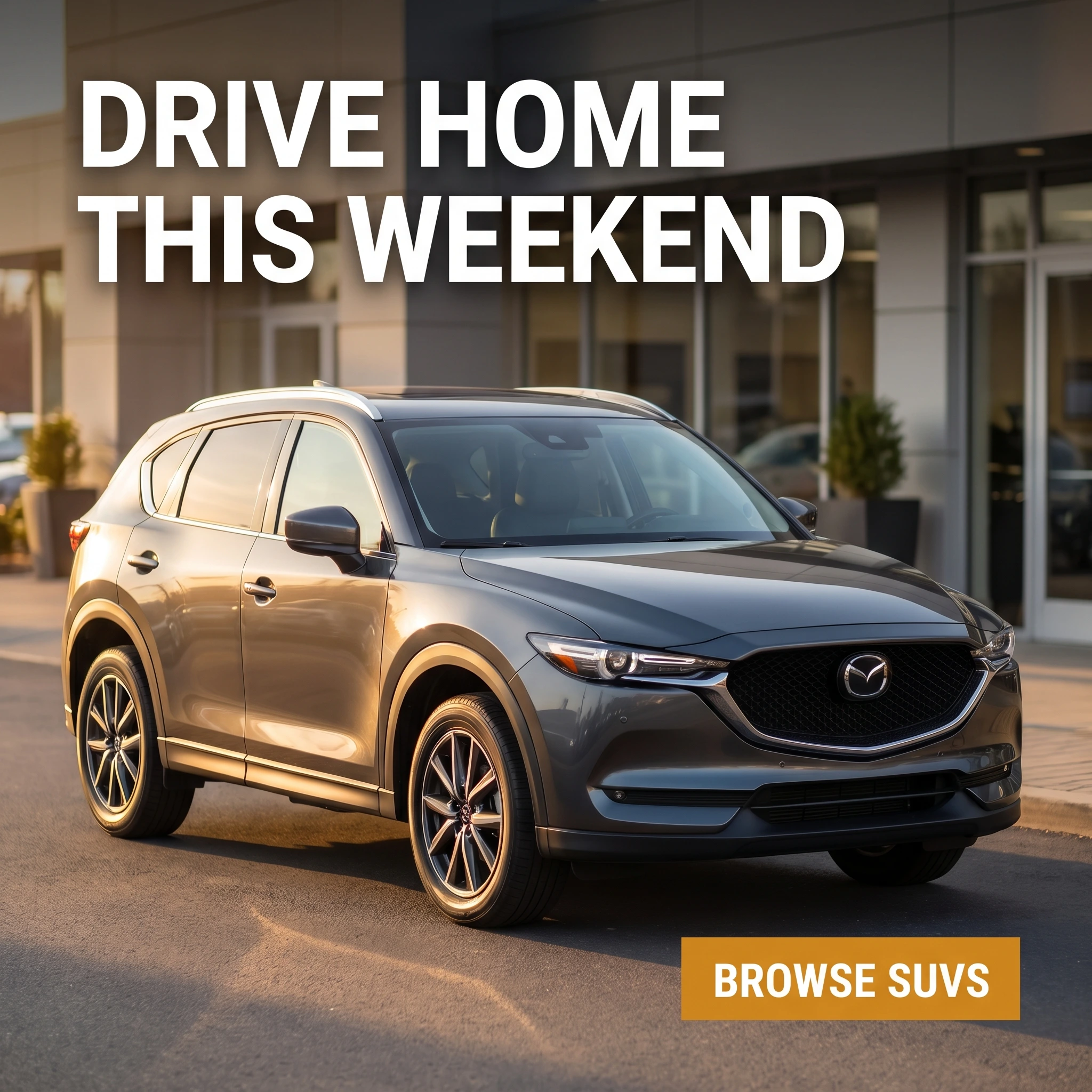
The format & angle. Crestline Motors’ hero: a clean midsize SUV shot at golden hour, one vehicle, one focal point, aspirational but grounded. Dream outcome — the keys in your hand by Sunday.
Who it targets. Cold and warm in-market shoppers browsing a segment — the “we need a bigger vehicle before the road trip” household.
The hook. “Drive Home This Weekend.” It compresses the timeline and makes the purchase feel immediate and achievable, not months away.
Why it works. Inventory ads usually drown the viewer in five vehicles and a price grid. A single clean hero with a tight crop reads as desire, not a spec sheet, and the timeline headline converts daydreaming into a near-term plan. Golden-hour lighting does the aspiration work without staging anything fake — it’s still the actual car on the actual lot.
Steal it. Shoot your hottest in-stock segment leader at golden hour, one vehicle, clean background. Headline the speed-to-ownership, and send the click to that segment’s inventory page, not the homepage.
3. The trade-in value split ad
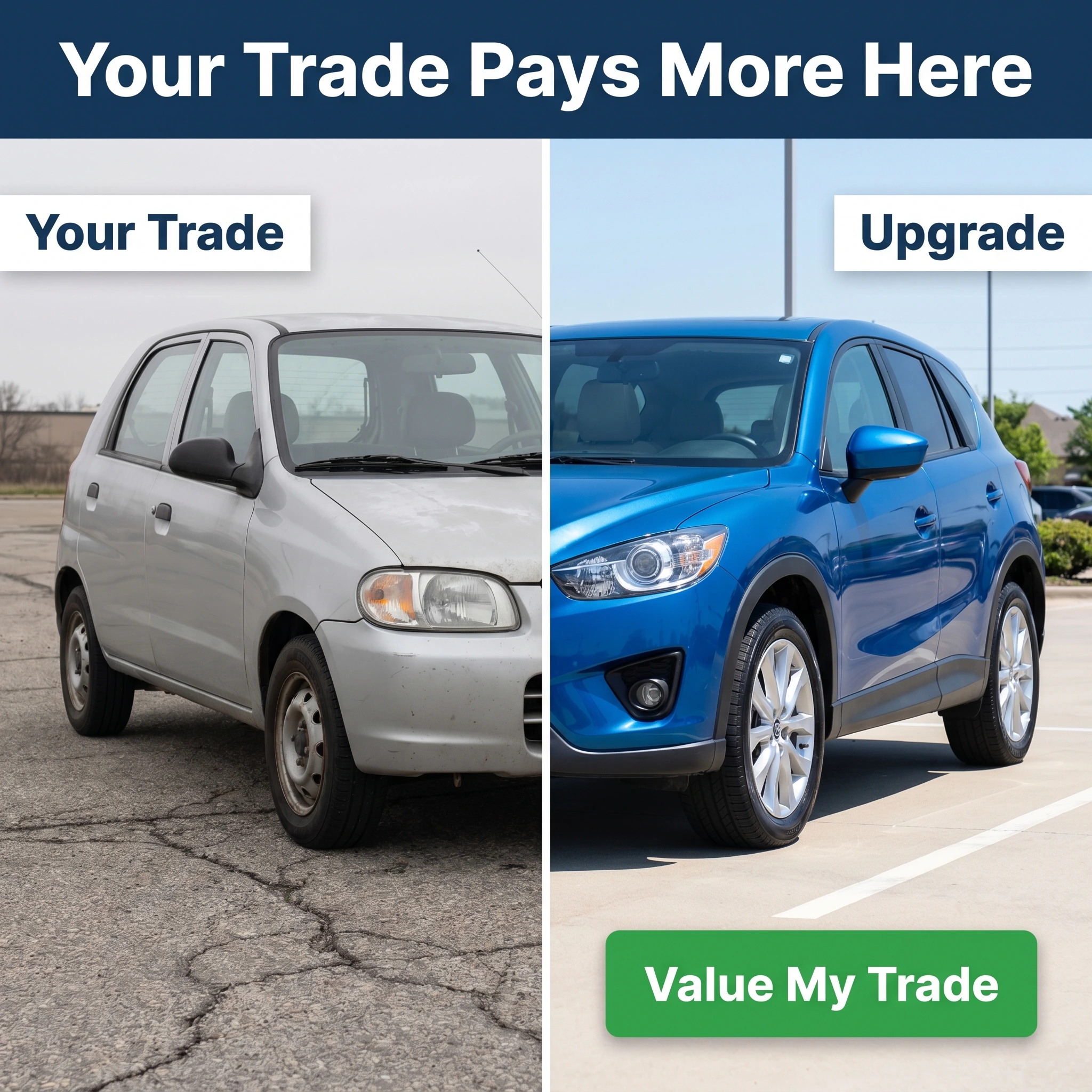
The format & angle. Oakmont Auto Group’s split: a buyer’s older car on the left, a newer model on the right, a value figure bridging them. Price and value, aimed at the trade.
Who it targets. Warm shoppers sitting on a vehicle they could trade — people who’d upgrade if the trade math worked.
The hook. “Your Trade Pays More Here.” A direct value claim that turns the buyer’s current liability into the reason to act.
Why it works. Trade-in is the most reliable lead engine a dealership has on Meta because almost every buyer has a car to move, and they all suspect they’re being lowballed. Naming a better trade value answers that suspicion and gives a concrete next step — get a number — that’s lower-commitment than buying. The split visual also plants the upgrade fantasy: this old thing becomes that new one.
Steal it. Run a trade-in valuation lead form, headline the value advantage, and route the leads to the BDC for instant follow-up. The number-request ask converts colder traffic than any “buy now” pitch.
4. The approval testimonial ad

The format & angle. Summit Drive Auto pairs a smiling customer with a review card — five stars, a real review count, and a financing-relief quote. Credibility, aimed at approval anxiety.
Who it targets. Warm buyers worried about financing — credit-challenged or first-time buyers who fear rejection more than price.
The hook. “Approved When Others Said No.” It speaks directly to the buyer who’s been turned down and turns the store’s financing into the hero.
Why it works. For a big chunk of the market, the real barrier isn’t the car — it’s whether they’ll qualify. A testimonial about approval, backed by a visible review count, converts that private fear into “people like me got approved here.” The social proof matters more than the vehicle in this segment. It’s also a clean, low-friction ask: get pre-approved, no commitment to buy.
Steal it. Pull a genuine review mentioning approval or financing relief, build the card around it with your live review count, and link to a soft-pull pre-approval form. Keep the claim honest to stay inside lending-ad rules.
5. The month-end offer ad

The format & angle. Vantage Auto’s end-of-month push: typography-led, the terms dominant, a hard month deadline, a confident color block — no vehicle photo competing with the numbers. Urgency and price.
Who it targets. Cold and warm buyers who are close but waiting for a reason — the deadline-driven and the payment-sensitive.
The hook. “$0 Down. 0% APR. June Only.” Three concrete terms and a real calendar deadline that the buyer can check against the month.
Why it works. A typography-only offer reads as a genuine promotion rather than a brand ad, and the dominant terms answer the payment-sensitive buyer’s only question fast. Naming the month makes the deadline real — month-end is also when dealerships actually need the volume, so the urgency isn’t manufactured. It’s the lowest-friction concept in the set and the one that closes the buyers the other four warmed up.
Steal it. Lead with the actual finance terms as the largest element, name the month, and run it hardest in the final ten days against retargeting pools your other ads built. Refresh the creative each month so it never goes stale.
Stock the lot with all five
Trust, aspiration, trade value, financing relief, and a deadline — together they cover a buyer’s path from idle browsing to signature. The reason to run all five instead of doubling down on last month’s winner is mechanical: Meta’s delivery favors accounts that hand it distinct creatives to match against distinct in-market buyers, and a tight local audience burns through any single ad fast as frequency climbs.
Put the cold trust and inventory ads at the top, aim the trade-in and approval offers at people who’ve already hit the site, and save the month-end deal for the final push. Swap the creative before ad fatigue flattens response — auto audiences are small enough that it arrives quickly.
Building that much fresh creative every month is where most stores stall. Zendux generates branded static ads with AI and bulk-launches them across ad sets, so the next portfolio is live before the sales meeting wraps.