Cleaning Service Ad Examples: 5 Ads Worth Stealing
Five cleaning service ad examples that book recurring clients — a time-back UGC ad, a spotless hero, a two-hour before/after, a trust testimonial, and a first-clean offer.
Cleaning service ads that book recurring clients sell one of two things, never both at once: the hours you get back, or the peace of mind that a vetted stranger is safe in your home. Square footage, eco products, and “100% satisfaction” are background noise until those two questions are answered. The five fictional ads below cover the five angles that convert in this category — time-back, the spotless outcome, the fast transformation, trust, and a low-risk first offer — each in a visibly different format.
Key takeaways
- People buy time or trust — sell the Saturday they reclaim, or the safety of a background-checked, bonded cleaner; not a vague “sparkling” promise.
- Recurring is the prize: design the ad and offer to convert a first clean into a weekly or biweekly plan, where the real lifetime value lives.
- A low-risk first offer lowers the barrier for a stranger-in-your-home purchase better than any quality claim.
- Five distinct concepts reach five different buyer mindsets; one recycled “winner” caps lead flow under Meta’s current delivery.
What makes a great cleaning service ad
The buyer is busy, a little embarrassed about the mess, and wary of letting an unknown person into their space. Two motivations drive the booking: reclaiming time, and trusting the cleaner. Your creative has to pick one per ad and answer it cleanly.
The proof that matters is human and verifiable — a real cleaner who looks careful, the words “bonded” and “background-checked,” and a review count from your actual city. Stock photos of a model in a fresh apron holding a spray bottle read as a franchise, and people booking a recurring cleaner want a specific, accountable team. One promise per ad, made checkable, is what separates the best static ads from wallpaper.
The economics reward retention. Local-service CPMs often land in the $10–$25 range, and a booking request usually costs less than a competitive cleaning-keyword click on search. Because a recurring client compounds — 50 cleans instead of one — cleaning businesses can pay more per first booking than a one-off trade can, provided the front desk books fast and the first clean earns the rebook.
| Ad | Format | Angle | Funnel stage | Best for |
|---|---|---|---|---|
| Saturdays-back UGC | UGC | Dream / time | Cold | Recurring residential plans |
| Come-home-to-this hero | Service hero | Dream outcome | Cold/warm | Premium home cleaning |
| Two-hour split | Before/after | Transformation | Warm | Move-out & deep cleans |
| Bonded-cleaner testimonial | Testimonial | Trust / safety | Warm | Recurring & first-time bookers |
| $59 first-clean offer | Offer | Price / low risk | Cold/warm | New-customer acquisition |
1. The Saturdays-back UGC ad
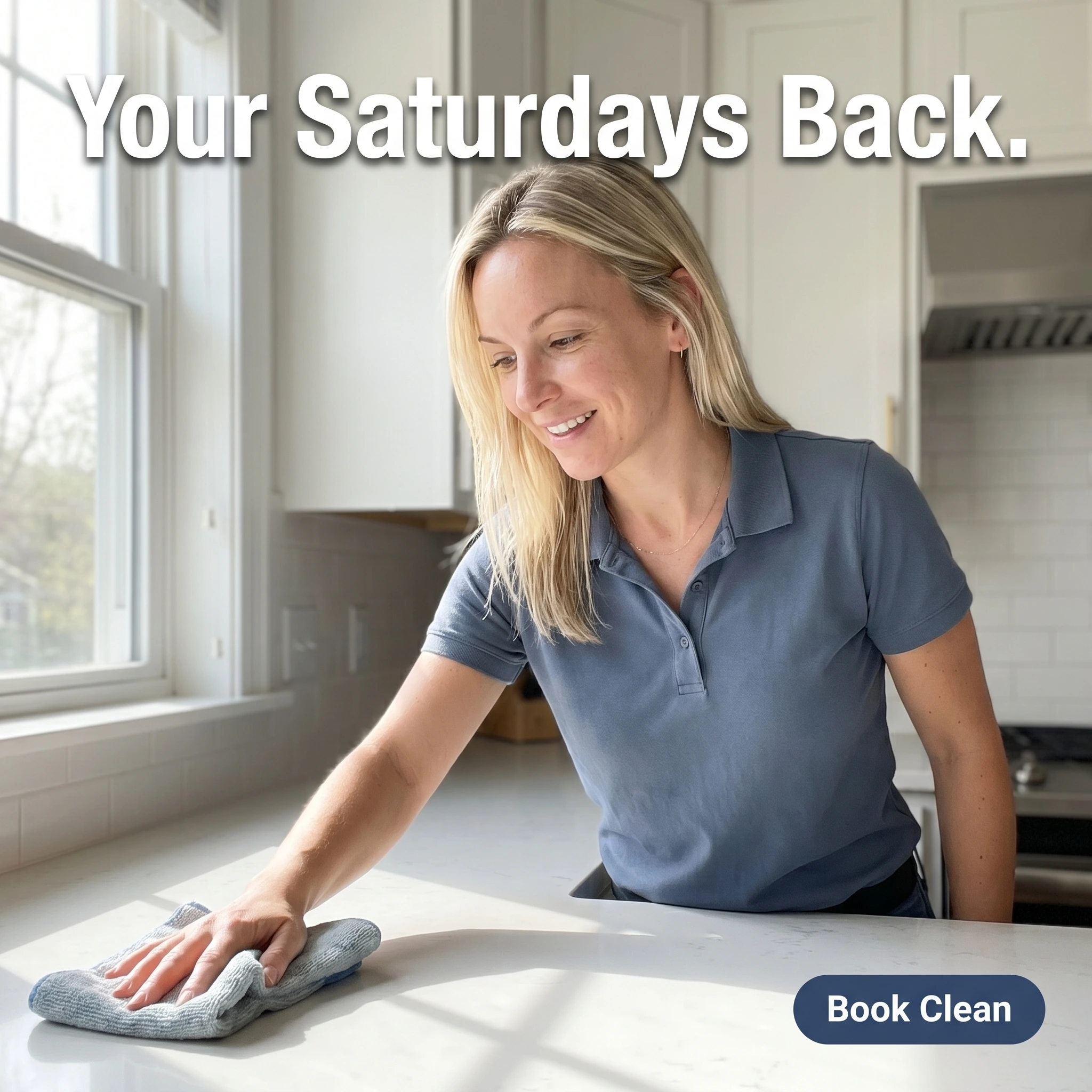
The format & angle. A Tidy Harbor cleaner wiping down a bright kitchen counter, shot like the homeowner snapped it on the way out the door. The dream outcome — your weekend, returned.
Who it targets. Cold, busy households who’ve thought about hiring help but never pulled the trigger.
The hook. “Your Saturdays Back.” Three words that name what people actually buy, which is not cleaning — it’s the time cleaning steals.
Why it works. The candid in-home frame is proof of a real person doing real work, not a catalog model. Selling the reclaimed weekend reframes the purchase from a chore expense to a lifestyle upgrade, which justifies the recurring spend. The unpolished look reads as a local team you could text, not a national booking app, and that earns the save and cheaper reach.
Steal it. Have a cleaner photographed mid-task in a real, slightly lived-in kitchen (with permission, phone camera). Headline the time customers tell you they got back — Saturdays, evenings, the dread of hosting — not your checklist.
2. The come-home-to-this hero ad
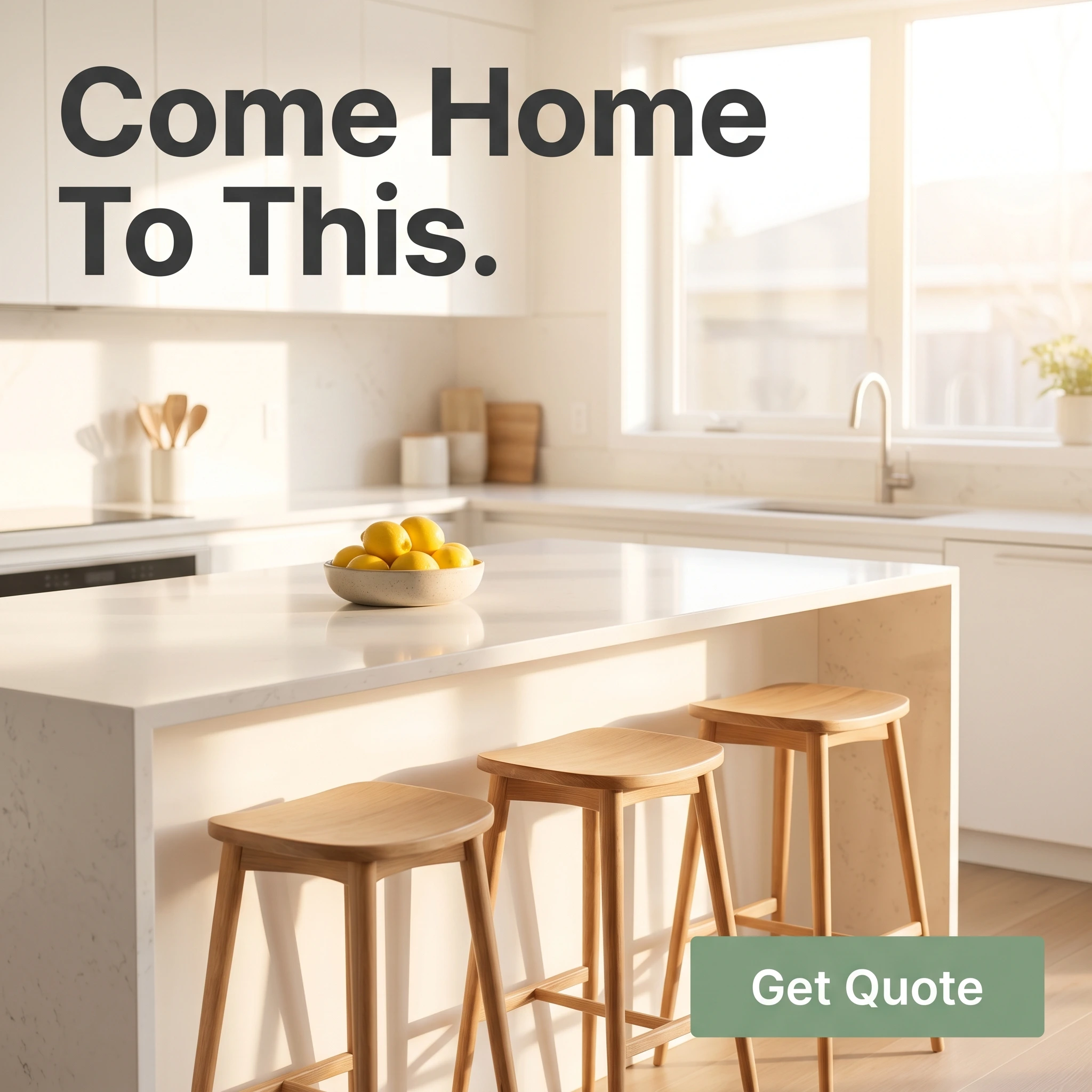
The format & angle. Lumen Home Cleaning’s hero shot: a spotless, sunlit kitchen — gleaming counters, neat stools, soft light — no people, no clutter. The pure dream outcome.
Who it targets. Cold and warm buyers who crave order and will pay for it.
The hook. “Come Home To This.” It sells the feeling of walking into a finished space, the emotional payoff of the whole service.
Why it works. People don’t shop for cleaning; they shop for the exhale of an ordered home. A flawless, aspirational interior is the destination made visible, and the absence of any person keeps the focus on the result the buyer is imagining themselves walking into. It’s the home-services equivalent of the comfort hero — outcome over process.
Steal it. Photograph your best finished kitchen or living room in golden light, styled but believable. Headline the moment of arrival, not the cleaning that produced it.
3. The two-hour split ad
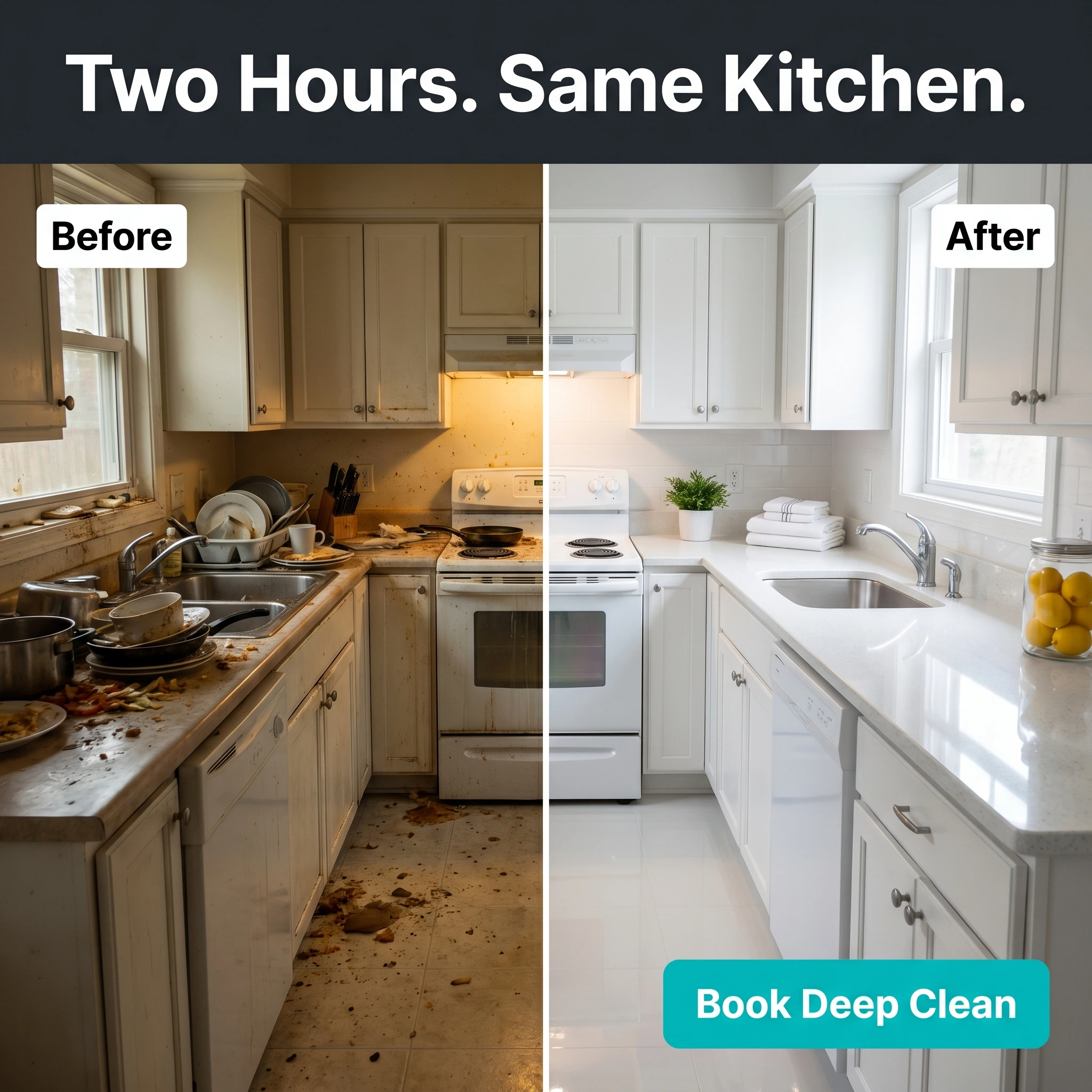
The format & angle. Fernway Cleaning’s transformation: a cluttered, grimy kitchen on the left; the same kitchen spotless and styled on the right. Cleaning’s signature before/after.
Who it targets. Warm buyers booking a move-out, deep, or post-construction clean — the jobs where the transformation is dramatic.
The hook. “Two Hours. Same Kitchen.” The time stamp turns the visual contrast into a concrete promise.
Why it works. Cleaning is the rare service where the before/after is genuinely jaw-dropping, and the format leans into the category’s natural strength. The left frame triggers recognition or relief (“not as bad as mine”); the right frame sells competence. Adding a realistic time — two hours, not “fast” — makes the result feel achievable and bookable rather than staged.
Steal it. Shoot one room before and after from the same angle on every deep clean. Pair the contrast with an honest time, and you’ll have an endless library of proof to rotate before fatigue sets in.
4. The bonded-cleaner testimonial ad

The format & angle. Maven Clean: a relaxed homeowner in her living room beside a quote card, five stars, “1,200+ cleans.” Trust and safety, told in a customer’s words.
Who it targets. Warm audiences — site visitors weighing who they’d actually let into the house.
The hook. “Background-Checked And I Felt It.” A review fragment that answers the real hesitation: is this person safe in my home?
Why it works. At the decision stage, buyers aren’t grading streak-free glass; they’re managing the discomfort of handing a key to a stranger. A testimonial that names vetting and the feeling of safety addresses the unspoken objection directly. The visible clean count turns one voice into a pattern, and the customer photo makes the whole thing concrete. This recycles your reviews into paid reach.
Steal it. Search reviews for “trust,” “safe,” “key,” “comfortable.” Build the card around the strongest line, add “background-checked, bonded & insured” as a supporting note, and show your live clean count.
5. The $59 first-clean offer ad
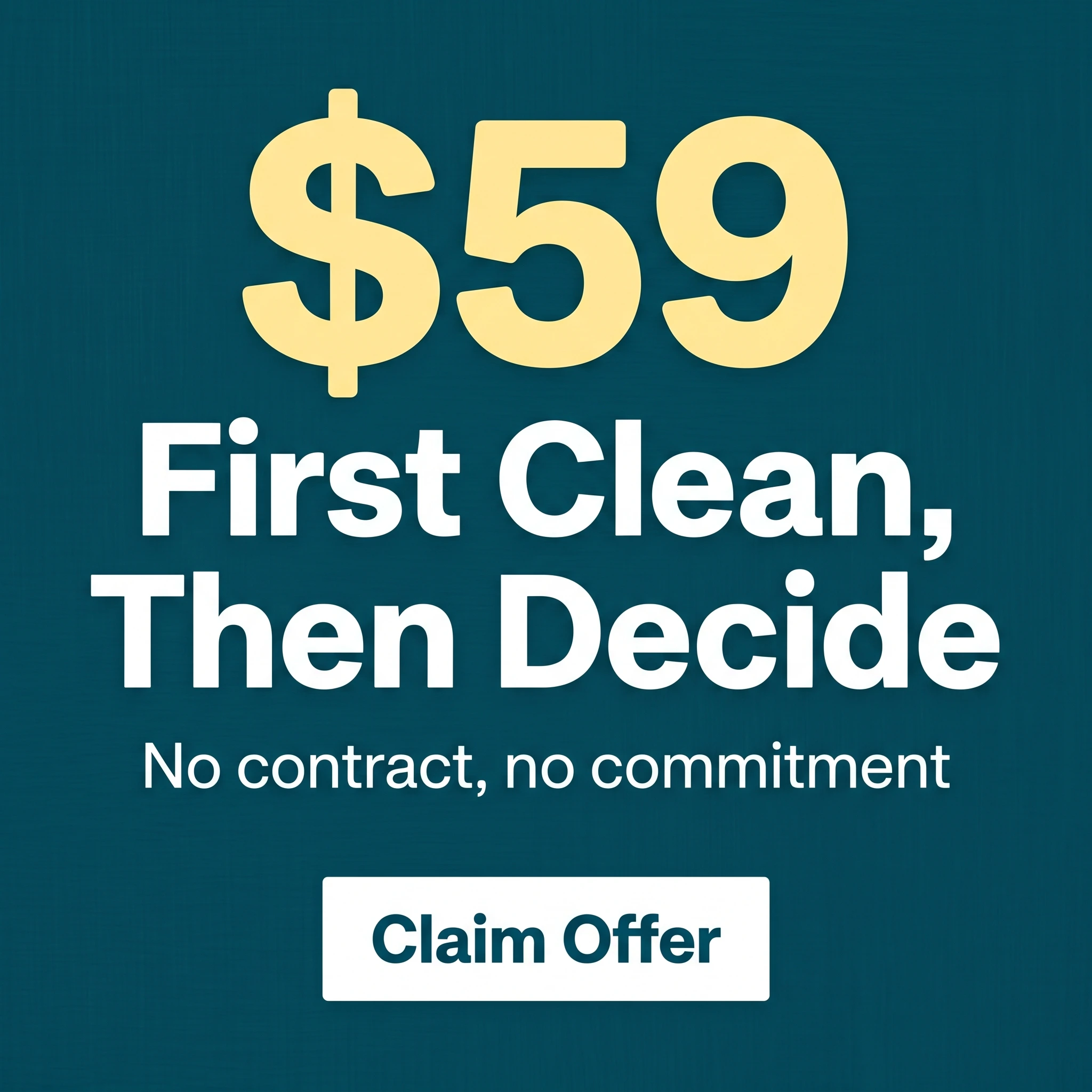
The format & angle. Sweep & Co.’s acquisition push: big type, one price, a deep teal background, no photo. Price and low risk.
Who it targets. Cold and warm buyers on the fence about committing to a recurring plan.
The hook. “$59 First Clean, Then Decide.” The price lowers the bar; “Then Decide” removes the fear of being locked in.
Why it works. The hardest part of selling recurring cleaning is the first yes — letting a stranger in for the first time. A cheap, no-commitment trial collapses that barrier, and “Then Decide” signals confidence that the first clean will earn the rebook. The typography-only format reads as a genuine local deal rather than an agency campaign, and the low number does the targeting by filtering for ready buyers.
Steal it. Price a first clean low enough to remove hesitation but high enough to cover your cost, and promise no contract. Your retention rate on that first visit is the metric that decides whether the offer is profitable — then rotate creative before ad fatigue erodes it.
Put all five on the route
A time-back promise, a spotless outcome, a transformation, a trust story, and a low-risk offer — five cleaning ads aimed at five different reasons people finally book. Near-duplicate ads compete for the same sliver of the audience and split your delivery; five distinct concepts each reach the household primed for them. The volume that lowers cost per booking now is volume of different ideas, not variations on one. Other in-home trades share these patterns — the home services ad examples post covers the cross-trade playbook, and if you also clean for people mid-move, the moving company ad examples breakdown is a natural sibling.
Lean on the offer and UGC concepts to acquire, then retarget bookers with the testimonial and hero creative to convert one-off cleans into recurring plans, where the lifetime value compounds. The hard part is generating five-plus genuinely different concepts on repeat, which is where Zendux comes in: on-brand static variants built by AI and bulk-launched across your ad sets faster than a deep clean takes.