Event Planning Ad Examples: 5 Ads That Book Events
Five event planning ad examples that book clients: a stress-relief UGC ad, a styled-reveal hero, an empty-room before/after, a review, and a free-consult offer.
Clients hire an event planner to buy back their own event — the freedom to enjoy it instead of running it. That’s the promise the event planning ad examples below lead with; vendor lists, timelines, and packages are how you deliver it, not why anyone signs. The five fictional ads here cover the angles that convert event clients — stress relief, the styled reveal, the empty-room transformation, a host’s relief, and an easy first conversation — each in a visibly different format.
Key takeaways
- Sell relief, then results. Clients buy “you just show up”; the tablescapes and timelines are proof, not the pitch.
- One stunning reveal does more than a ten-photo collage — the finished event is your strongest single asset.
- A free consultation is the lowest-friction first step into a high-consideration, high-ticket purchase.
- Five distinct concepts reach the overwhelmed bride, the corporate organizer, and the milestone host separately, which is how Meta’s delivery rewards a portfolio now.
What the best event planning ad examples get right
The buyer is stressed and time-poor — a couple, a corporate organizer, or someone hosting a milestone — and terrified of two outcomes: a chaotic event they spend the whole night managing, and a budget that spirals out of control. Your ad has to speak to the relief first, because that’s the emotional purchase, then back it with proof you can deliver the vision.
Two principles carry every concept. First, show the outcome, sell the feeling — a breathtaking reveal proves capability, but the headline should promise the host’s experience, not the décor. Second, lower the commitment: event planning is a big, infrequent, high-trust purchase, so a free consultation or walkthrough is a far easier yes than “book us now.”
Portfolio discipline matters. If you want luxury weddings, show luxury weddings; if you want corporate galas, show galas. The work you feature is the client you attract, and consistency is what separates a planner’s feed from a collection of pretty but aimless images.
| Ad | Format | Angle | Funnel stage | Best for |
|---|---|---|---|---|
| Stress-relief UGC | UGC | Pain-point relief | Cold | Full-service and day-of planners |
| Styled-reveal hero | Service hero | Dream outcome | Cold/warm | Luxury weddings and galas |
| Empty-room transformation | Before/after | Transformation | Warm | Design-and-styling specialists |
| Enjoyed-my-own-party testimonial | Testimonial | Trust / social proof | Warm | Planners with strong reviews |
| Free-consult offer | Offer | Access / low friction | Cold/warm | Lead generation and inquiries |
1. The stress-relief UGC ad
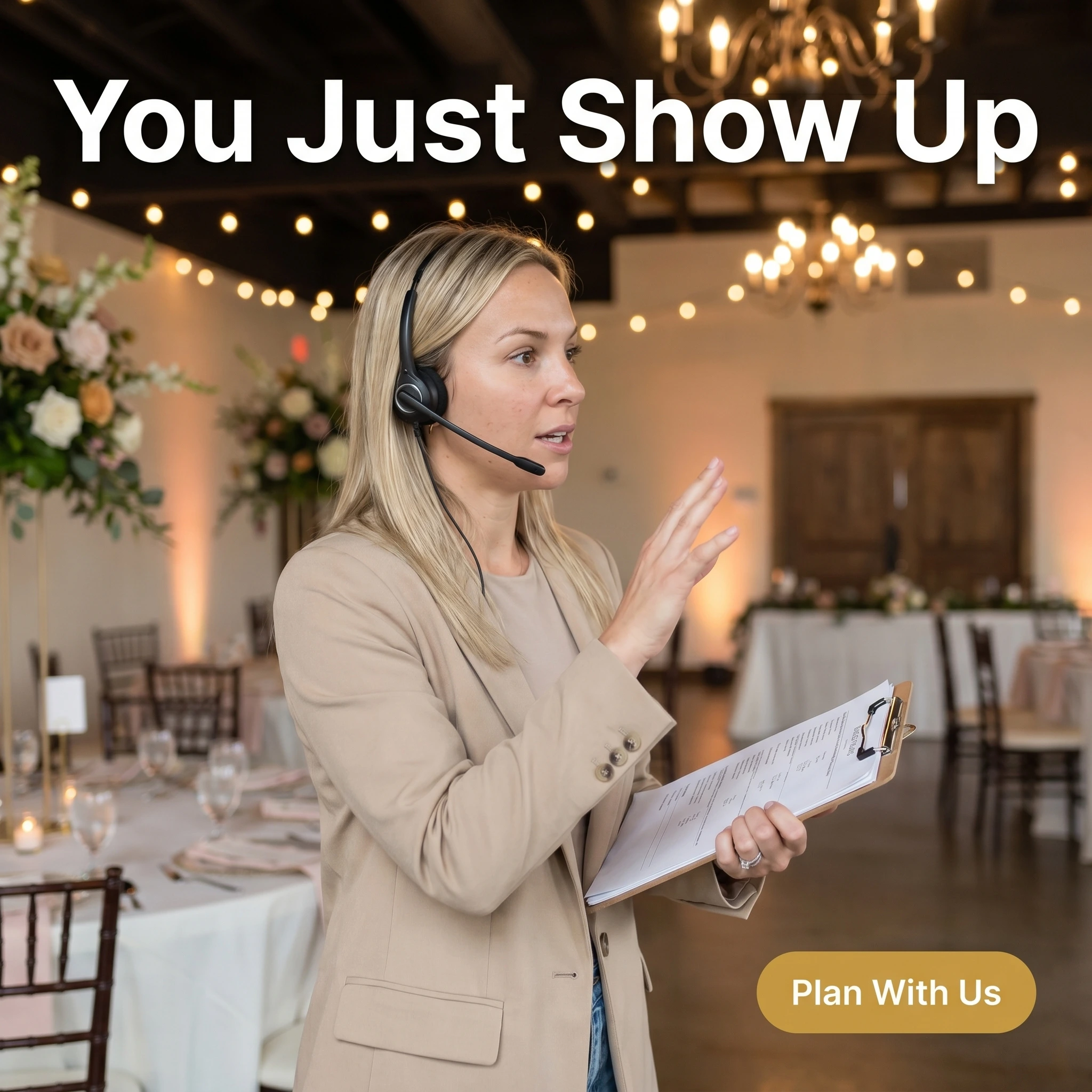
The format & angle. A Marigold Events Co. planner in a headset, clipboard in hand, directing setup before doors open, shot like a candid behind-the-scenes phone grab. Pain-point relief, from the person doing the worrying for you.
Who it targets. Cold hosts — couples and organizers — dreading the logistics of an event they don’t know how to run.
The hook. “You Just Show Up.” Three words that hand the entire burden to someone else.
Why it works. A headset-and-clipboard candid looks like a peek behind the curtain, not a brochure, so it earns the stop. Seeing the planner absorb the chaos — headset, clipboard, calm — is proof of the service, not a promise of it. Selling the host’s freedom converts the person who’s been quietly panicking about pulling the event off themselves.
Steal it. Have someone photograph you mid-setup, in the thick of it, looking in control. Headline the freedom you give the host, not the services you list, and let the calm in the frame carry the rest.
2. The styled-reveal hero ad
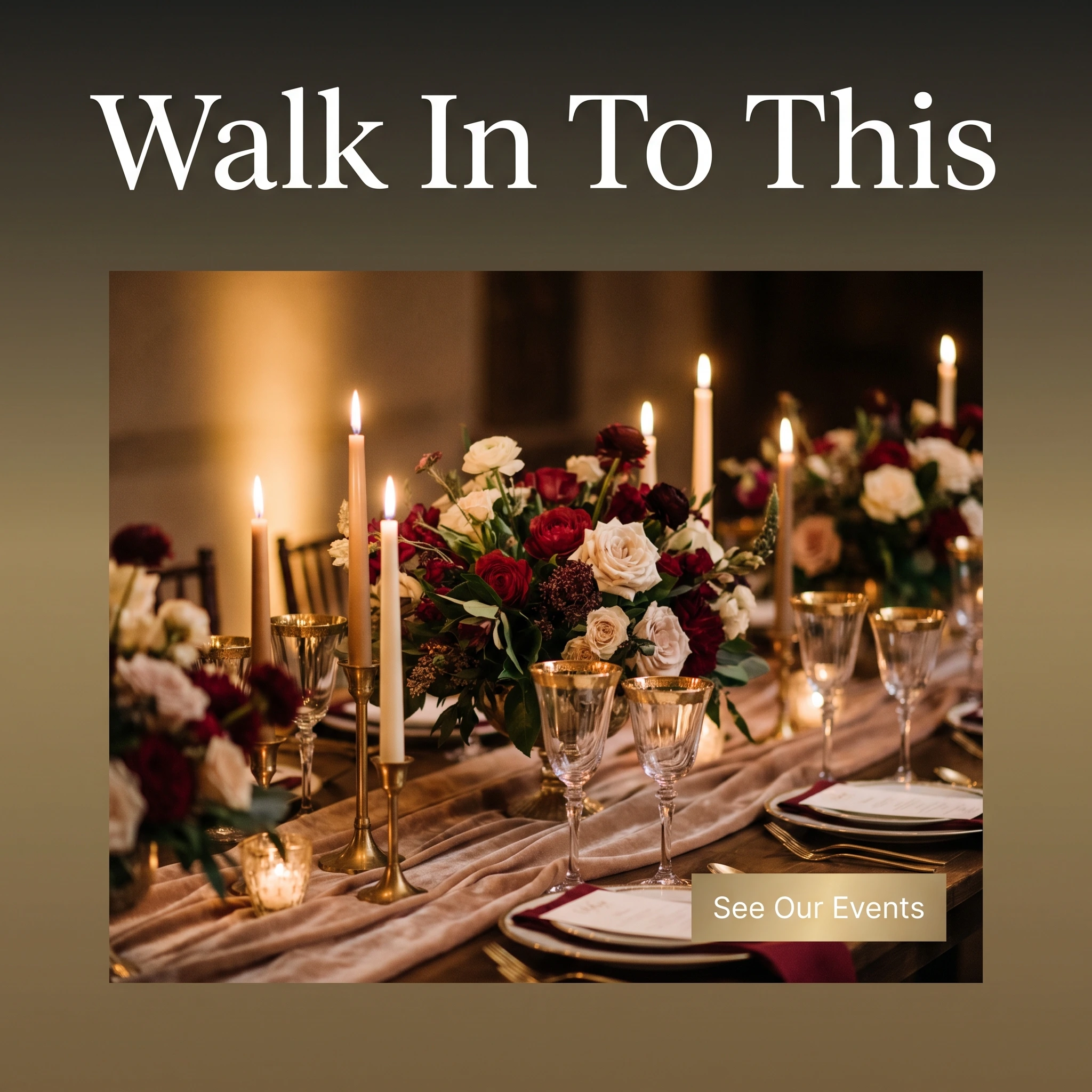
The format & angle. Velvet & Vine Events’ hero: a single elegant, candlelit reception tablescape — florals, glassware, warm light — styled like an editorial spread. Dream outcome, undiluted.
Who it targets. Cold and warm clients planning a wedding or gala who care about a high-end aesthetic.
The hook. “Walk In To This.” It puts the viewer in the host’s shoes at the moment the doors open.
Why it works. When the product is an experience, one extraordinary image of the result does the persuading. The second-person framing makes the viewer imagine arriving to a finished, beautiful room — the exact fantasy that justifies a premium fee. A clean, editorial layout signals luxury positioning and attracts the clients who’ll pay for it.
Steal it. Pull your single most jaw-dropping reveal shot and let it fill the frame. Headline the moment of arrival, not the centerpiece count, and route the click to a portfolio that keeps the promise.
3. The empty-room transformation ad
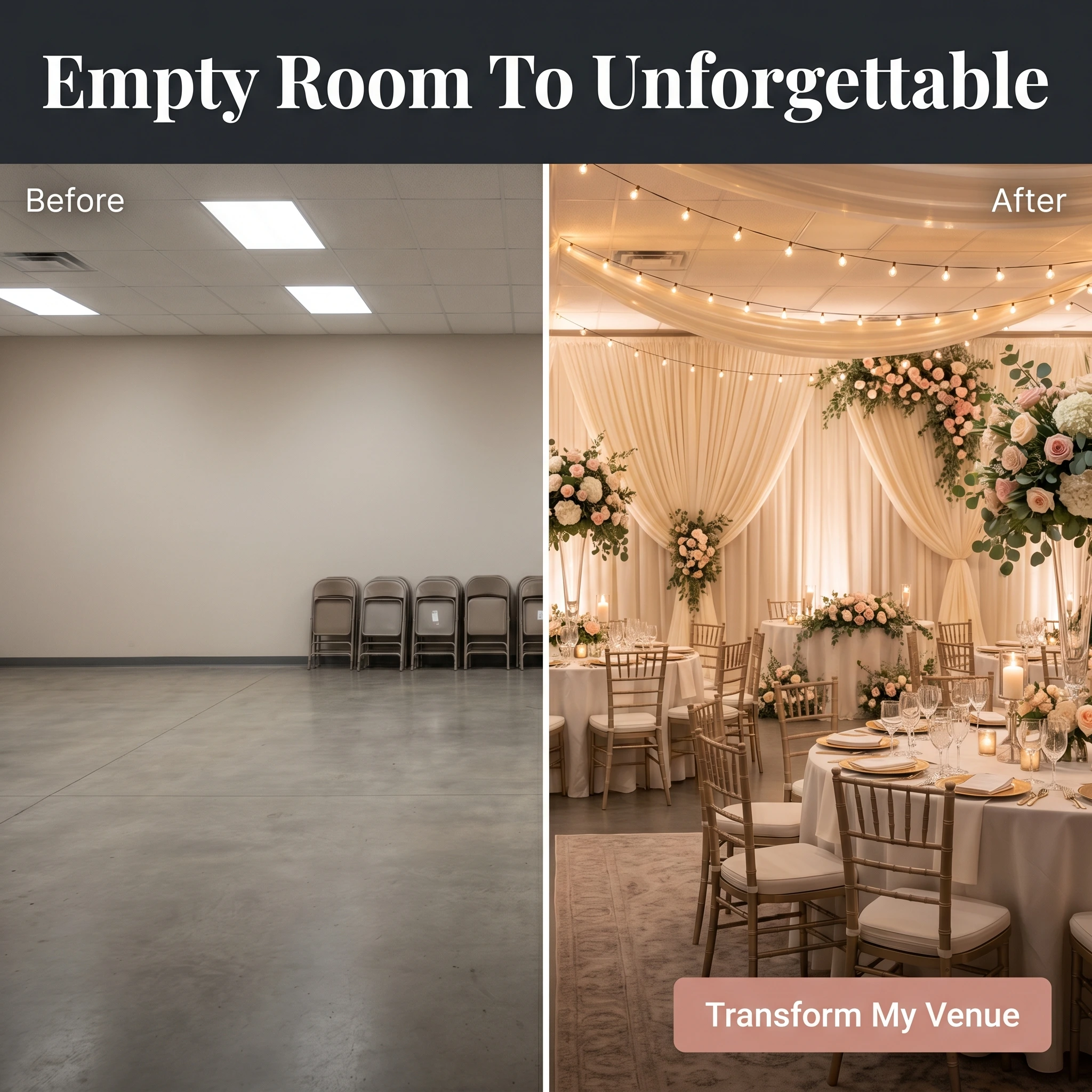
The format & angle. Cedar & Sparrow Events’ split: a plain, bare venue hall on the left, the same room transformed into a styled event space on the right. The category’s signature before/after.
Who it targets. Warm clients who’ve booked a blank venue and can’t picture how it becomes a celebration.
The hook. “Empty Room To Unforgettable.” The contrast is the argument; the headline names the leap.
Why it works. Most clients can’t visualize a finished event from an empty hall, which is precisely the skill they’re paying for. Showing the before and after makes your design value undeniable in one glance. The transformation also reassures the client who’s standing in a bare room right now, anxious that it’ll never come together. The split holds up at thumbnail size and needs no copy to land.
Steal it. Photograph a venue empty and again fully styled, same angle. Build a library of these — every event you produce supplies another honest transformation to rotate.
4. The enjoyed-my-own-party testimonial ad
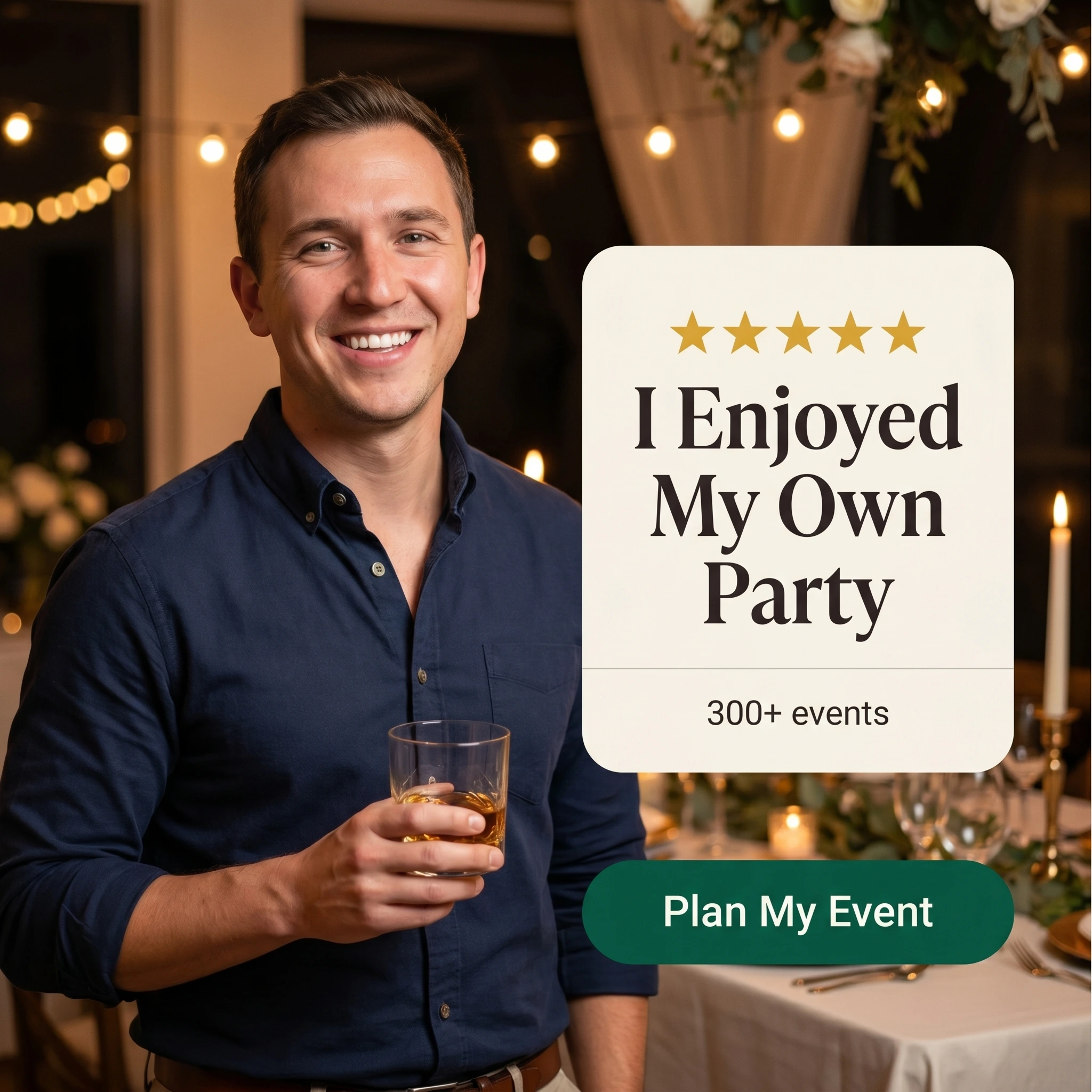
The format & angle. Grand Avenue Events: a relaxed, happy host beside a review card — five stars, “300+ events.” Trust, told as the experience the client actually wanted.
Who it targets. Warm clients who like the work and need to believe the day itself will feel effortless for them.
The hook. “I Enjoyed My Own Party.” A peer naming the exact outcome every host secretly fears they won’t get.
Why it works. Once a client trusts your taste, the remaining worry is whether they’ll spend their event working. A peer saying they actually got to enjoy it resolves that better than any service description. The event count turns one story into a pattern, and the relaxed host in the photo embodies the promise the whole brand is built on.
Steal it. Mine reviews for lines about the host’s experience — “relaxed,” “present,” “enjoyed it.” Build the card around the best one and add your event count beneath the stars.
5. The free-consult offer ad
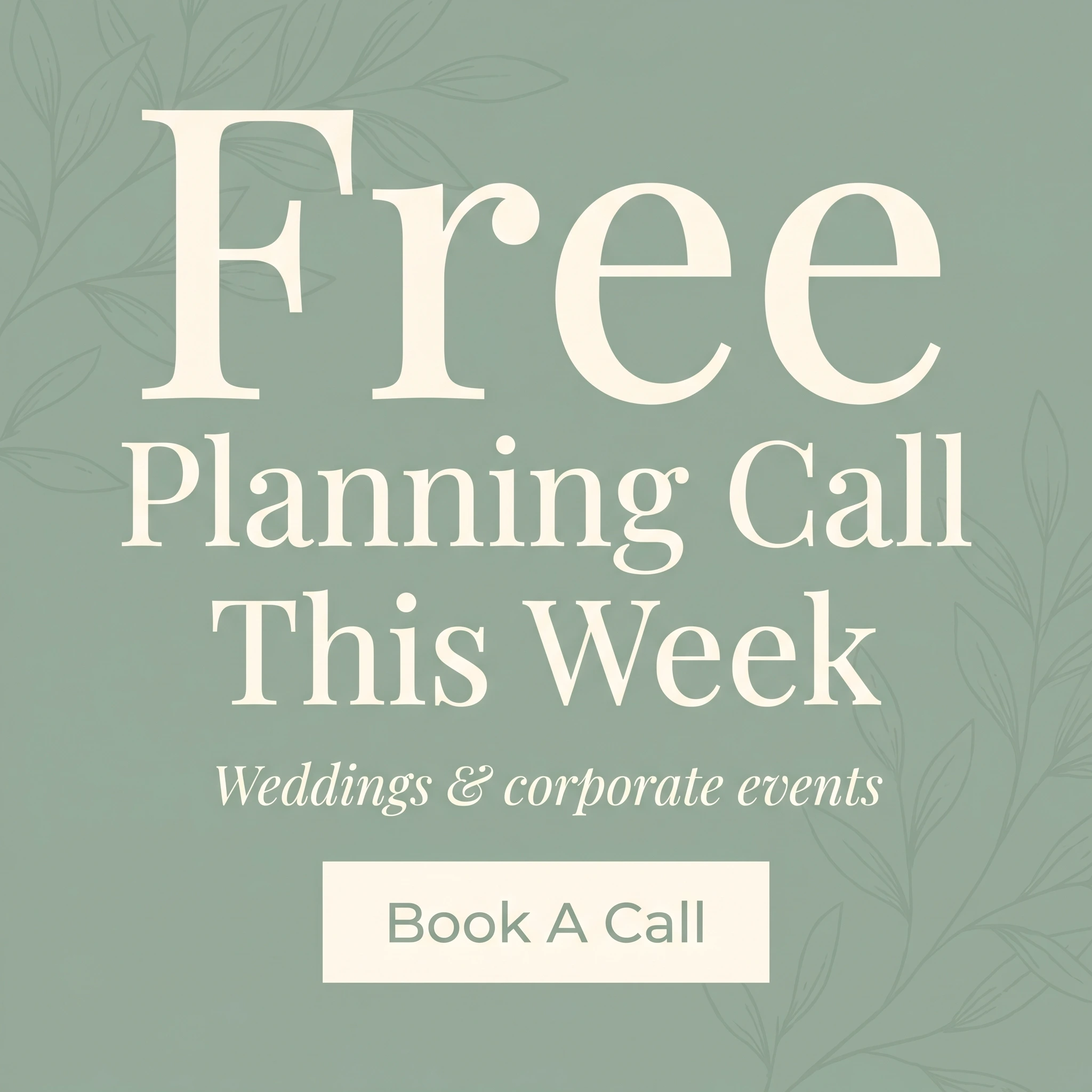
The format & angle. Polished Co. Events’ lead-gen push: elegant type, a single low-commitment offer, a refined palette. Access and low friction, no photo.
Who it targets. Cold and warm clients interested but not ready to commit to a full booking.
The hook. “Free Planning Call This Week.” It offers a small, easy first step with a gentle nudge to act now.
Why it works. Event planning is a high-consideration purchase, so a free consultation is a far easier yes than a contract. It opens a conversation where you can scope the event and build trust in person, which is where these deals actually close. The “this week” framing supplies light, honest urgency, and the typography-led layout reads as a clear invitation rather than a hard sell.
Steal it. Offer a genuinely free, no-pressure first call and make the offer the largest element on the canvas. Reserve it for warm retargeting audiences who engaged but didn’t reach out, and refresh it before the creative fatigues.
Stage all five angles
Stress relief, a styled reveal, the empty-room transformation, a host’s relief, and an easy first call — five ads aimed at the overwhelmed couple, the luxury client, and the cautious milestone host. Distinct concepts are what Meta’s Andromeda-era delivery pays out on: each finds the couple, the organizer, or the host it was made for, while five versions of one tablescape simply trade impressions among themselves. The vendors your clients also hire run the same playbook — the wedding photographer ad examples, photography ad examples, and videography ad examples breakdowns cover the rest of the event-day team.
Producing five-plus genuinely different concepts every season — between actual events — is the bottleneck, and it’s what Zendux handles: it generates on-brand static variants and pushes them across your ad sets in minutes, so creative stops being the thing you never get to.