5 Videography Ad Examples That Win Clients
Five videography ad examples that win clients: a no-headache UGC ad, a cinematic hero, a phone-vs-pro before/after, an ROI testimonial, and a content-day offer.
The videography ad examples that win clients share an irony worth using: the static frame sells the video. A still loads instantly, makes one claim, and is cheap to test in volume, so it earns the click your reel then closes. The five fictional ads below cover the angles that book video work — removing the on-camera dread, a cinematic promise, the case against phone footage, a client’s measurable win, and a packaged content day — each in a visibly different format.
Key takeaways
- Lead with a static frame, close with the reel. A cinematic still wins the cheap first click; video does the heavy persuasion in retargeting.
- Sell the client’s outcome — reach, a premium brand, listings that move — not your camera body and lens kit.
- A productized “content day” is the easiest video offer to buy because it turns an open-ended quote into a fixed scope and price.
- Five distinct concepts reach the brand, the agent, and the event host separately, which is how Meta’s delivery rewards a video portfolio now.
What makes these videography ad examples land clients
The buyer is rarely another creative — it’s a business owner, marketer, agent, or event host who needs video but doesn’t speak f-stops. They fear two things: paying a lot for footage that looks amateur, and the hassle of a shoot that eats a week. Your ad has to answer both before it mentions a single piece of equipment.
Two principles follow. First, show production value in one frame — a genuinely cinematic still proves you can deliver the look, where a gear list just proves you own gear. Second, productize the offer: “custom video production” sounds expensive and undefined, while “a content day, twelve reels, one price” is a decision a buyer can make in the feed.
There’s a placement nuance specific to your craft. Even though you sell motion, your most efficient cold creative is often a static image, and your video belongs in retargeting and Reels. Plan both deliberately — the breakdown of Meta ad examples by format covers when image beats video, and getting aspect ratios right per placement keeps your reel from being cropped to nonsense in Stories.
| Ad | Format | Angle | Funnel stage | Best for |
|---|---|---|---|---|
| No-headache UGC | UGC | Pain-point relief | Cold | Solo and small-crew shooters |
| Cinematic hero | Service hero | Dream outcome | Cold | Brand and commercial work |
| Phone-vs-pro split | Before/after | Us-vs-the-old-way | Cold/warm | Convincing the DIY skeptic |
| Tripled-reach testimonial | Testimonial | Trust / ROI | Warm | Brand and social video |
| Content-day offer | Offer | Price / value | Cold/warm | Recurring content retainers |
1. The no-headache UGC ad

The format & angle. A Handheld Studio shooter running a gimbal-mounted camera on a city sidewalk, framed like a behind-the-scenes phone grab. Pain-point relief, in the videographer’s own world.
Who it targets. Cold business owners who know they need video but dread the production circus they imagine it requires.
The hook. “Video Without The Headache.” It names the real objection — not quality, but hassle — and promises to remove it.
Why it works. A lean, on-the-sidewalk shot looks like a clip a friend grabbed, which is exactly why a cold viewer stops on it. Showing a one-person rig quietly answers the fear of a giant crew, lights, and a lost week. Selling ease — “we make this painless” — converts the owner who’s been putting video off precisely because it sounds like a production.
Steal it. Have someone grab a candid of you working light and mobile. Headline the hassle you remove, not the resolution you shoot, then make the booking process as easy as the shoot.
2. The cinematic hero ad

The format & angle. Lumen & Co. Films’ hero: a richly color-graded, moody product still with a subtle play-button overlay, styled like a frame paused from a high-end commercial. Dream outcome, no clutter.
Who it targets. Cold brands and marketers who want their product to look premium and have the budget to pay for it.
The hook. “Make Your Brand Look Cinematic.” It promises the exact transformation a brand wants — to look bigger and more polished than it is.
Why it works. When you sell a look, you have to show the look, and a single graded frame proves it instantly. The play-button overlay signals “there’s a film behind this” and nudges the click toward your reel. The aspirational framing attracts clients who value production quality and self-selects out of the bargain hunters who’d grind your margin.
Steal it. Pull your most cinematic single frame — color-graded, intentional lighting — and add a tasteful play overlay. Headline the elevation your client wants for their brand, and route the click to your best 30-second reel.
3. The phone-vs-pro split ad
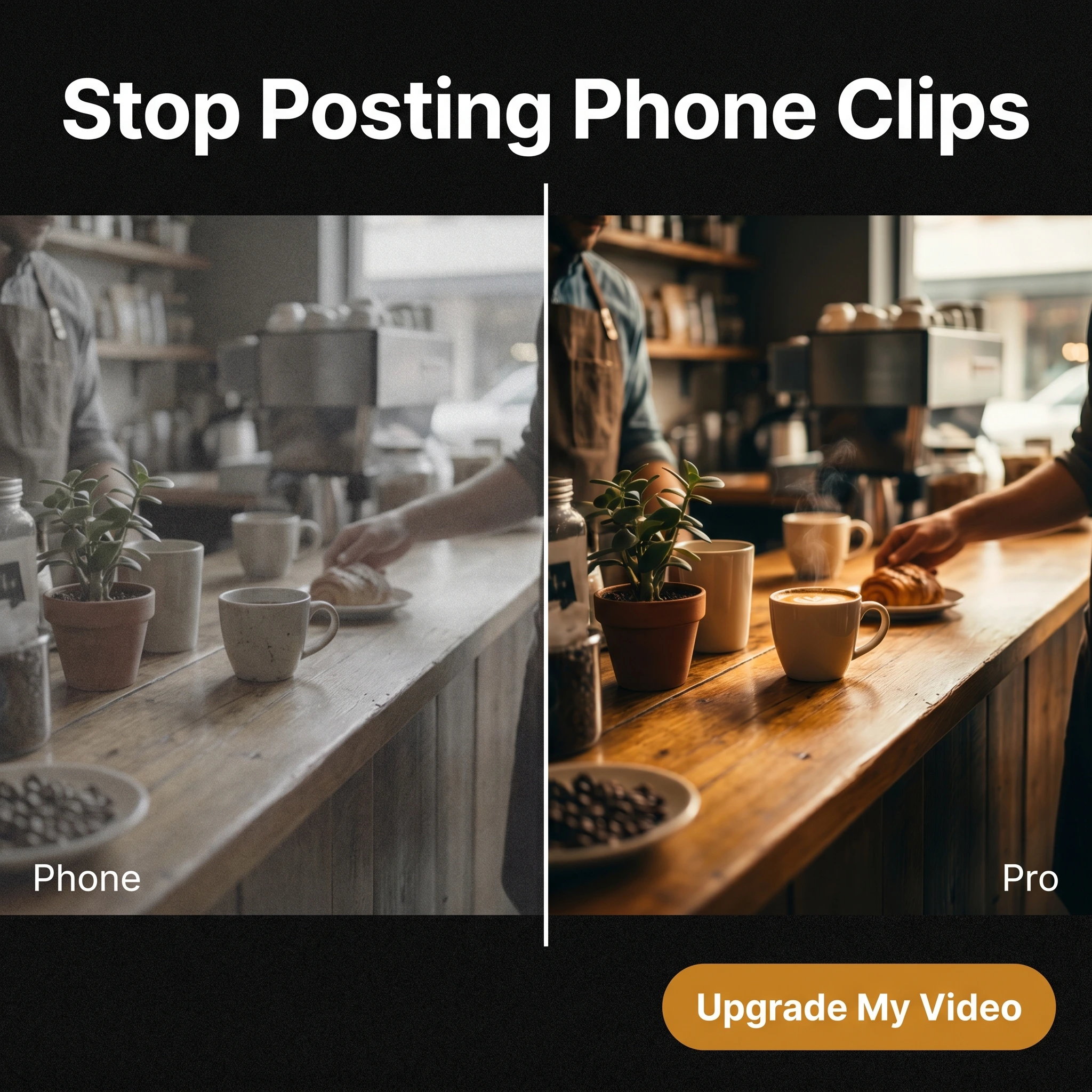
The format & angle. Frame 24 Films’ split: a flat, grainy phone-shot frame on the left, the same scene as a color-graded cinematic frame on the right. Us-vs-the-old-way, shown as two stills.
Who it targets. Cold and warm business owners shooting their own social video on a phone and wondering why it looks cheap.
The hook. “Stop Posting Phone Clips.” It names the cheap habit and shows its cost in one glance.
Why it works. Most video budgets are lost not to other studios but to “we’ll just film it ourselves.” Dramatizing the gap between a phone clip and a graded frame converts a do-it-yourselfer into a buyer. The split makes the case before any copy is read, and the contrast in light and color carries at thumbnail size — exactly what a static testing concept needs.
Steal it. Shoot the same scene on a phone and on your real setup, then place the graded frames side by side. Headline the upgrade as a habit to drop, not an insult to the viewer’s effort.
4. The tripled-reach testimonial ad
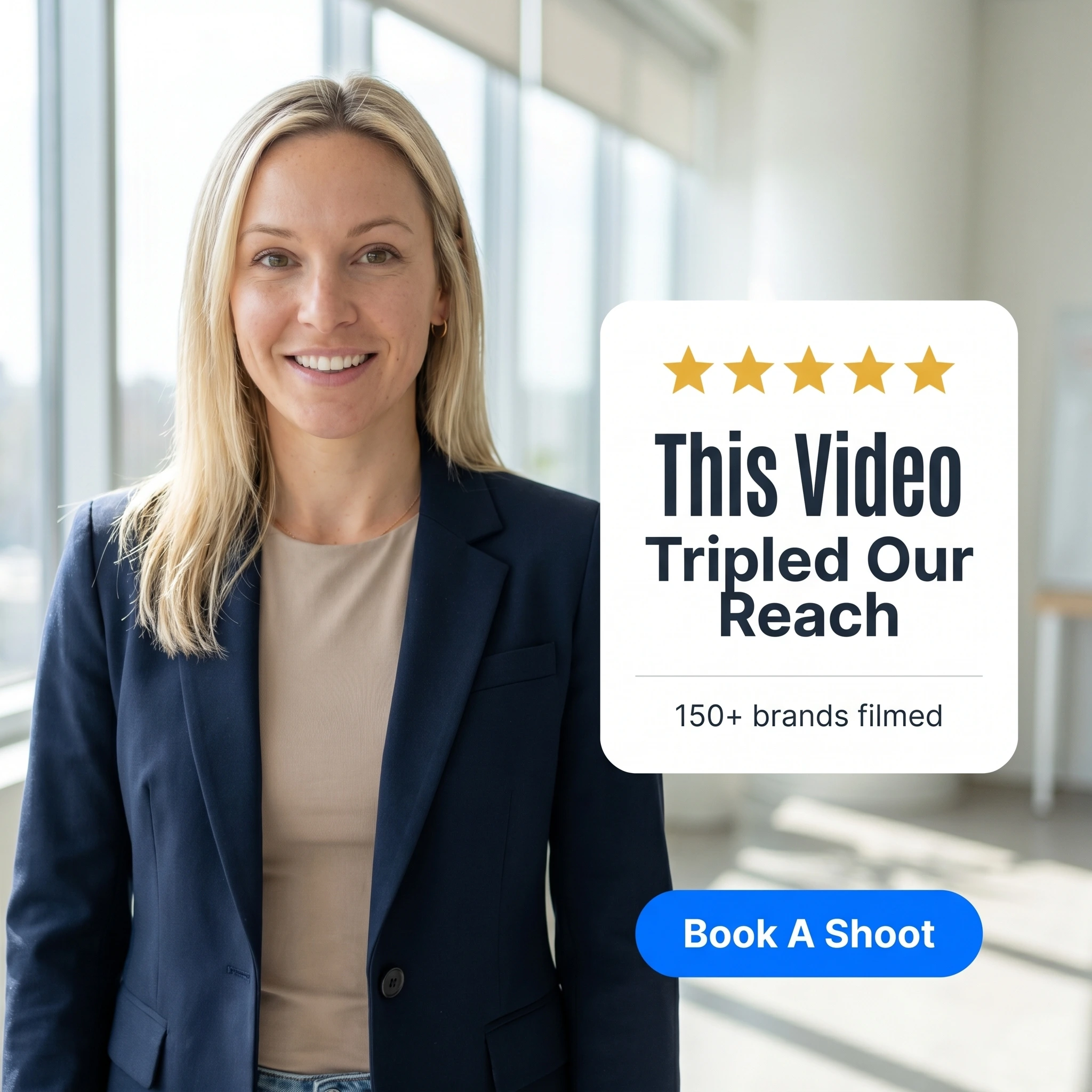
The format & angle. Highbeam Video Co.: a marketing client beside a review card — five stars, “150+ brands filmed.” Trust, anchored to a number.
Who it targets. Warm brands and marketers who’ve seen the reel and now need proof it pays off.
The hook. “This Video Tripled Our Reach.” A client’s words tying your work to a metric they’re measured on.
Why it works. Brand buyers justify spend with results, so a testimonial framed as reach or ROI answers the budget question directly. A peer’s measurable win beats any self-description of your craft. The brands-filmed count signals you do this at scale, which lowers the perceived risk of handing you a campaign.
Steal it. Get the client quote that names a number — reach, views, leads, sales — and build the card around it. Add your projects-filmed count to turn one result into a pattern, and reserve this creative for warm audiences.
5. The content-day offer ad
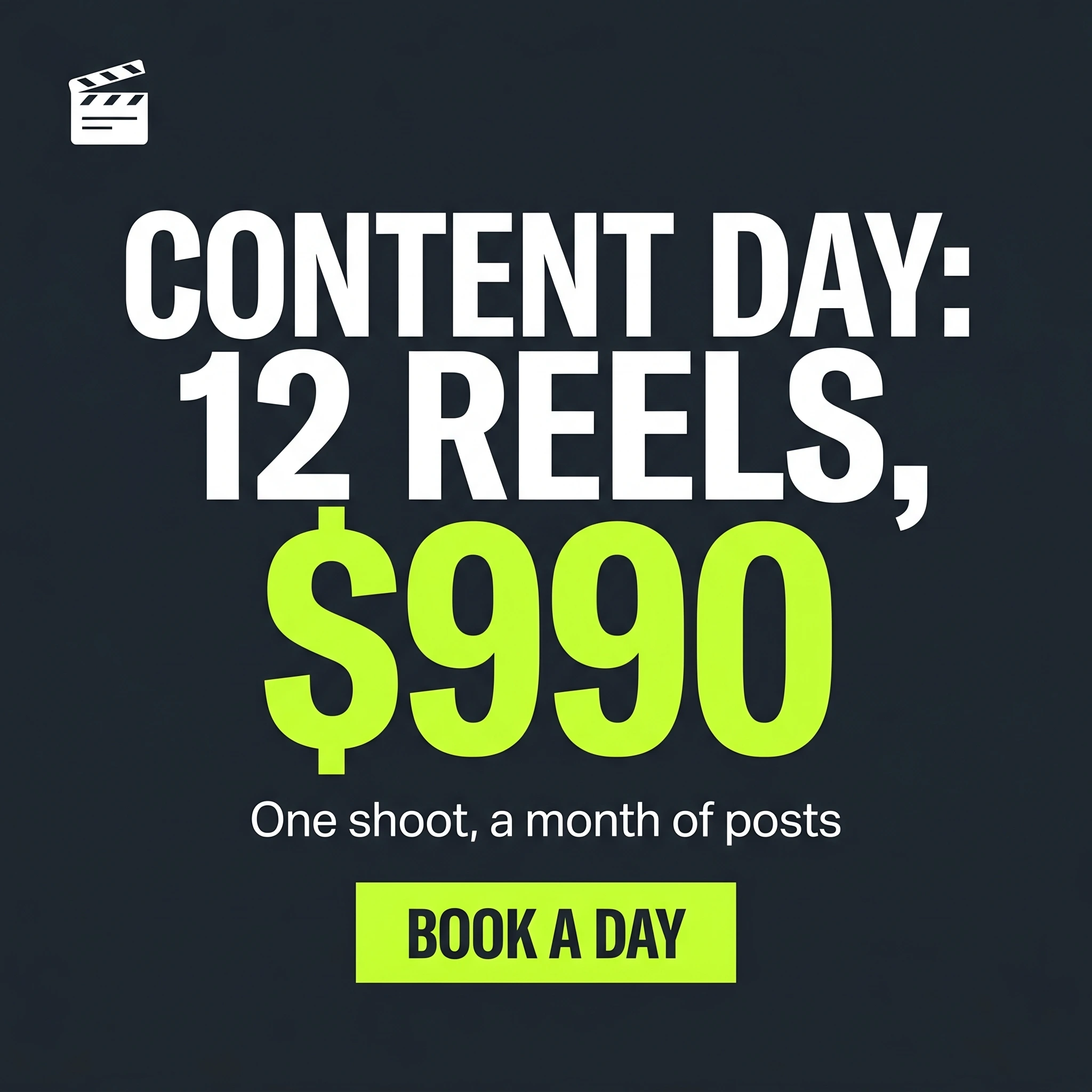
The format & angle. Daylight Reels’ productized push: bold type, a defined deliverable and price, a clean clapperboard motif. Price and value, no footage required.
Who it targets. Cold and warm brands and creators who need a steady stream of short video and hate open-ended quotes.
The hook. “Content Day: 12 Reels, $990.” A scope and a number — the open-ended video quote turned into a yes-or-no decision.
Why it works. Productizing is the strongest move in video sales because it removes the “how much will this even cost” friction that kills inquiries. A fixed deliverable and price reads as low-risk and easy to approve, and it sets up the recurring retainer most video businesses actually want. The typography-led layout signals a clear offer, not a vague service.
Steal it. Package one shoot day into a named bundle with a fixed deliverable count and price. Make the number the largest element, then upsell the content day into a monthly retainer once the first one lands.
Cut five concepts, not five versions of one
Removing the dread, a cinematic promise, the case against phone footage, a measurable win, and a packaged content day — five ads aimed at the hesitant owner, the premium brand, and the recurring-content client. In the Andromeda era, that variety isn’t optional: Meta’s auction now draws from a far deeper pool of creative and rewards the accounts feeding it real differences, not five passes at one frame. Adjacent creative businesses run the same playbook — the photography ad examples breakdown covers stills, and if weddings are on your menu, the wedding photographer ad examples post angles to couples.
Producing five-plus genuinely different static concepts every week is the bottleneck between shoots, and it’s what Zendux handles: generate a batch of on-brand stills and bulk-launch them across ad sets while you’re back behind the camera.