5 Wedding Photographer Ad Examples Worth Stealing
Five wedding photographer ad examples that book couples: a candid UGC ad, an heirloom hero, a phone-vs-pro before/after, a review, and a date-scarcity offer.
Couples don’t book a wedding photographer from a price list — they book the one whose photos already look like the wedding in their heads. The wedding photographer ad examples that fill a calendar all signal that style match in a single frame, then make checking your date easy. The five fictional ads below cover the angles that convert engaged couples — your candid eye, the heirloom result, the case against the phone, a newlywed’s relief, and the scarcity of Saturdays — each in a visibly different format.
Key takeaways
- Instagram is your room. The audience is visual and already collecting inspiration; lead with your real style, not a stock-looking couple.
- Book on style match, close on trust. Couples shortlist by look, then hire the photographer who feels easy to be around.
- Date scarcity is your honest urgency — Saturdays in peak season genuinely run out, which makes a booking nudge true rather than manufactured.
- Five distinct concepts reach the bride who wants candid, the one who wants editorial, and the one just comparing prices — one recycled “winner” can’t.
What makes these wedding photographer ad examples convert
The buyer is usually one half of a newly engaged couple, planning a year out, overwhelmed by options, and quietly afraid of two things: hiring someone whose photos look nothing like the wedding in their head, and stiff, awkward portraits where everyone looks like they’re holding their breath.
Two principles follow. First, the work is the ad — a wedding photographer who hides behind logos and price tables loses to one who shows a single frame so good it stops the scroll. Second, sell the feeling of the day, not the deliverables; “400 edited images” is a spec, while “you’ll forget the camera is there” is the experience a couple is actually buying.
Style discipline matters more here than in most niches. If your feed and your ads promise light-and-airy and you deliver dark-and-moody, you book the wrong couples and earn the wrong reviews. Pick a lane and let every creative reinforce it. And because Instagram placements reward vertical, shoot and crop with the right aspect ratios per placement in mind so your best frame isn’t cropped at the chin in Stories.
| Ad | Format | Angle | Funnel stage | Best for |
|---|---|---|---|---|
| Candid-eye UGC | UGC | Style / connection | Cold | Documentary-leaning shooters |
| Heirloom portrait hero | Service hero | Dream outcome | Cold/warm | Editorial and fine-art brands |
| Phone-vs-pro split | Before/after | Us-vs-the-old-way | Cold/warm | Convincing the budget skeptic |
| Newlywed testimonial | Testimonial | Trust / social proof | Warm | Comfort-focused, candid shooters |
| Saturdays-booking offer | Offer | Urgency / scarcity | Warm | Filling next year’s calendar early |
1. The candid-eye UGC ad
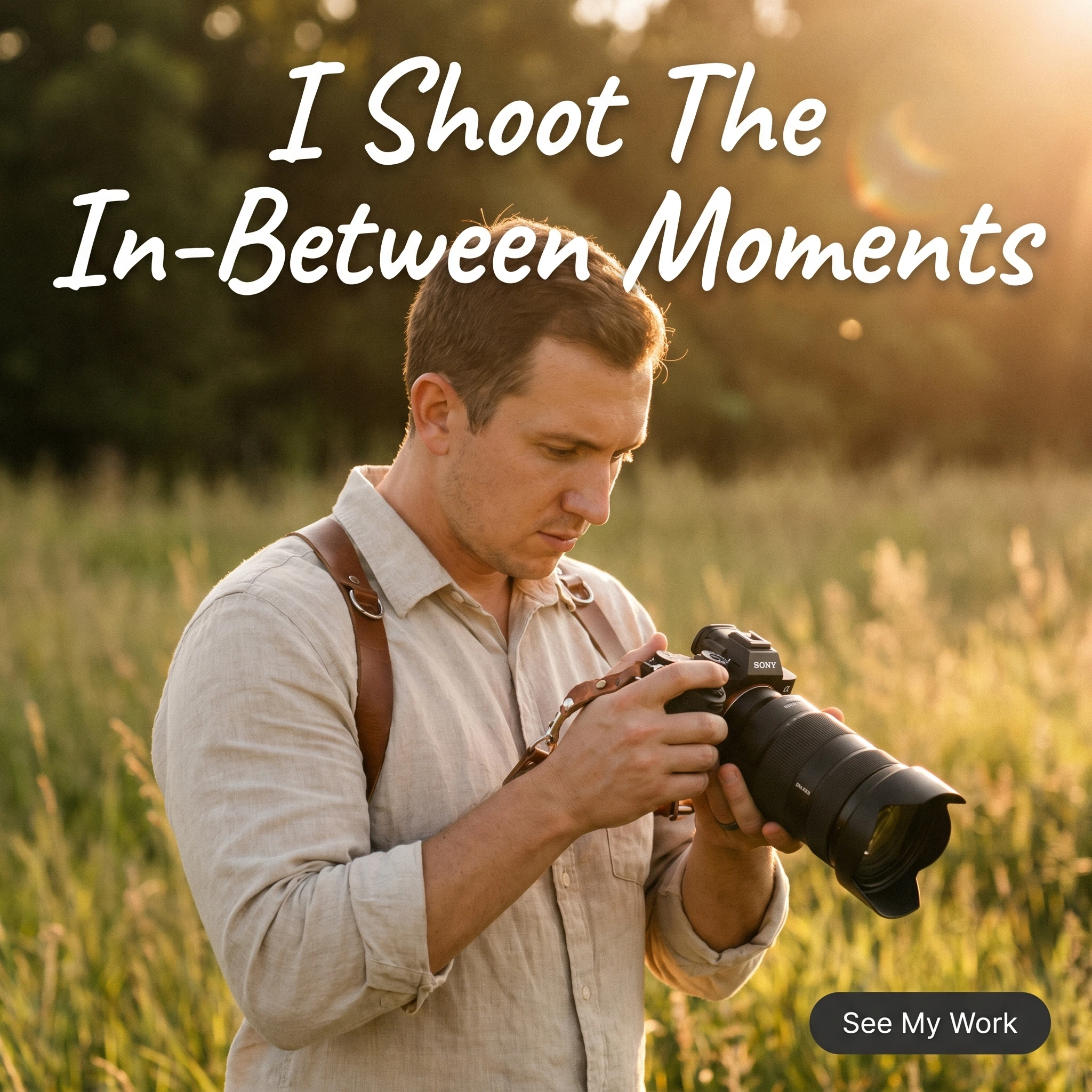
The format & angle. A Wildbloom Photo Co. shooter at golden hour, camera up, checking the back screen, framed like a second shooter caught him working. Style and connection, in his own voice.
Who it targets. Cold couples scrolling Instagram who want a documentary feel, not posed-and-stiff portraits.
The hook. “I Shoot The In-Between Moments.” First person, specific point of view — it tells a couple exactly what kind of photographer they’re looking at.
Why it works. A working-photographer shot looks like something a friend posted, not something a studio paid for, so it survives the scroll. The first-person line is a style filter: the couple who wants candid leans in, and the one who wants formal poses scrolls past — exactly the qualifying you want before an inquiry. And a real person behind the lens reads as a real person, not an agency.
Steal it. Have a second shooter or assistant photograph you working at golden hour, phone camera, no polish. Write the headline as the one sentence that describes your eye — the thing your favorite couples always say about your photos.
2. The heirloom portrait hero ad
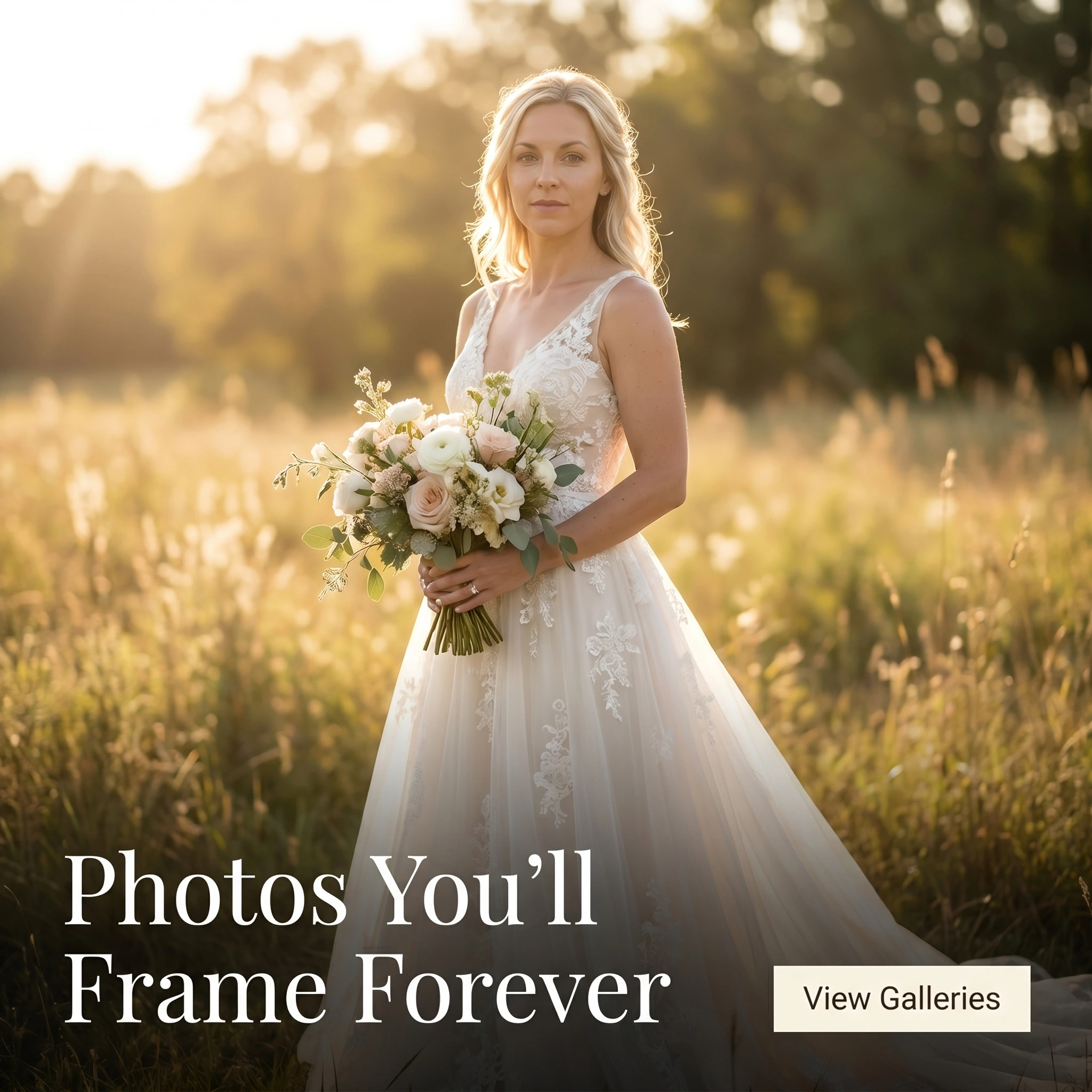
The format & angle. Aurelia Wedding Photography’s hero frame: a single breathtaking bridal portrait, golden light, editorial styling — the photo as the entire pitch. The dream outcome, undiluted.
Who it targets. Cold and warm couples drawn to a fine-art, editorial look who’ll pay for images that feel timeless.
The hook. “Photos You’ll Frame Forever.” It reframes the purchase from a wedding-day service to a lifetime heirloom.
Why it works. When the product is visual, one extraordinary image outperforms any claim about it. The heirloom framing also justifies a premium price — a couple spending more wants permanence, not just coverage. A clean, gallery-like layout signals fine-art positioning before they read a word, sorting for the couples who value that.
Steal it. Pull your single strongest portrait — the one you’d hang in your own home — and let it fill the frame with minimal text. Headline the legacy, not the logistics.
3. The phone-vs-pro split ad
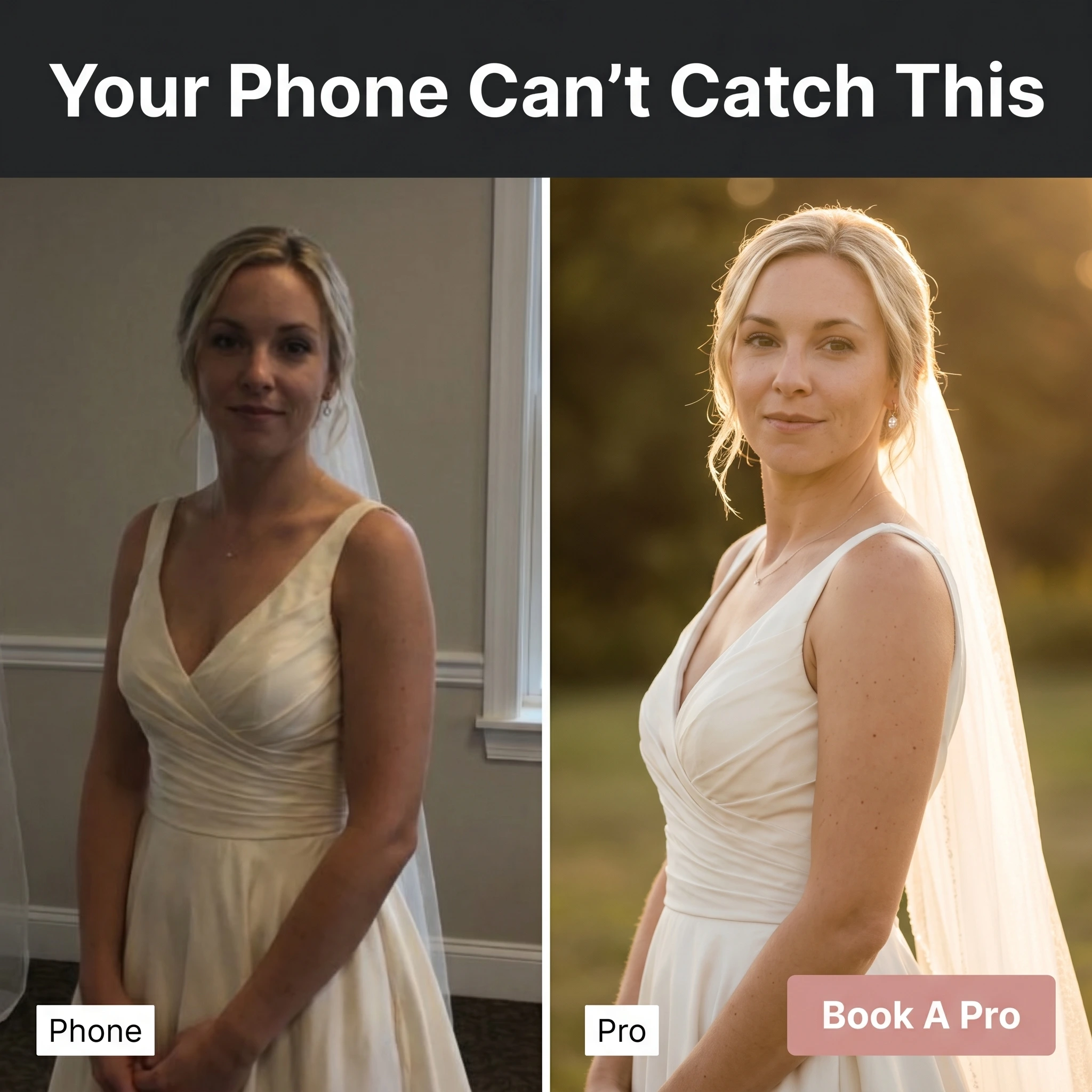
The format & angle. Hush & Lace Photography’s split: a dim, badly-framed phone snapshot of a bride on the left, the same moment as a pro golden-hour frame on the right. Us-vs-the-old-way — the wedding version of a before/after.
Who it targets. Cold and warm couples tempted to cut the budget by leaning on guests’ phones or a hobbyist friend.
The hook. “Your Phone Can’t Catch This.” It names the cheap alternative and shows, in one glance, what it costs.
Why it works. Most wedding photographers lose budget not to rivals but to “our friend has a nice camera.” Dramatizing that gap converts a non-shopper into a shopper. The split makes the argument visually before a word is read, and the contrast — flat phone snapshot against directed light and composition — carries at thumbnail size. It sells the category, not just the brand.
Steal it. Recreate the comparison honestly: a quick phone grab versus your edited frame of the same setup. Headline the limitation of the cheap option without insulting the couple’s friend.
4. The newlywed testimonial ad
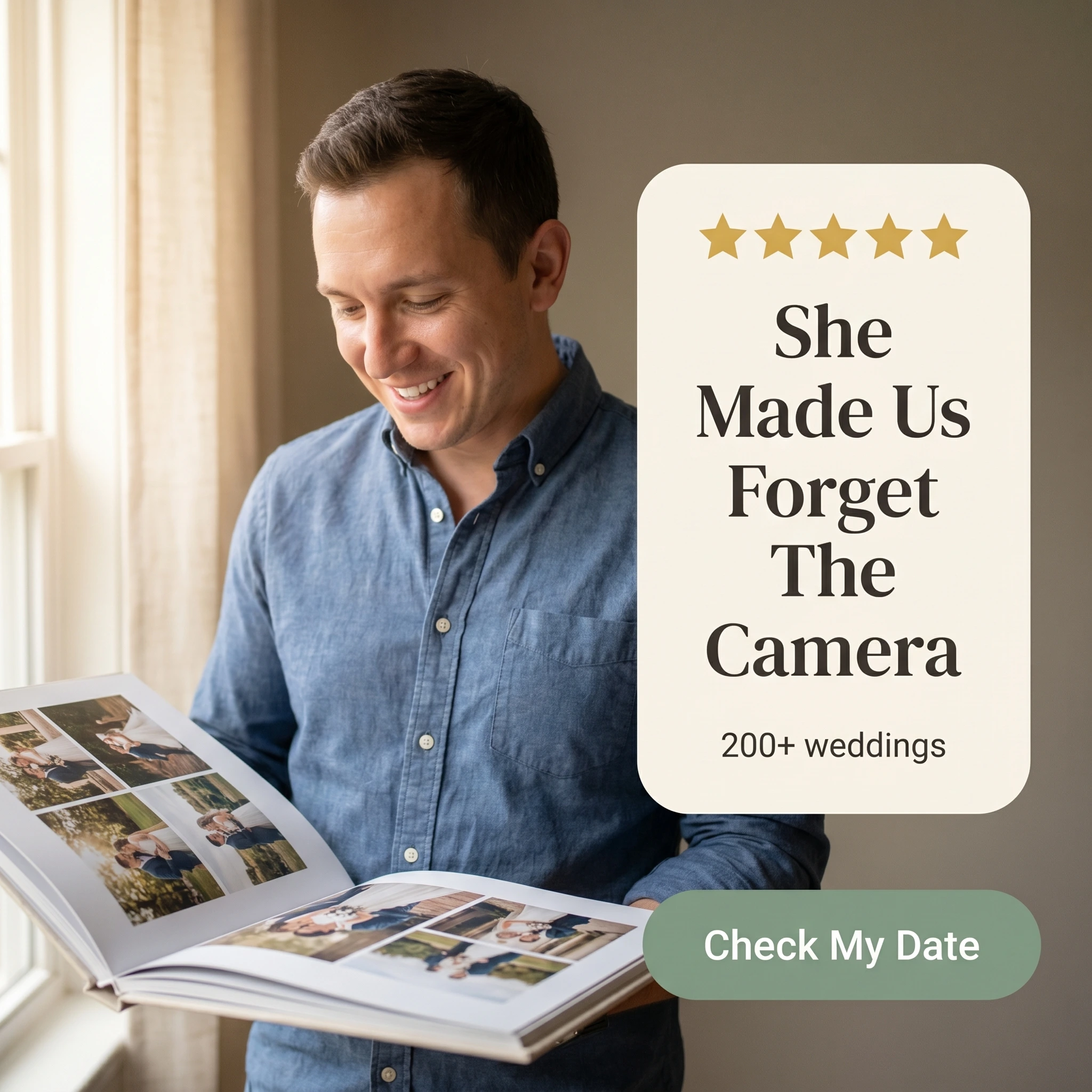
The format & angle. June & Oak Photography: a happy newlywed holding a printed album beside a review card — five stars, “200+ weddings.” Trust, told as ease.
Who it targets. Warm couples who’ve seen the work and now need to believe the day itself will feel relaxed.
The hook. “She Made Us Forget The Camera.” The fear it answers isn’t quality — it’s a wedding day spent performing for a lens.
Why it works. Once a couple likes the photos, the remaining objection is the experience: will the photographer be a calm presence or a stressful one? A peer saying they forgot the camera was there resolves that better than any self-description. The album in hand makes the result tangible, and the wedding count turns one story into a pattern.
Steal it. Mine your reviews for words like “comfortable,” “natural,” and “forgot you were there.” Build the card around the best one, add a printed product in the photo, and put your wedding count beneath the stars.
5. The Saturdays-booking offer ad
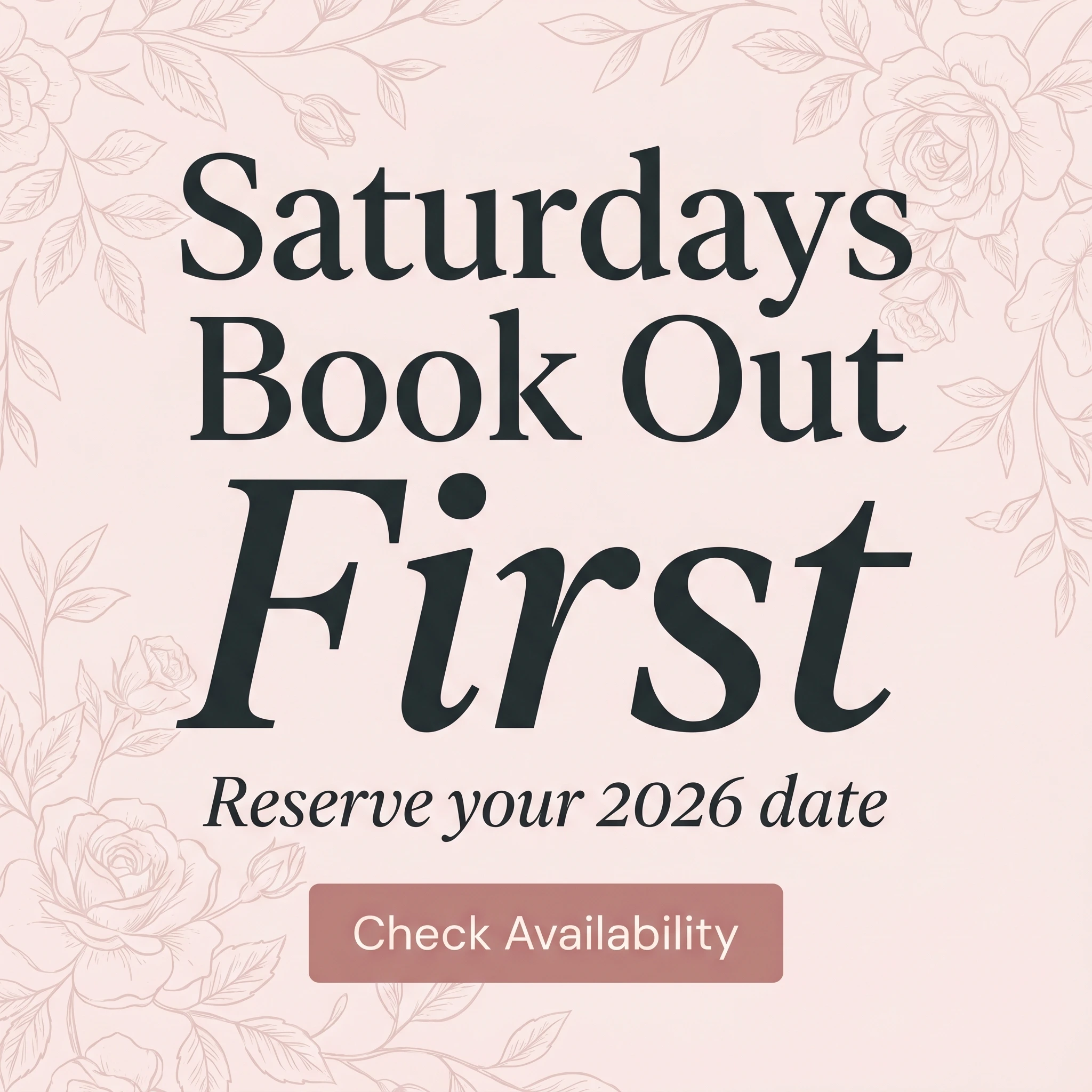
The format & angle. Vow & Veil Photography’s calendar push: elegant type on a soft blush background, no photo, one honest piece of scarcity. Urgency, the real kind.
Who it targets. Warm couples who love the work but keep putting off the inquiry.
The hook. “Saturdays Book Out First.” It states a fact every couple intuitively knows and turns it into a reason to act now.
Why it works. Date scarcity is the rare wedding urgency that’s genuinely true — a photographer can shoot one wedding per Saturday, and peak dates do fill. That makes the nudge credible rather than the fake-countdown theatrics that erode trust. The typography-only layout reads as a calm studio announcement, which fits how couples want to be spoken to.
Steal it. Reserve one retargeting ad set for couples who engaged but didn’t inquire. Run an elegant, photo-free creative naming your real availability constraint, and refresh the creative each season so the scarcity stays honest.
Five angles, one fully booked season
Your candid eye, an heirloom frame, the case against the phone, a newlywed’s relief, and the scarcity of Saturdays — five ads aimed at five kinds of couple and five points in a long booking journey. That spread is what current delivery rewards: in Meta’s Andromeda era, near-duplicate ads compete for the same couples, while distinct concepts each open a new pocket of demand. If you also shoot or refer other vendors, the photography ad examples breakdown covers portraits and branding work, the videography ad examples post handles film, and couples planning the whole day are the same audience reached in the event planning ad examples piece.
Producing five-plus genuinely different concepts every season is the hard part, and it’s what Zendux handles: it generates on-brand static variants in your style and launches them across ad sets in minutes, not an afternoon lost in the editing suite.