5 Skincare Ad Examples Breaking Down What Works
Five skincare ad examples that build trust and sales — a routine UGC ad, a serum hero, a clean-vs-cluttered ingredient split, a glowing review, and a starter-set offer.
Skincare ads convert on credibility, not promises: show the routine, the ingredient, and the real reviews, because shoppers have been burned by miracle claims before. The buyer is skeptical and ingredient-aware, so the ad that explains what’s in the bottle and lets customers vouch for it beats one more glowing-skin stock photo. These five fictional skincare ad examples each run a different angle in a different layout — a morning-routine UGC moment, a serum hero, a clean-versus-cluttered ingredient split, a customer testimonial, and a starter-set offer. Worth noting: Meta restricts before-and-after skin transformations and “fix your flaw” framing, so these lead with routine, ingredients, and reviews instead.
Key takeaways
- Lead with ingredients — a named active and an honest formula beat vague “radiance” claims for a skeptical buyer.
- Routine sells the habit — showing the simple daily steps makes the product feel doable, not another shelf orphan.
- Reviews carry the proof — let real customers describe how their skin feels; since you can’t claim a transformation, they do the vouching.
- Stay compliant — no before/after face shots or flaw-framing; use ingredient, texture, and testimonial angles.
What makes a great skincare ad
The buyer has tried things that didn’t work and reads ingredient lists for fun. That skepticism is the whole challenge: a polished promise of perfect skin triggers their guard, while a clear explanation of the formula earns a hearing. Lead with substance — the active, the texture, the routine — and you meet the shopper where they actually are.
Proof has to come from customers, not the brand, partly by policy and partly by trust. Meta limits before/after skin photos and any framing that implies a flaw, so the strongest skincare ads route around it: real people describing how their skin feels, verified review counts, honest texture and ingredient shots. Knowing how much of this to rotate matters too, which is the question behind how many ad creatives to test per week.
Format choice is strategic here. Static creative carries ingredient and review messaging cleanly and cheaply, and the trade-offs against motion are worth understanding — see dynamic vs static ads. A routine UGC ad prospects; an ingredient comparison converts the researcher; a starter set lowers the risk of a first purchase. The five concepts below cover that range, all within policy.
| Ad | Format | Angle | Funnel stage | Best for |
|---|---|---|---|---|
| Morning-routine UGC | UGC | Routine/convenience | Cold | Daily-use products |
| Serum-drop hero | Hero | Efficacy/ingredient | Cold/warm | Hero serums & actives |
| Ingredient split | Comparison | Clean/us-vs-old-way | Warm | Clean & minimalist brands |
| Glow testimonial | Testimonial | Trust/social proof | Warm | Reorder-driven lines |
| Starter-set offer | Offer | Price/value | Cold/warm | First-time buyers |
1. The morning-routine UGC ad
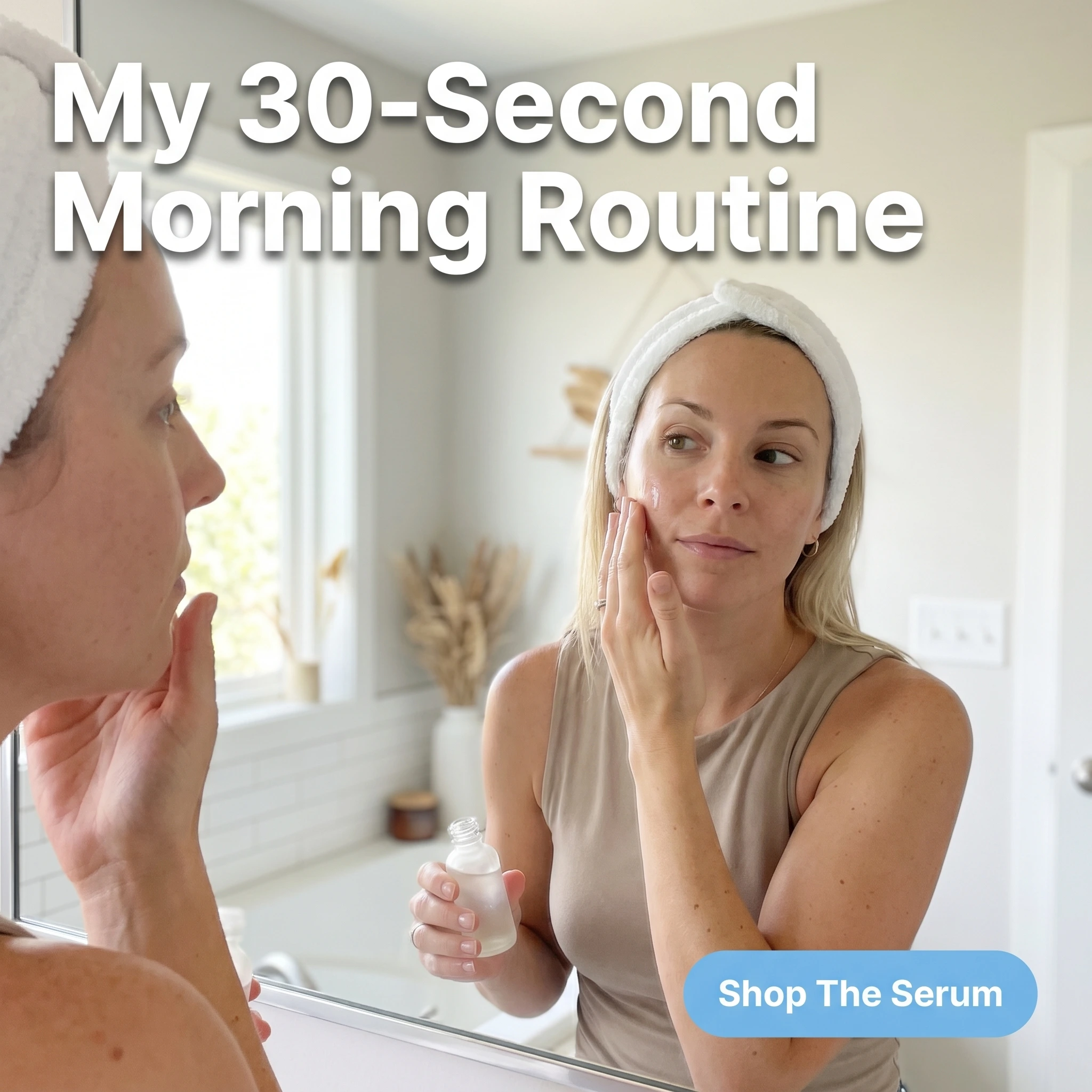
The format & angle. A Dewpoint Skin customer patting in serum at the bathroom mirror, towel headband on, shot like a real morning. Routine and convenience.
Who it targets. Cold shoppers who want better skin but bounce off complicated 10-step regimens.
The hook. “My 30-Second Morning Routine.” It promises results without the time cost that kills most skincare habits.
Why it works. The unstaged bathroom setting reads as a real customer, not an ad, which earns trust from a guarded audience. Framing it as a quick routine removes the biggest objection — that skincare is a chore — and makes the product feel sustainable. Convenience widens the audience beyond skincare obsessives to anyone who wants low-effort results.
Steal it. Shoot a real, simple application in everyday bathroom light and headline the time or the step count, not a vague outcome. Send the click to the product or a routine bundle, not a wall of text.
2. The serum-drop hero ad
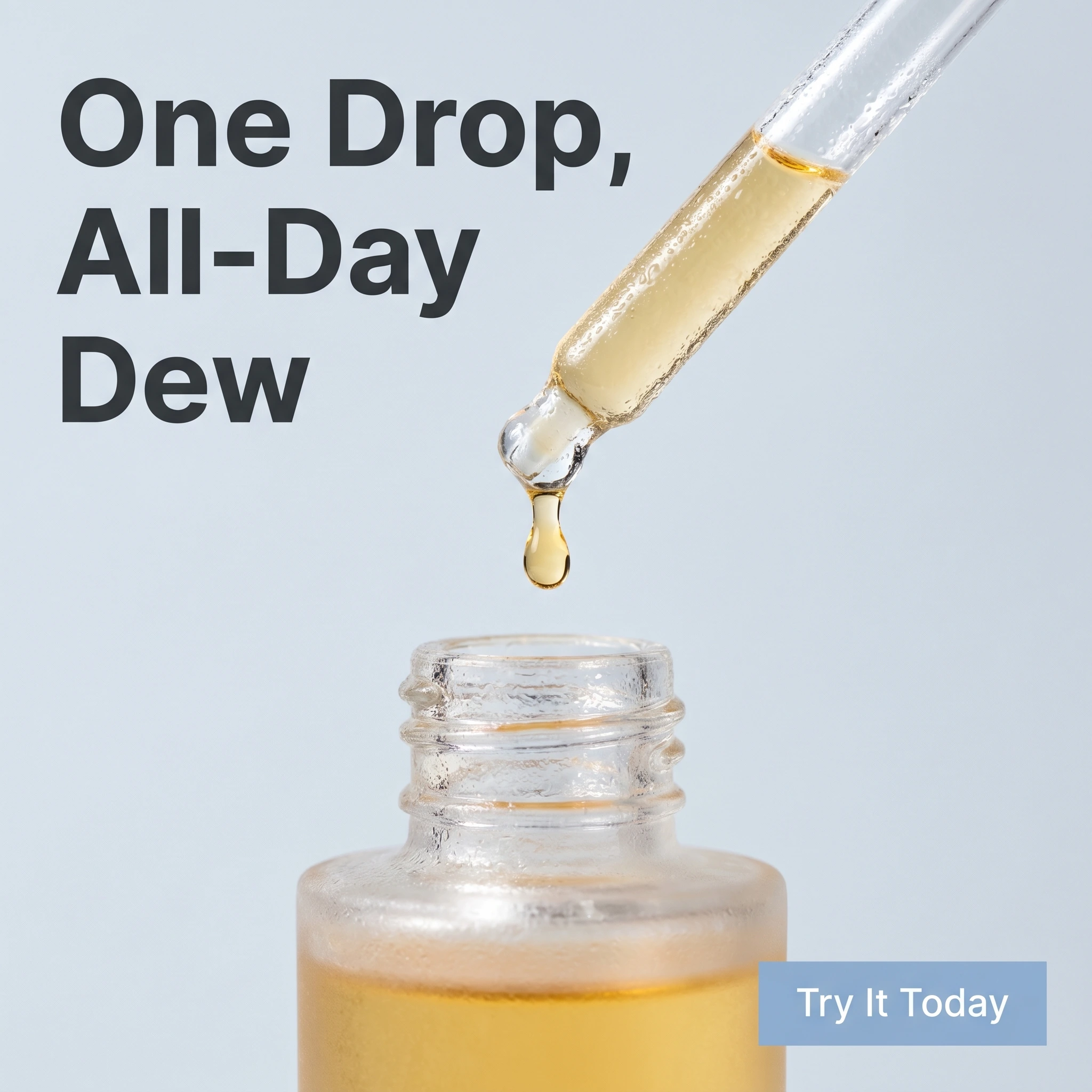
The format & angle. Lys Skincare’s macro: a dropper releasing a single glistening droplet above a frosted bottle, dewy texture, no people, one focal point. Efficacy and ingredient.
Who it targets. Cold and warm shoppers drawn to a hero active who judge a serum on how it looks and feels.
The hook. “One Drop, All-Day Dew.” It promises efficacy and a sensory payoff in four words.
Why it works. A texture macro is desire for skincare — the dewy droplet signals hydration and quality before any claim is read. “One drop” implies potency and value (a little goes far), and “all-day dew” describes a feel customers can imagine. It’s a clean prospecting ad that makes the formula look effective without crossing into a results claim Meta would flag.
Steal it. Shoot your hero product’s texture close and beautifully lit — the drop, the cream peak, the gel sheen — and headline the sensory benefit. Keep it about feel and formula, not a promised transformation.
3. The clean-vs-cluttered ingredient split ad
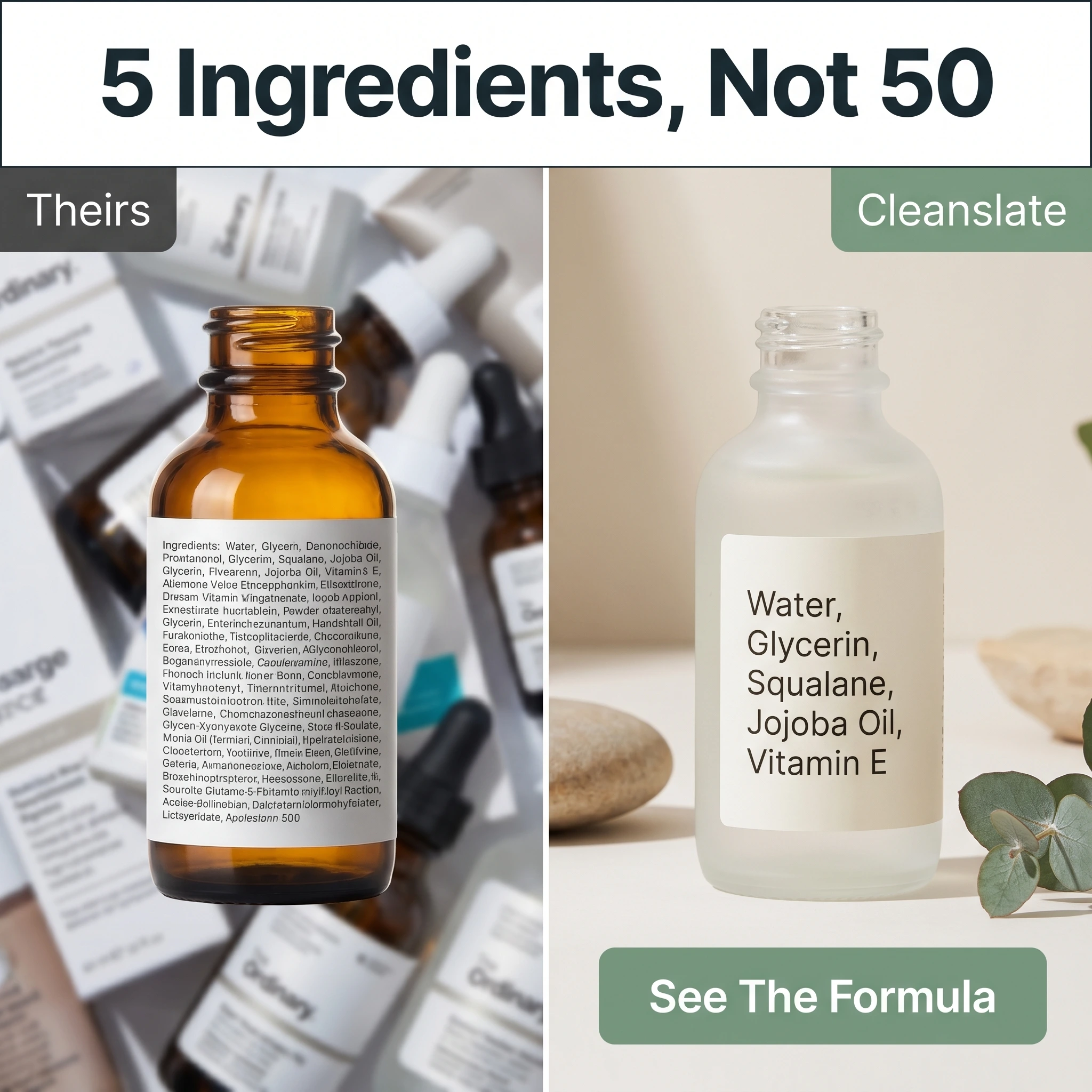
The format & angle. Cleanslate Co.’s split: a label crammed with 50 unreadable ingredients on the left, a short clean 5-ingredient label on the right. Clean and us-versus-the-old-way. This swaps the restricted before/after format for an ingredient comparison — no skin, no flaw framing.
Who it targets. Warm, ingredient-literate shoppers who’ve started flipping bottles over and distrust long chemical lists.
The hook. “5 Ingredients, Not 50.” It states the brand’s whole positioning in four words.
Why it works. The comparison makes “clean” concrete instead of a buzzword — the shopper sees the difference rather than taking it on faith. It validates the research-driven buyer’s instinct that simpler is better and positions the brand as the transparent choice. Aimed at warm traffic, it converts the skeptic the routine ad attracted by answering their exact objection.
Steal it. Put a typical overloaded label beside your short one, label each side, and keep the headline to the contrast. Make sure the claim is true — this audience will fact-check it, and a stretch destroys trust.
4. The glow testimonial ad
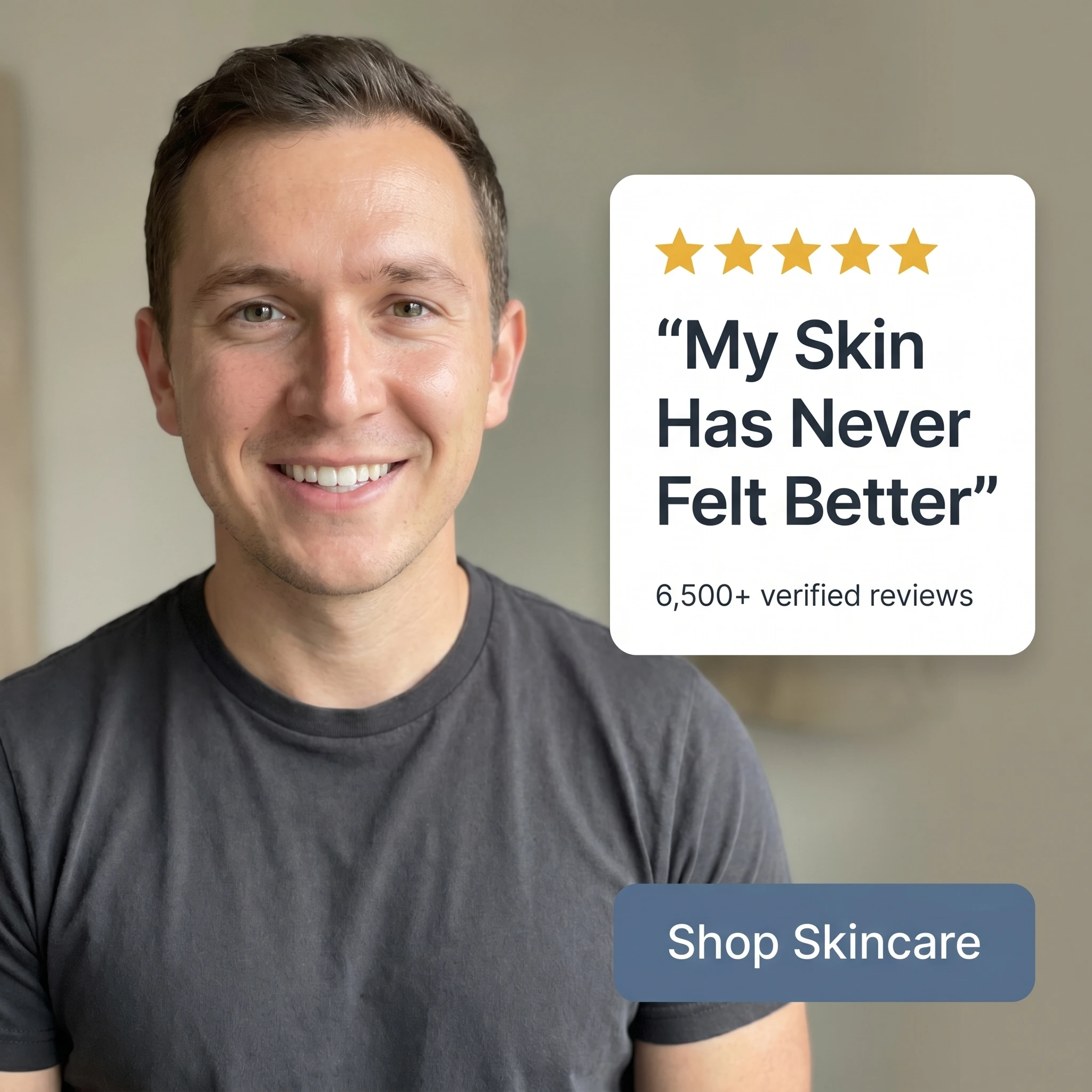
The format & angle. Hydra Theory pairs a customer with healthy, fresh skin and a review card — five stars and a verified-review count. Trust and social proof.
Who it targets. Warm shoppers who like the formula but want proof it works before they commit.
The hook. “My Skin Has Never Felt Better.” A feel-based result that’s both compliant and convincing.
Why it works. Since brands can’t promise a transformation, a customer describing how their skin feels is the strongest available proof — and “feels” stays inside Meta’s policy lines. The verified-review count signals it’s a pattern, not a paid one-off. Coming from a peer, the claim defuses the skepticism that stalls skincare purchases better than any clinical-sounding brand line.
Steal it. Choose a review that describes a feel or experience rather than a cure, build a clean card with five stars and your live verified count, and run it to people who engaged with the product but didn’t buy.
5. The starter-set offer ad
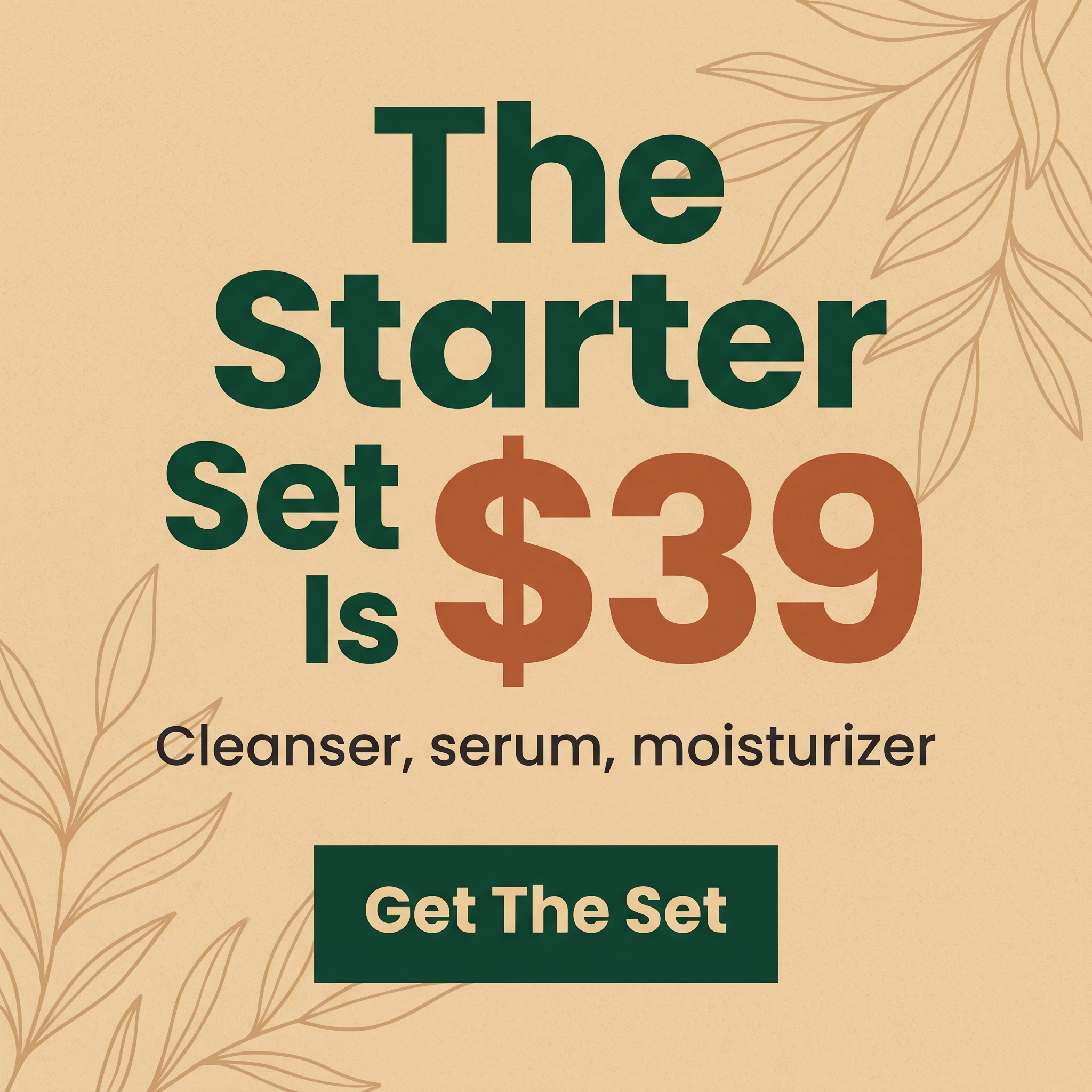
The format & angle. Marrow & Bloom’s risk-reducer: typography-led, the price dominant on warm sand, no product competing. Price and value.
Who it targets. Cold and warm first-time buyers hesitant to spend full price on an unproven routine.
The hook. “The Starter Set Is $39.” A concrete, low entry price that removes the barrier to a first purchase.
Why it works. A starter set is the smartest first purchase in skincare — it lowers the risk on an unproven brand and seeds the full routine that drives the reorders the category lives on. A named low price beats “try our bundle,” and the “cleanser, serum, moisturizer” subline shows the value without clutter. Bare type reads as a real deal, and it converts the cautious shopper the other ads warmed up.
Steal it. Make the price and what’s included the two biggest elements, skip the busy product shot, and target first-time visitors and engagers. Use the starter set as the on-ramp to a subscription or reorder flow.
Build a full routine of ads
A simple routine, a hero ingredient, a clean-formula contrast, a trusted rave, and a low-risk starter set — five reasons a skeptical shopper finally tries you. Andromeda-era delivery can evaluate and personalize far more creatives per auction than the system it replaced, so a varied set lets Meta send the ingredient researcher the comparison and the cautious first-timer the starter set.
Run the routine UGC and serum hero to prospect, the ingredient split and testimonial to convert warm researchers, and the starter set to lower the bar on a first buy. Refresh creators and reviews often so a tight retargeting audience never fatigues — and keep every concept inside Meta’s health and personal-attribute rules.
Producing that much compliant creative is the real constraint for a growing skincare brand. Zendux drafts on-brand static variants with AI and fans them out across your ad sets, so a full slate is ready for the next launch. If you also sell color cosmetics, the beauty brand ad examples breakdown pairs naturally with this; for broader online-retail ideas, see the ecommerce ad examples.