5 Jewelry Ad Examples That Sell (and Why They Work)
Five jewelry ad examples that turn scrollers into buyers — a try-on UGC ad, a diamond hero, a lab-grown-vs-mined value split, a gift review, and an anniversary sale.
Jewelry ads sell when they make a small, expensive object feel worth it — by showing the piece on a real person and giving one clear reason to buy now. A ring or a necklace is bought on emotion and justified on craft, occasion, or price, so the ad has to spark the want and then answer the hesitation. These five fictional jewelry ad examples each run a different angle in a different layout — a try-on UGC moment, a diamond hero, a lab-grown-versus-mined value split, a gift testimonial, and an anniversary offer.
Key takeaways
- Show it worn, not just shot — a piece on a real neck or hand conveys scale and desirability a product-only photo can’t.
- Sell the occasion — engagements, anniversaries, and “treat yourself” moments are the buying triggers; name them.
- Justify the price — lab-grown value, certification, or a lifetime warranty answers the “is it worth it” hesitation.
- Gifting is half the market — speak to the giver’s fear of getting it wrong, not just the wearer’s taste.
What makes a great jewelry ad
The buyer is split into two minds: the person treating themselves and the person buying a gift they’re terrified to get wrong. Both decide on emotion, but they hesitate for different reasons — the self-purchaser wonders if it’s worth it, the gift-giver wonders if it’ll land. A good jewelry ad sparks the desire fast, then hands over the exact reassurance that buyer needs.
Desire comes from seeing the piece in context. A necklace on a real collarbone or a ring catching light tells the brain “this is beautiful and this is the size” in a way a floating product shot can’t. The on-body shot and the macro hero do different jobs, which is why pulling layouts from proven static ad examples and applying the principles behind the best static ads pays off in this category.
Then comes justification. Price is the friction, so the ad needs an answer: lab-grown value, certification, lifetime warranty, free resizing, easy returns. Specifics beat luxury adjectives — the same lesson that runs through strong ecommerce ad examples. The five concepts below cover the desire-and-justification spread.
| Ad | Format | Angle | Funnel stage | Best for |
|---|---|---|---|---|
| Try-on UGC | UGC | Everyday luxury/status | Cold | Self-purchasers |
| Diamond hero | Hero | Craft/quality | Cold/warm | Signature pieces |
| Lab-grown-vs-mined split | Comparison | Price/value | Warm | Value-led brands |
| Gift testimonial | Testimonial | Emotion/social proof | Warm | Gift-givers |
| Anniversary offer | Offer | Urgency/value | Cold/warm | Seasonal sales |
1. The try-on UGC ad
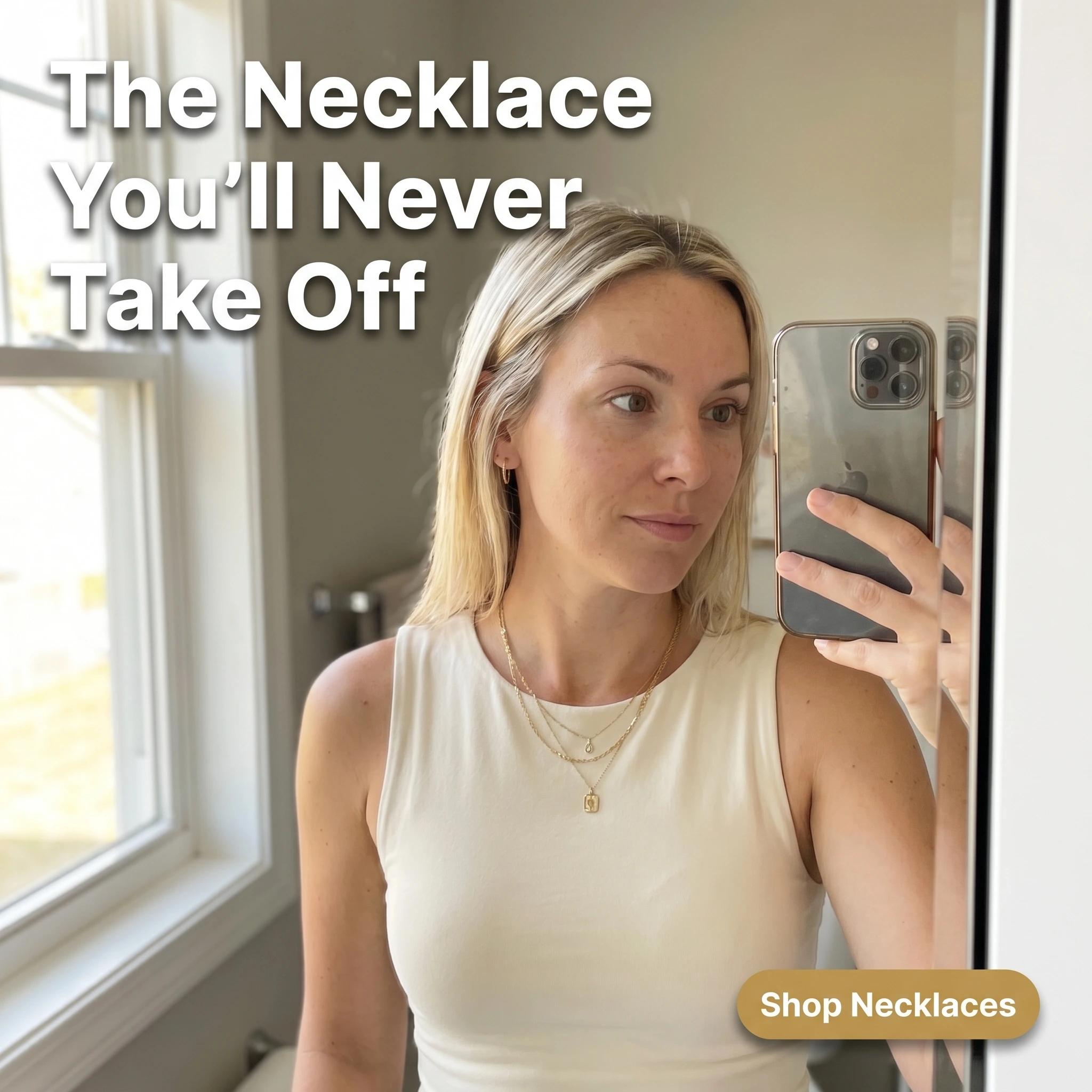
The format & angle. A Verenne customer taking a mirror selfie that shows a delicate layered gold necklace at her collarbone, shot like a real “look what I got” post. Everyday luxury and status.
Who it targets. Cold self-purchasers who buy jewelry for themselves and want pieces they can actually live in.
The hook. “The Necklace You’ll Never Take Off.” It reframes the buy from a special-occasion splurge to a daily staple — better value in the shopper’s mind.
Why it works. Seeing the piece on a real neck answers the two silent questions — how big is it, how does it sit — that stop online jewelry purchases. The selfie framing reads as a recommendation, not an ad, and “never take off” positions the price as cost-per-wear, which is exactly how self-purchasers rationalize. It’s a clean prospecting ad that also builds a retargeting pool.
Steal it. Shoot your bestselling everyday piece on a real person, phone-camera style, in natural light. Headline the wearability, not the carat, and send the click to that product, not the homepage.
2. The diamond hero ad
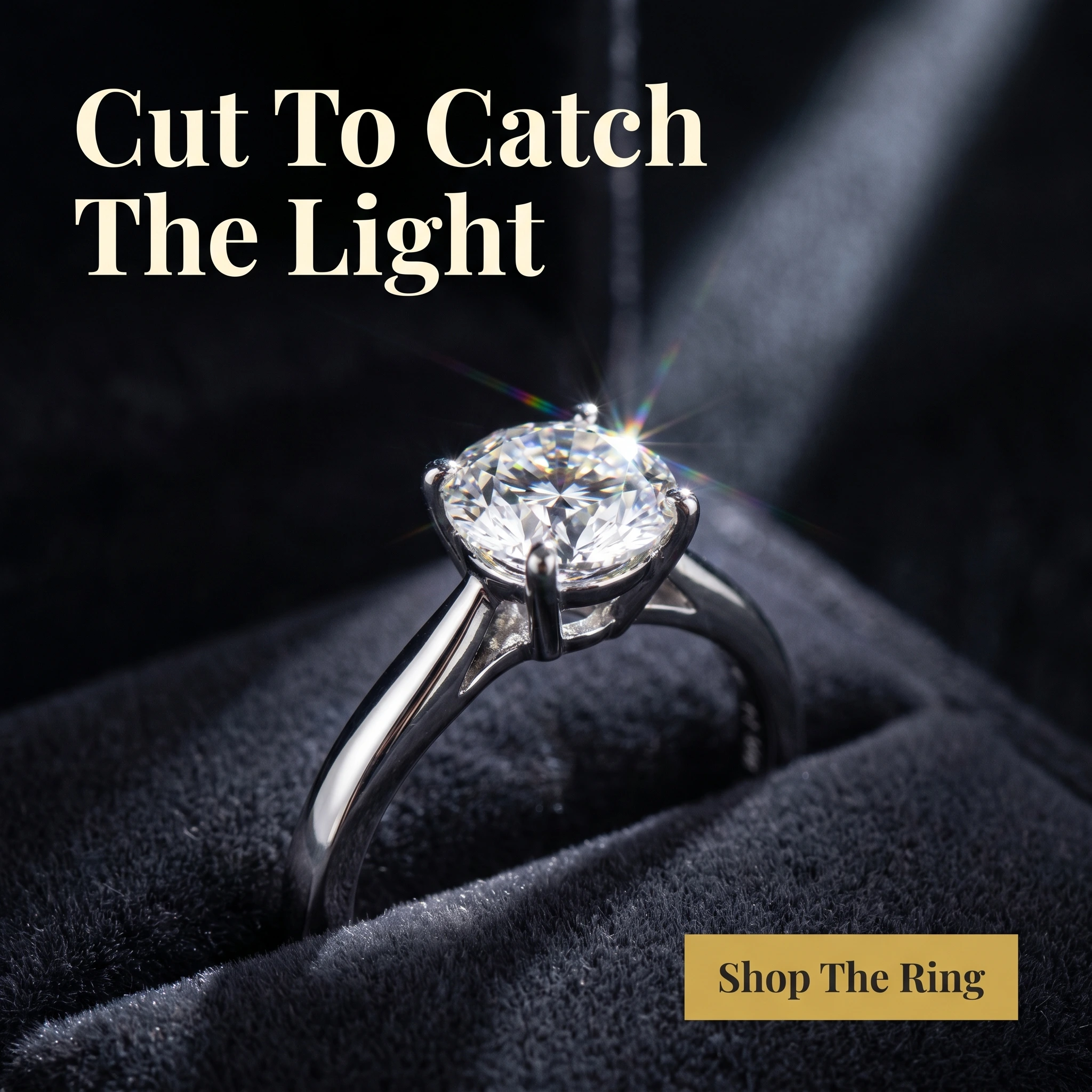
The format & angle. Aurelia & Stone’s signature macro: a solitaire ring on charcoal velvet, one dramatic light igniting the facets, no people, one focal point. Craft and quality.
Who it targets. Cold and warm shoppers researching a serious piece — engagement and milestone buyers who judge on the stone.
The hook. “Cut To Catch The Light.” It names what diamond buyers actually evaluate — cut and brilliance — instead of generic sparkle.
Why it works. A tight, well-lit macro is pure desire; the fire in the facets does the selling no adjective can match. Leading on cut signals expertise to a buyer who’s been reading about the 4Cs, which builds trust at the exact moment they’re comparing vendors. It’s the prestige ad that makes the brand feel worth its price before the value and offer ads close the deal.
Steal it. Shoot your hero stone close, in hard directional light that maximizes fire, on a dark seamless ground with nothing competing. Headline the quality dimension your buyers care most about — cut, clarity, or origin.
3. The lab-grown-vs-mined value split ad
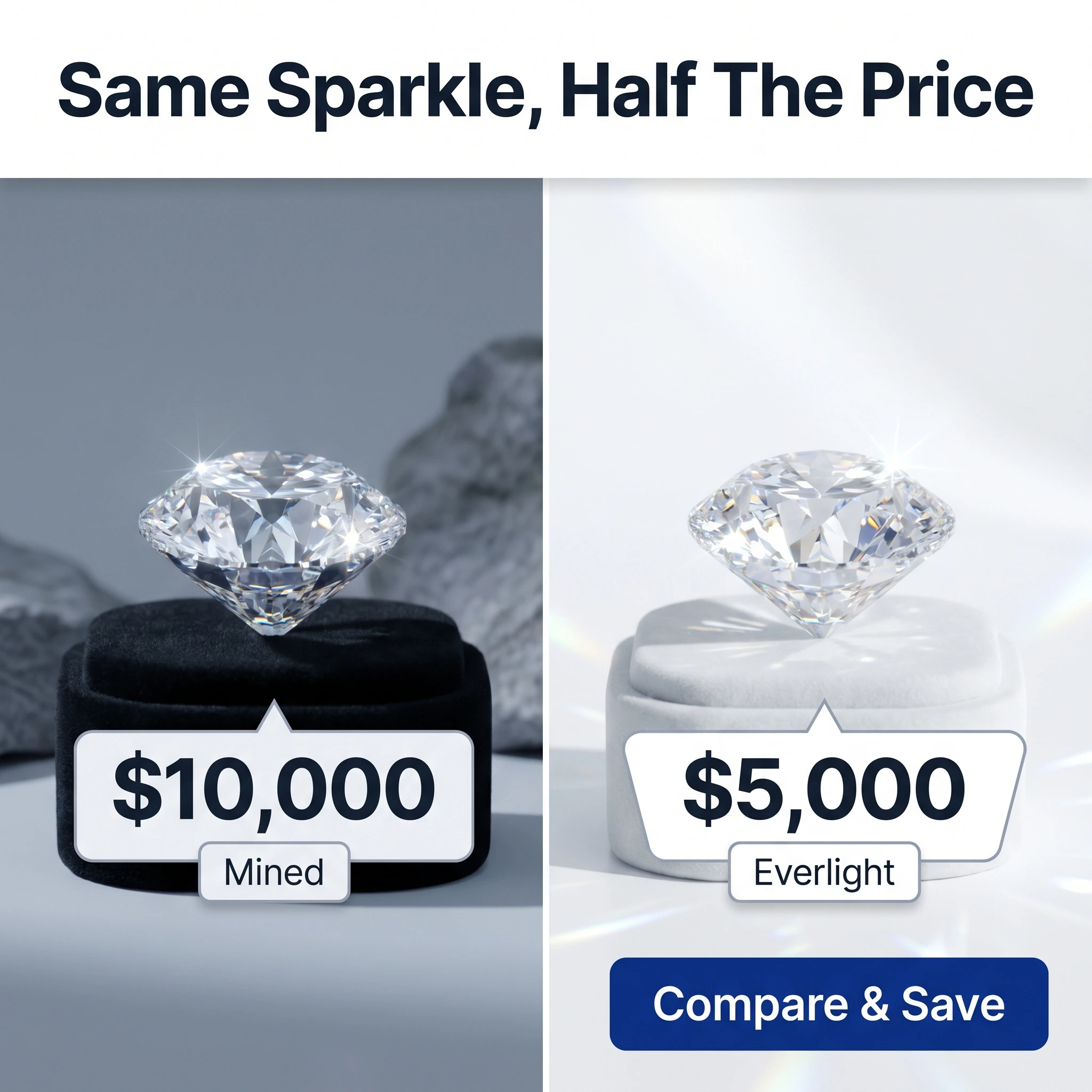
The format & angle. Everlight Jewelry’s split: a mined diamond with a high price tag on the left, a visually identical lab-grown stone at a lower price on the right. Price and value. Before/after doesn’t fit a product like jewelry, so this slot runs a value comparison instead.
Who it targets. Warm shoppers weighing an engagement ring who’ve started questioning the mined-diamond markup.
The hook. “Same Sparkle, Half The Price.” It makes the value case in five words.
Why it works. The comparison format turns an abstract debate into an obvious choice — if the stones look identical and one costs half, the decision makes itself. It directly addresses the sticker shock that stalls ring purchases, and it positions the brand as the smart, modern option rather than the budget one. Aimed at warm, price-comparing traffic, it converts the hesitation the hero ad created desire for.
Steal it. Build an honest side-by-side of the two options at real prices, label each clearly, and retarget people who viewed your engagement collection. Keep the claim defensible — overstating the comparison erodes the trust a high-ticket purchase needs.
4. The gift testimonial ad
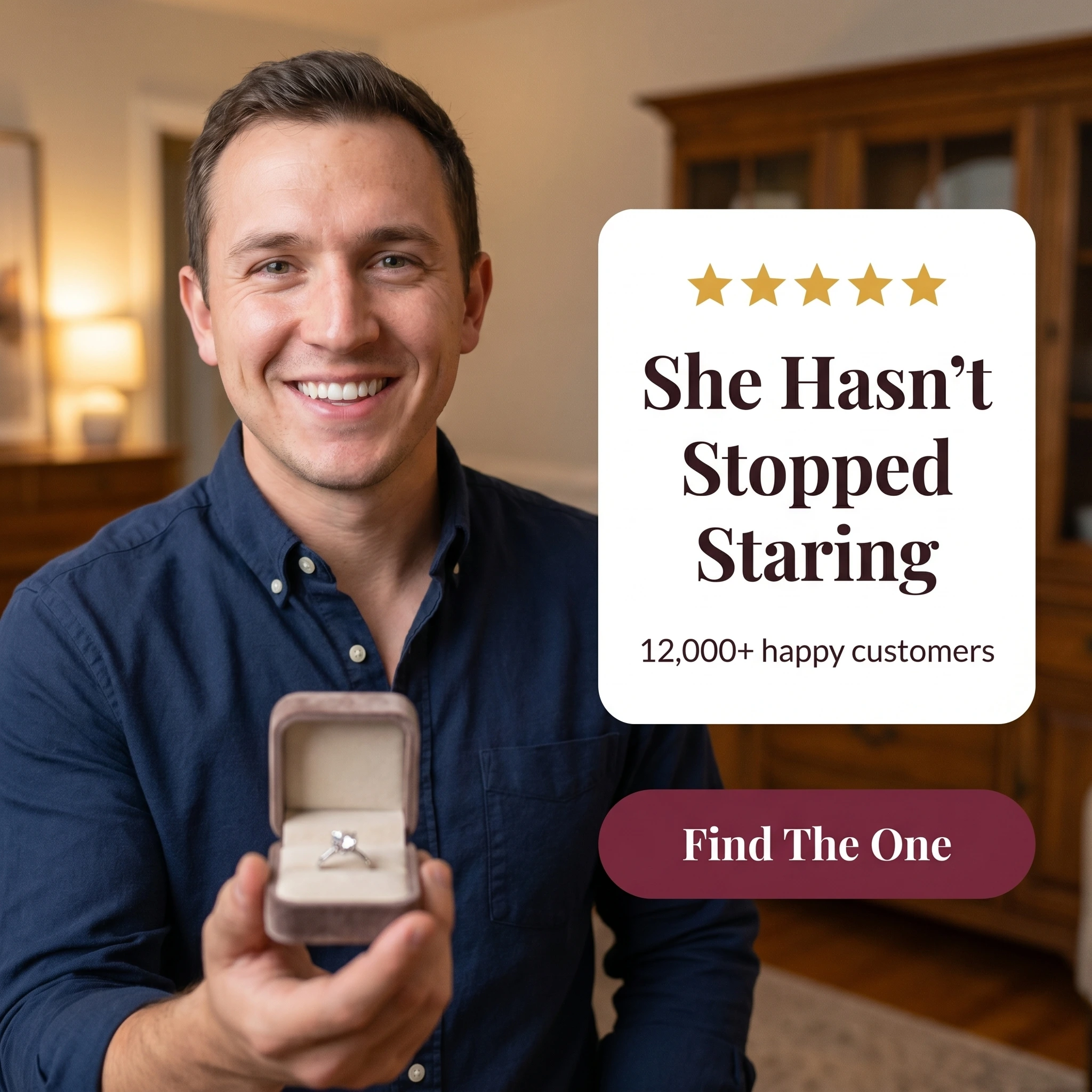
The format & angle. Saint Clair pairs a happy gift-giver holding a ring box with a review card — five stars and a customer count. Emotion and social proof.
Who it targets. Warm gift-givers comparing where to buy, anxious about choosing the wrong piece.
The hook. “She Hasn’t Stopped Staring.” A reaction quote that sells the outcome the giver actually wants — delight, not just a ring.
Why it works. Gift buyers fear regret more than price, so a peer reporting a great reaction is the precise reassurance they need. The visible customer count proves it’s not a fluke, and putting the win in a real giver’s words carries trust the brand can’t claim about itself. It nudges an anxious buyer from “what if it’s wrong” to “this is the safe choice.”
Steal it. Pull a review that describes the recipient’s reaction, build a card around the verbatim quote with a real customer photo, and run it to warm gift-intent audiences in the weeks before a gifting season.
5. The anniversary offer ad
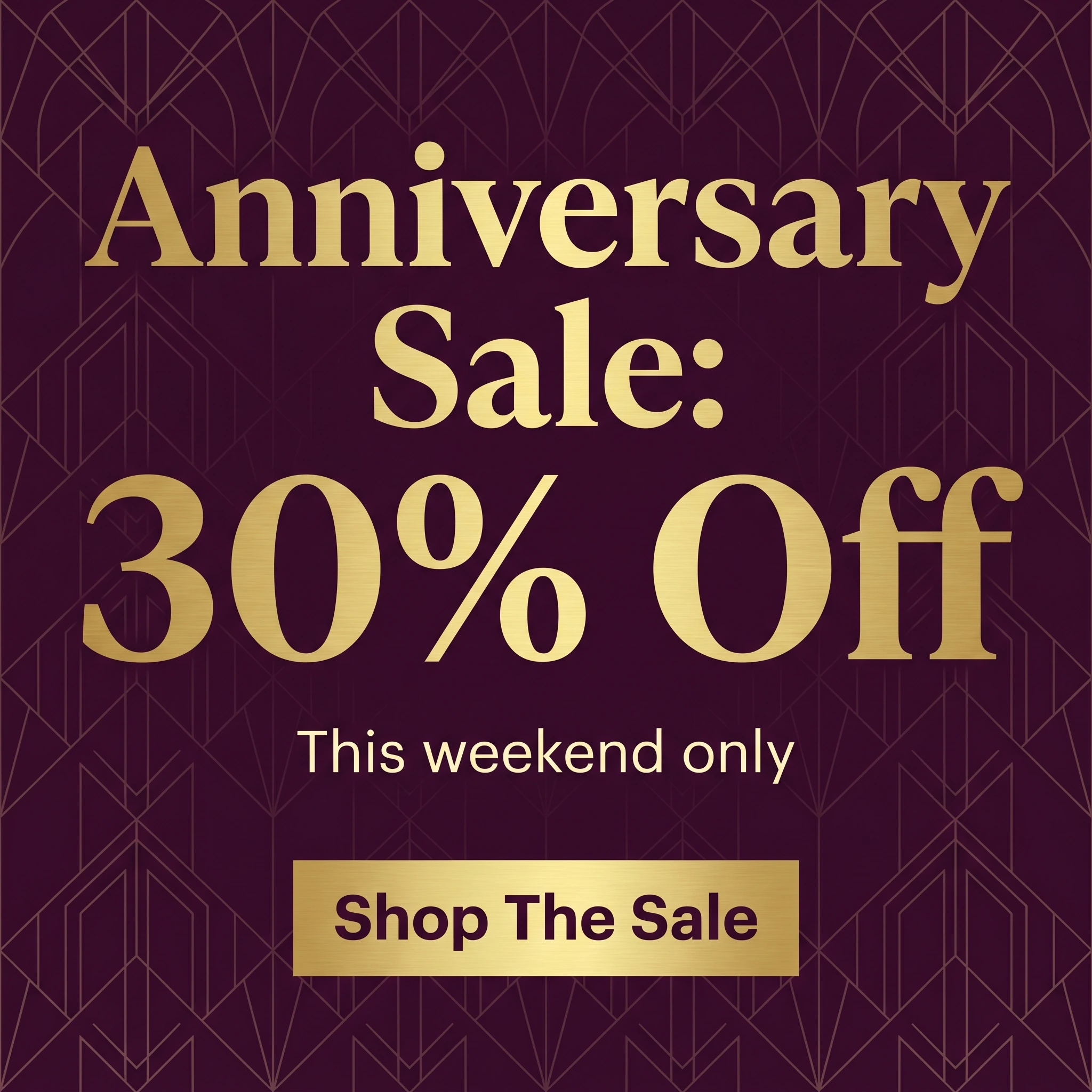
The format & angle. Goldthread Co.’s deadline play: typography-led, the discount dominant on deep plum, no product competing with the number. Urgency and value.
Who it targets. Cold and warm shoppers who’ve been circling a piece and need a reason to stop circling.
The hook. “Anniversary Sale: 30% Off.” A concrete discount with a built-in deadline.
Why it works. Jewelry purchases stall for months — the desire is there, the trigger isn’t — so a dated discount is often what finally converts it. “30% off, this weekend only” creates real urgency without a fake timer, and the bare layout reads as a genuine sale rather than a brand post. It’s the closer for everyone the try-on and testimonial warmed up.
Steal it. Make the discount and the deadline the two biggest elements, skip the product photo so the deal reads instantly, and schedule it to retarget everyone who engaged with your catalog in the prior 60 days.
Build a window display of ads
Everyday luxury, master craft, smart value, a gifting rave, and a dated sale — five reasons the same shopper finally checks out. Because Andromeda-era delivery evaluates far more ads per auction, a varied set lets Meta route the self-treater to the try-on and the soon-to-propose buyer to the value comparison, instead of riding one product shot for every audience.
Sequence by intent: the try-on and hero prospect, the comparison and testimonial convert warm shoppers, and the sale closes on a deadline — weight it heavier through gifting seasons. Refresh the featured piece and offer often so a small retargeting pool never fatigues.
Producing that much on-brand creative is the bottleneck for a lean jewelry brand. Zendux spins up static ad variants with AI and rolls them out across ad sets together, so a full slate of angles is ready before the next gifting window. For more retail-side ideas, the fashion ecommerce ad examples and beauty brand ad examples breakdowns pair well with this one.