Amazon Seller Ad Examples: 5 Meta Ads That Sell
Five Amazon seller ad examples for Meta that send shoppers to your listings: social-proof UGC, a product hero, a before/after, a review, and a launch offer.
Meta can’t close the sale on your Amazon listing for you, so its job is velocity: send pre-sold, well-matched traffic to a page that already converts. That’s the lens the Amazon seller ad examples below are built through — Facebook and Instagram creative driving external traffic, the kind Amazon rewards with the Brand Referral Bonus, not on-platform Sponsored Products. The five fictional product ads here cover the angles that turn cold scrollers into Amazon buyers, each in a visibly different format.
Key takeaways
- External traffic is rewarded. The Brand Referral Bonus credits roughly 10% of qualifying sales back to brand-registered sellers, so converting Meta ads partly pay for themselves.
- Velocity lifts rank. Converting off-Amazon traffic adds sales velocity, a core ranking input — but only if the traffic is matched well enough to buy.
- Track with Amazon Attribution, since you can’t pixel an Amazon page; it’s how you know which creative actually sells.
- Five distinct concepts find five pockets of buyers, which is how Meta’s delivery rewards a product portfolio now.
What makes these Amazon seller ad examples sell
The buyer is a cold scroller who isn’t shopping for your product and will land on an Amazon page where the back button is one tap away. Your ad has to do two jobs most ad articles ignore: stop the scroll and pre-sell hard enough that the listing only has to confirm the decision.
Three principles follow. First, the creative carries the persuasion, because an Amazon listing is built to convert intent, not to create it — the desire has to arrive with the click. Second, match the ad to the listing so the hero image, benefit, and even the price the shopper expects are continuous; a mismatch tanks conversion and wastes the click. Third, lean on reviews, since Amazon shoppers trust the review count above almost everything, and surfacing it in the ad borrows that trust early.
Measurement is the discipline that separates profitable sellers from hopeful ones. You can’t drop a Meta pixel on an Amazon page, so use Amazon Attribution to connect ad clicks to sales, and weigh the Brand Referral Bonus into your true cost per order. On the creative side, the same rules that make the best static ads convert apply here — one claim, one focal point, legible at thumbnail size.
| Ad | Product | Format | Angle | Best for |
|---|---|---|---|---|
| Sold-out UGC | Milk frother | UGC | Social proof / scarcity | Trending impulse products |
| 24-hour-cold hero | Insulated bottle | Product hero | Dream outcome / benefit | Spec-driven hero products |
| Junk-drawer before/after | Drawer organizers | Before/after | Transformation | Problem-solution products |
| Review-count testimonial | Slow-feeder bowl | Testimonial | Trust / social proof | High-review catalog leaders |
| Launch-week offer | Soy candles | Offer | Price / urgency | New launches and rank pushes |
1. The sold-out UGC ad
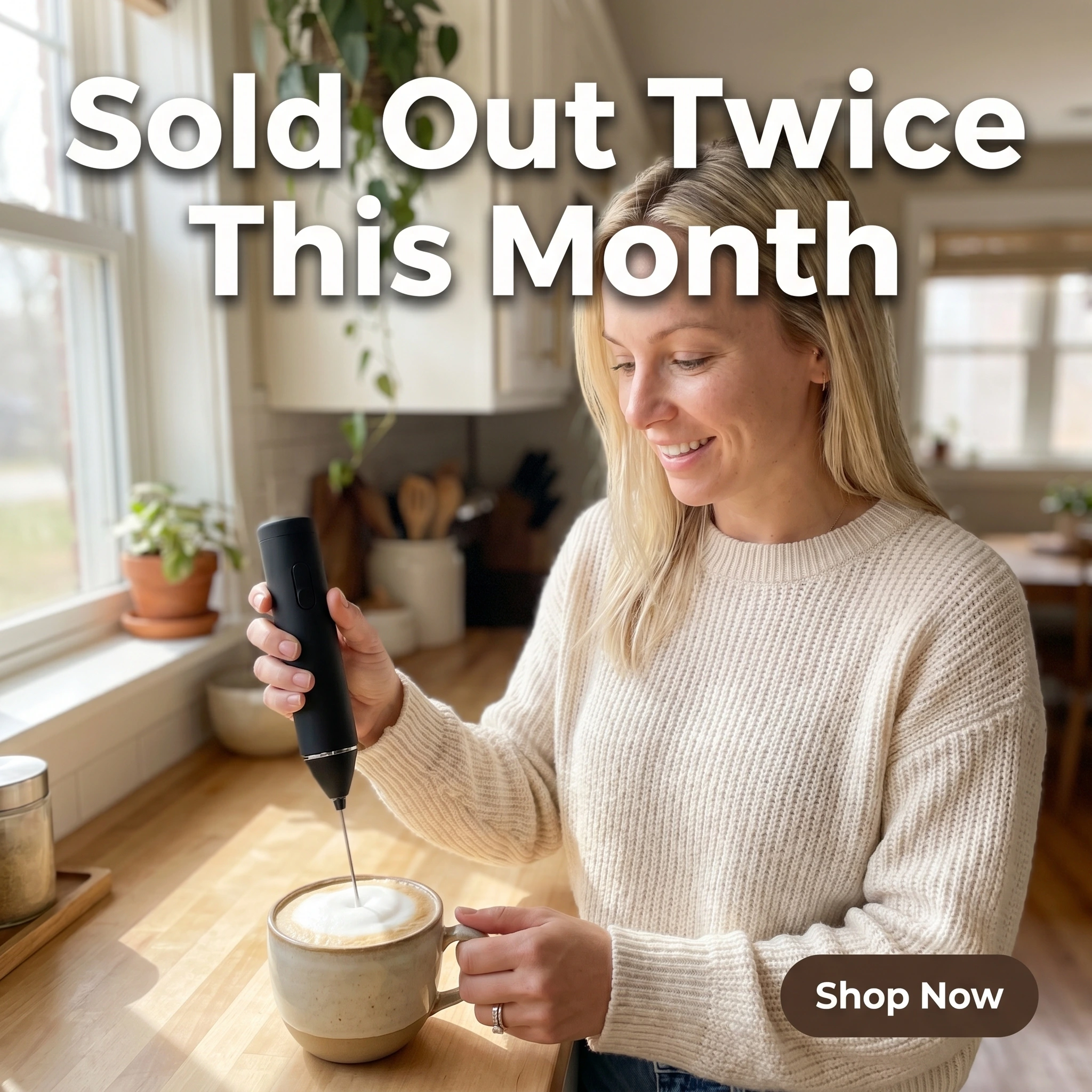
The format & angle. A candid smartphone-style shot of a Frothwell customer in her kitchen holding the frother beside a fresh latte. Social proof and scarcity, in a real user’s hands.
Who it targets. Cold scrollers who love a small kitchen upgrade and are swayed by what’s popular.
The hook. “Sold Out Twice This Month.” Scarcity plus social proof — if it keeps selling out, it must be worth having.
Why it works. A real kitchen and a real hand around the product read as a recommendation, and a recommendation beats a catalog shot cold. The sold-out line manufactures honest urgency from genuine demand and implies a crowd has already validated the purchase — exactly the reassurance a cold buyer needs before clicking through to a listing. The everyday kitchen setting makes the product feel attainable.
Steal it. Film a real customer or your own kitchen, natural light, product in use. Headline real momentum — a sell-out, a waitlist, a restock — and make sure the listing’s main image matches the product in the shot.
2. The 24-hour-cold hero ad
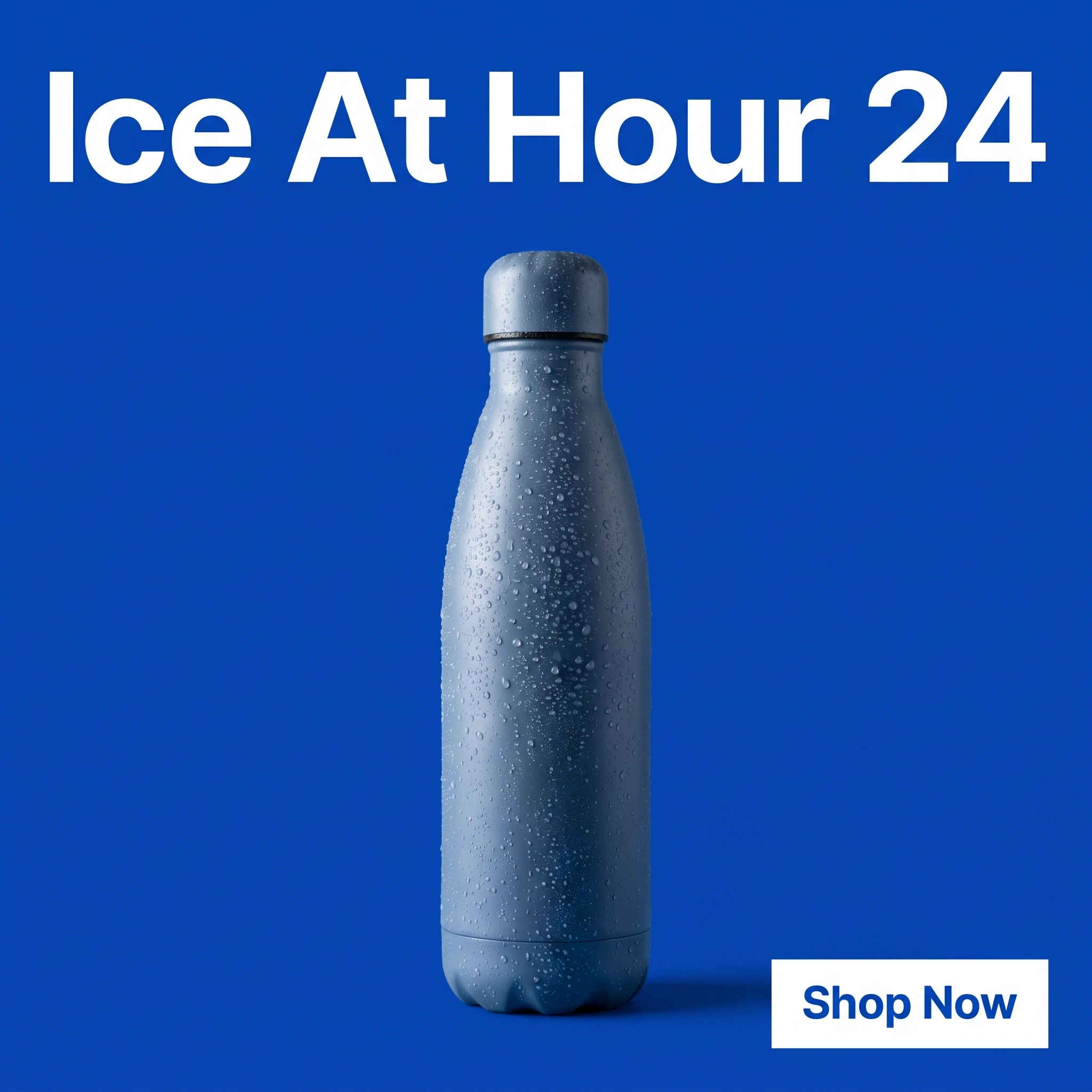
The format & angle. Glacir’s product hero: a single insulated bottle on a saturated background, beaded with condensation, one focal point, studio-clean. Dream outcome expressed as a hard benefit.
Who it targets. Cold buyers comparing bottles on a concrete spec — how long it actually stays cold.
The hook. “Ice At Hour 24.” A specific, testable claim that does the work of a paragraph of features.
Why it works. Hero ads win when the product is the star and the claim is falsifiable. “Ice At Hour 24” invites the skeptical click and sets up the listing to prove it with reviews and a chart. The bold background makes the bottle pop against the feed’s photographic noise, and a single quantified benefit travels cleanly from ad to listing without a mismatch.
Steal it. Shoot your hero product on one saturated color and headline your single strongest, defensible spec as a number. Make that exact claim the first thing the listing reinforces.
3. The junk-drawer before/after ad
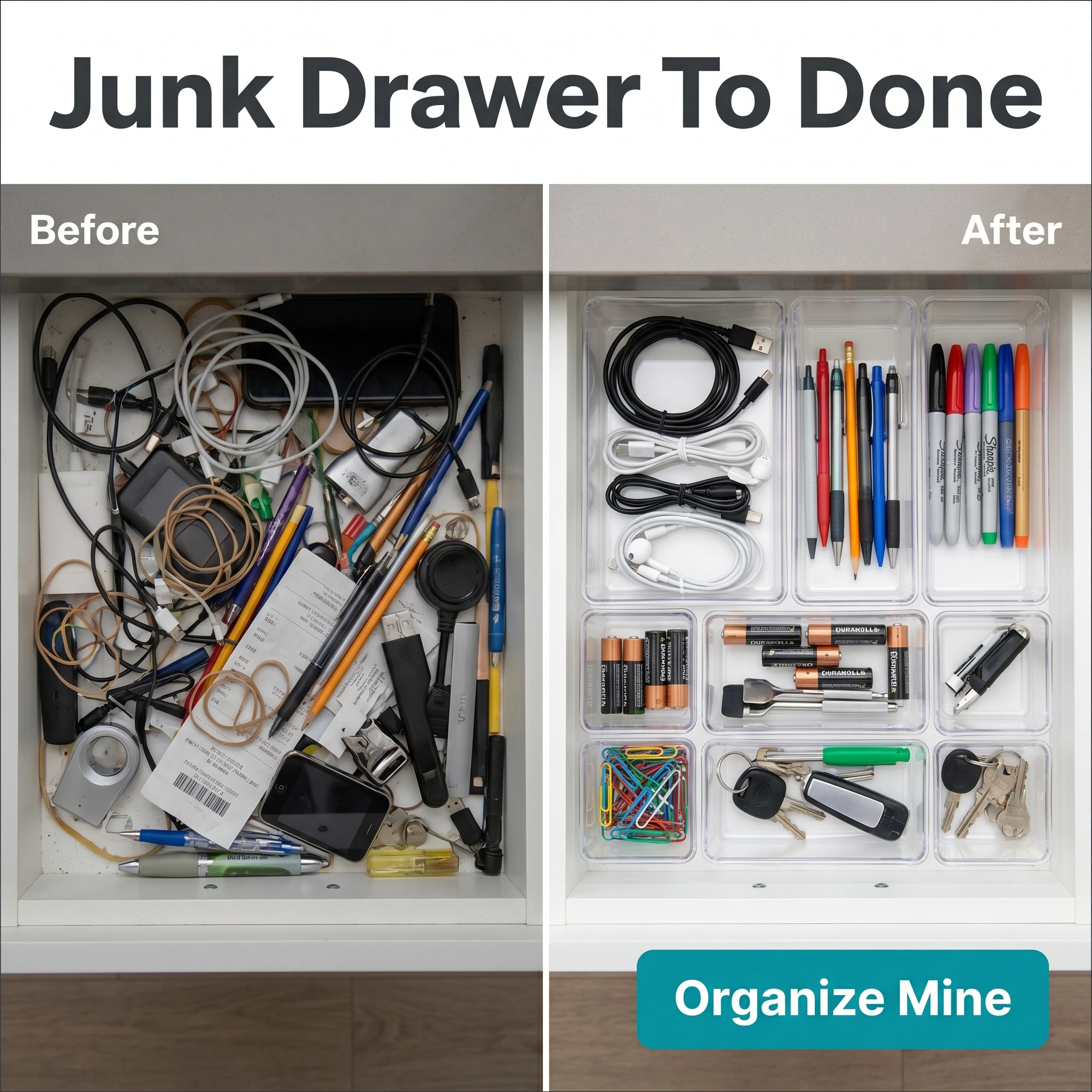
The format & angle. Nooksy’s split: a chaotic, overflowing junk drawer on the left, the same drawer neatly sorted with the organizers on the right. The problem-solution before/after physical products are built for.
Who it targets. Cold buyers who recognize their own drawer in the “before” and feel the itch to fix it.
The hook. “Junk Drawer To Done.” The contrast is the pitch; the headline just names the relief.
Why it works. Problem-solution products sell on recognition, and a before/after triggers it instantly — the messy half is a tiny jolt of “that’s mine,” the tidy half is the dopamine of the fix. The transformation makes the product’s value obvious without explanation and carries at thumbnail size. It’s also honest: the product genuinely produces that result, so the listing photos can deliver the same proof.
Steal it. Shoot the real mess and the real fix, same drawer, same angle. Lead with the universal “before” your buyer already lives with, and let the product be the visible solution.
4. The review-count testimonial ad

The format & angle. Pawthos: a dog owner on his porch with his dog eating from the slow-feeder bowl, beside a review card — five stars, “12,000 reviews.” Trust, the way Amazon shoppers measure it.
Who it targets. Warm and cold buyers who trust the crowd and screen products by review count.
The hook. “12,000 Reviews, One Calm Dog.” Social proof at scale, tied to a tangible benefit.
Why it works. Review count is the single strongest trust signal on Amazon, so surfacing it in the ad pre-loads the credibility the listing will confirm. A real owner-and-dog moment makes the bowl’s benefit concrete — calmer, slower eating — while the star rating compresses thousands of opinions into a glance. This format borrows your hardest-won asset, reviews, and puts it to work in the feed.
Steal it. Put your live review count and rating on the card with a genuine customer moment. Keep the claim short and let the number do the persuading — then make sure the listing shows the same rating the ad promised.
5. The launch-week offer ad

The format & angle. Hearthwick’s launch push: bold type, a clear discount, a clean palette, no clutter. Price and urgency, built for a rank push.
Who it targets. Cold and warm buyers who respond to a deal, and your own retargeting pool during a launch or event.
The hook. “Launch Week: 30% Off.” A real, time-boxed reason to buy now rather than save the listing for later.
Why it works. A launch or event discount does double duty: it converts price-sensitive buyers and concentrates sales into a window, and that burst of velocity is exactly what nudges organic rank during a launch or a Prime Day push. The typography-led layout reads as an announcement, and the deadline supplies honest urgency. Sent to a warm audience, an offer like this is among the cheapest orders you’ll buy.
Steal it. Time a discount to a launch, a holiday, or Prime Day to concentrate velocity when it counts. Run the offer hard to retargeting, keep the percentage the largest element, and rotate it before the creative fatigues.
Velocity comes from five angles
Social proof, a hard benefit, a problem solved, a review wall, and a launch deal — five ads aimed at five buyers, all sending velocity to listings that convert. Off-Amazon velocity scales the same way creative does: Meta’s Andromeda-era auction spreads genuinely different ads across genuinely different buyers, so a portfolio outsells five passes at one product shot. Sellers running their own storefronts alongside Amazon will find adjacent playbooks in the ecommerce ad examples and Shopify store ad examples breakdowns, and makers selling handmade goods should see the Etsy store ad examples post.
Generating five-plus genuinely different concepts per product — and refreshing them as you launch and push for rank — is the production problem behind external-traffic velocity, and it’s what Zendux solves: it turns one product into a batch of on-brand static variants and bulk-launches them across your ad sets.