5 Etsy Store Ad Examples That Drive Sales
Five Etsy store ad examples that drive sales: a maker-story UGC ad, a gift hero, a pet-portrait before/after, a gift testimonial, and a holiday-deadline offer.
A marketplace search shows a thumbnail and a price. The Etsy store ad examples that drive sales show what that thumbnail can’t — the maker’s story and the gift it will become. Shoppers come to Etsy for handmade and personalized, so an ad of a name being engraved or a pet being illustrated beats any generic product shot. The five fictional shops below cover the angles that convert gift-shoppers and treat-yourself buyers, each in a visibly different format.
Key takeaways
- Personalization is the hook. Show the name, the date, the pet — the customizable detail is what a marketplace listing can’t advertise for you.
- Sell the gift moment. “Best gift I’ve ever given” converts better than a feature list, because most Etsy purchases are for someone else.
- Your own Meta ads beat relying on Etsy’s Offsite Ads, which skim a 12–15% fee — running your own keeps the margin and the control.
- Five distinct concepts reach the gift-giver, the bride, and the pet parent separately, which is how Meta’s delivery rewards a shop now.
What the best Etsy store ad examples do differently
The buyer is usually shopping for someone else, on an occasion, and wants a gift that feels personal rather than picked off a shelf. They fear two things: giving something generic, and ordering a custom item too late for the date. Your ad has to promise meaning and reassure on timing — the two levers a big-box retailer can’t pull.
Three principles follow. First, lead with the customization, because the personalized detail is your entire advantage over Amazon and the big stores — show it being made or worn. Second, anchor to the occasion, since the gift-giver isn’t browsing, they’re solving a birthday or an anniversary. Third, mind the margin: handmade goods carry real production cost, so your creative has to convert efficiently and lean on bundles or higher-value items rather than racing competitors to the bottom on price. The one-claim discipline behind the best static ads matters even more when every click has to pay for materials and time.
| Ad | Shop | Format | Angle | Best for |
|---|---|---|---|---|
| Maker-story UGC | Engraved jewelry | UGC | Authenticity / personalization | Made-to-order makers |
| Gift hero | Leather goods | Product hero | Gift / status | High-value gift products |
| Pet-portrait before/after | Custom pet art | Before/after | Transformation | Personalized print shops |
| Gift testimonial | Custom star maps | Testimonial | Trust / social proof | Emotional gift products |
| Holiday-deadline offer | Personalized ornaments | Offer | Urgency / deadline | Seasonal gift pushes |
1. The maker-story UGC ad
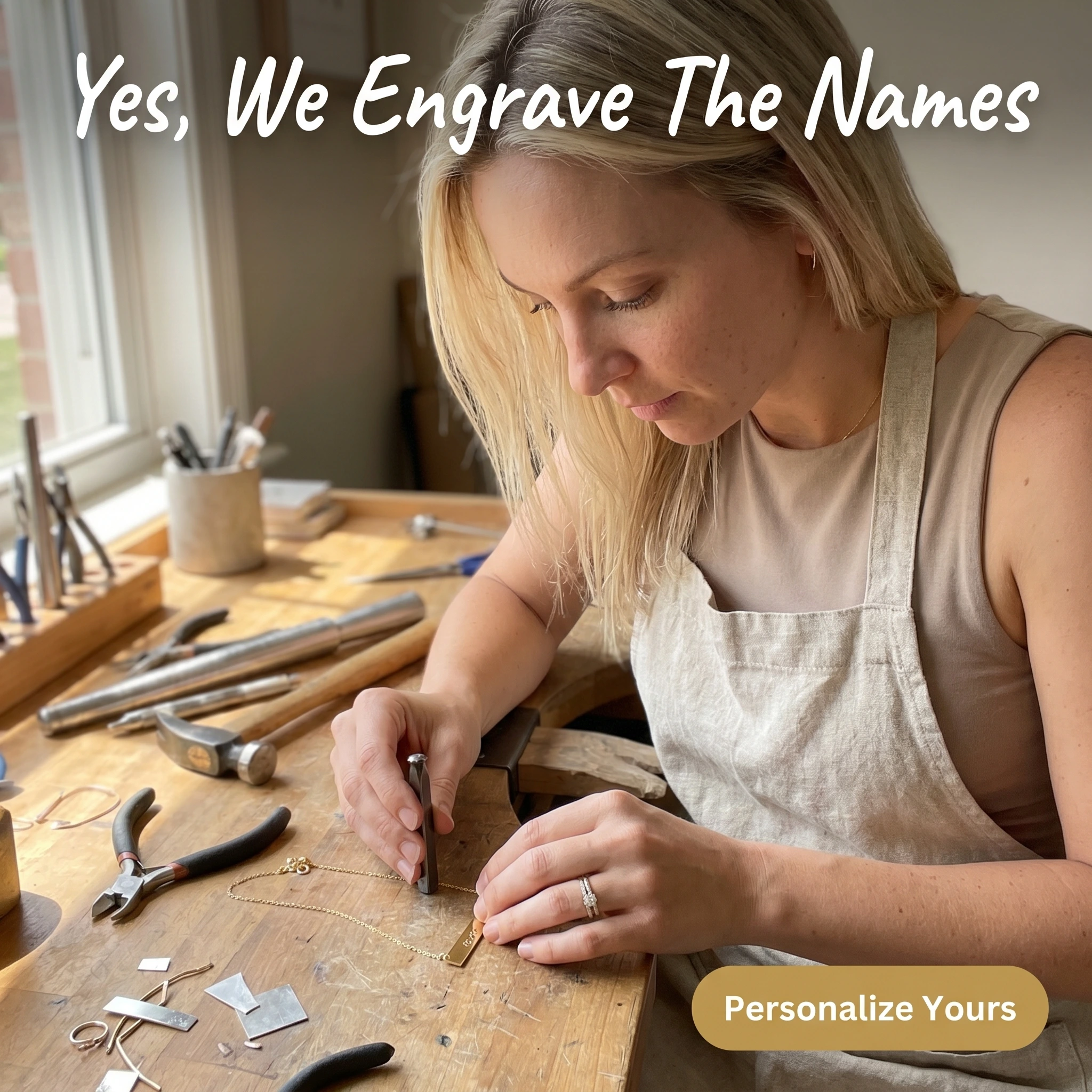
The format & angle. A Foxglove & Co. maker at her bench, hand-stamping a name onto a delicate necklace, shot like a candid phone grab in a real studio. Authenticity and personalization, in the maker’s own hands.
Who it targets. Cold shoppers who want a gift that feels handmade and personal, not mass-produced.
The hook. “Yes, We Engrave The Names.” It answers the buyer’s first question and signals true customization in one line.
Why it works. UGC reads as a real maker, not a brand, which is exactly the trust Etsy buyers are shopping for. Showing the personalization being made — a name being stamped — proves the customization is real, not a mockup, and the handmade-in-a-studio setting justifies the premium over a factory product. The maker’s hands are the whole pitch.
Steal it. Film yourself actually making or personalizing a piece, natural light, imperfect and real. Headline the customization promise as the answer to the question every gift-shopper asks — can you put the name on it.
2. The gift hero ad
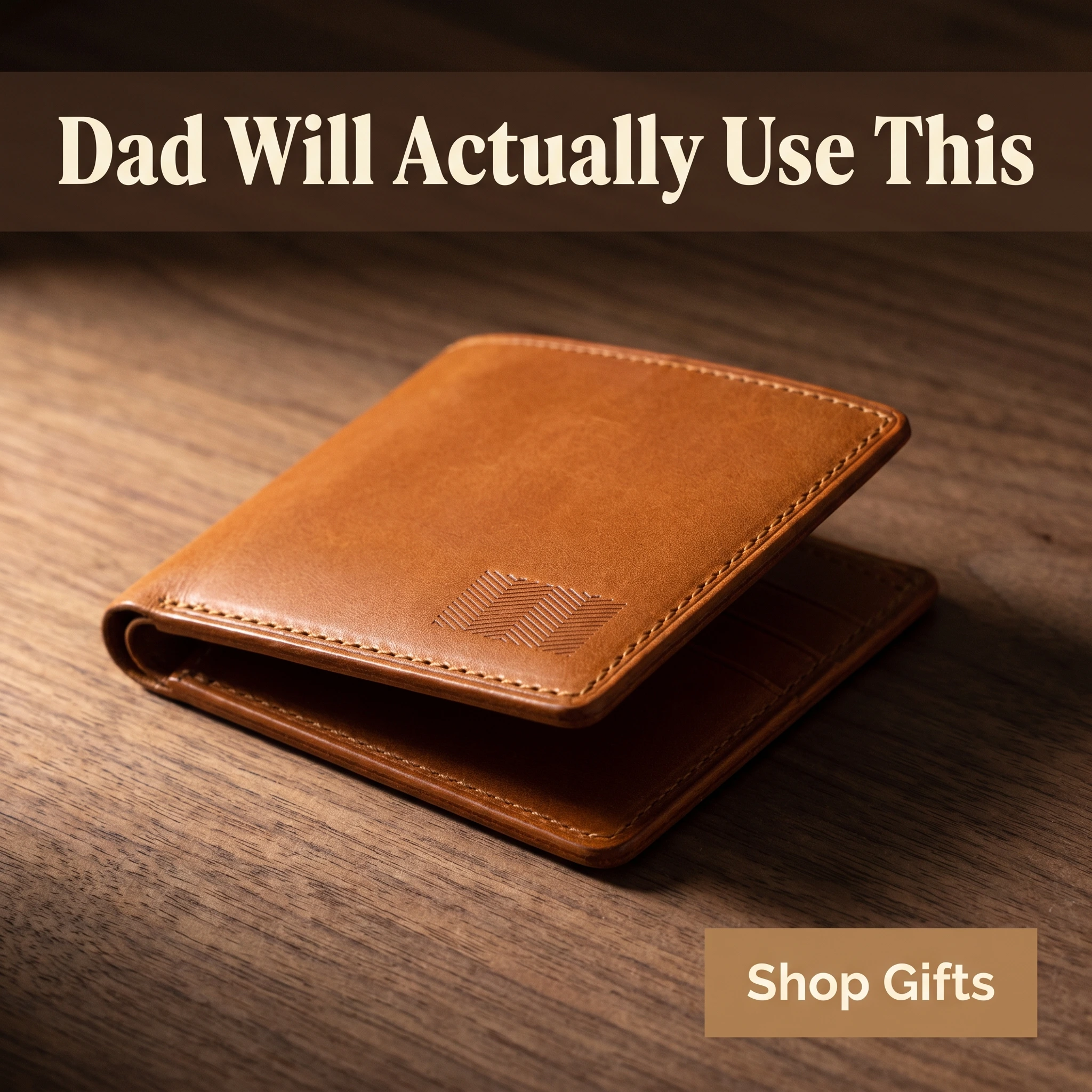
The format & angle. Tanner & Hide’s product hero: a personalized engraved leather wallet on a warm, textured background, one focal point, styled and tactile. Gift and a little status, no clutter.
Who it targets. Cold gift-givers hunting for a present that won’t end up in a drawer — think Father’s Day, birthdays, anniversaries.
The hook. “Dad Will Actually Use This.” It names the gift-giver’s real fear — wasting money on something ignored — and resolves it.
Why it works. Gift buyers worry their present will be politely shelved, so promising genuine usefulness is more persuasive than promising beauty. The tactile leather hero conveys quality at a glance and justifies the price, and the engraving hints at personalization without a word. Speaking to the giver’s anxiety, not the product’s specs, is what converts the browse into a buy.
Steal it. Shoot your most giftable product beautifully and headline the recipient’s reaction or use, not the materials. Tie the creative to the next gift occasion on the calendar.
3. The pet-portrait before/after ad
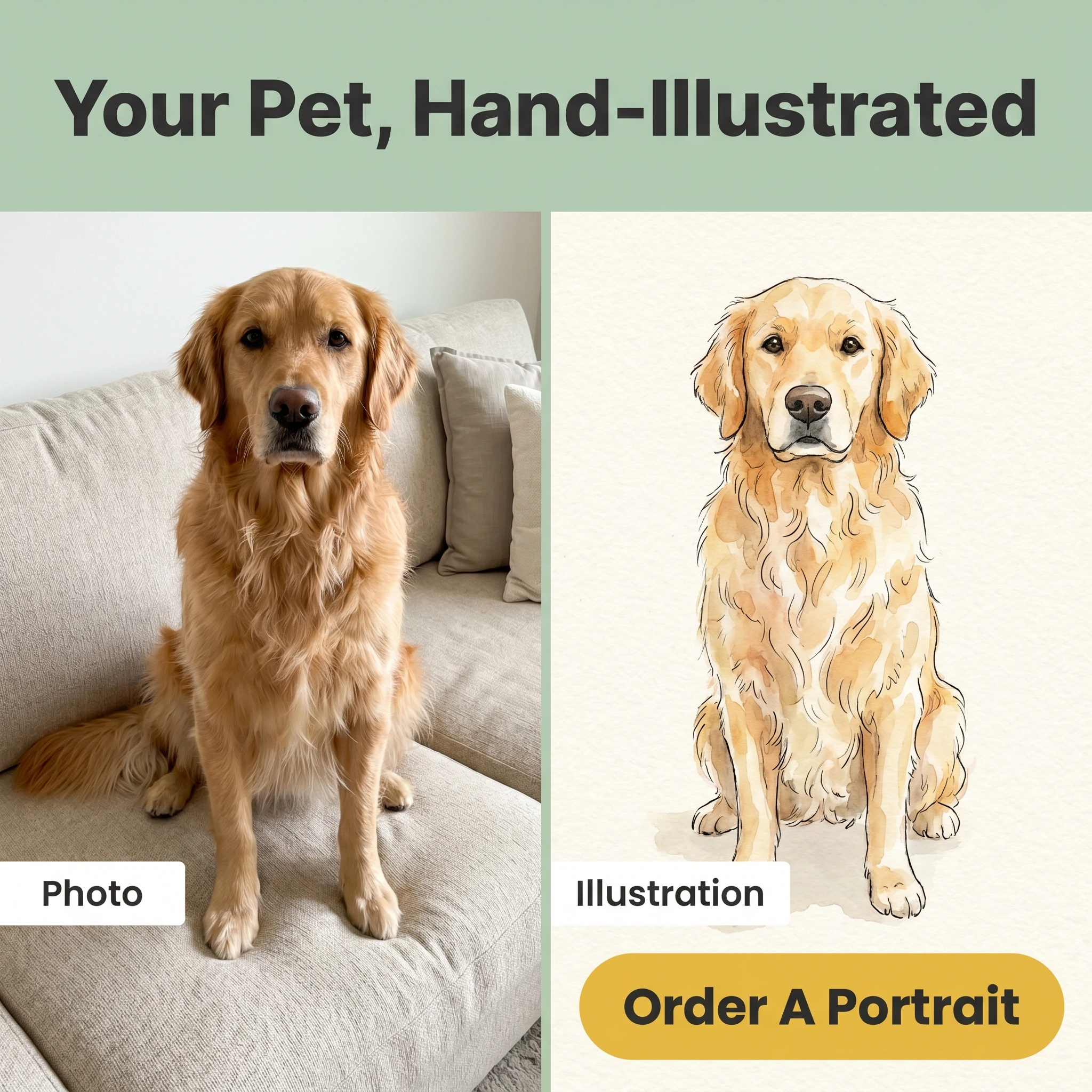
The format & angle. Paper Paws Studio’s split: a customer’s pet photo on the left, the same pet as a finished hand-drawn illustration on the right. The personalization transformation custom-art shops are built for.
Who it targets. Cold pet parents — a devoted, high-converting audience — who’ll pay for art of their animal.
The hook. “Your Pet, Hand-Illustrated.” It shows exactly what they’ll get and makes the custom process tangible.
Why it works. The before/after here is the product’s whole magic: a photo anyone has becomes a keepsake only you make. Showing the input and the output removes the doubt that stalls custom orders (“will it actually look like my dog?”). Pet parents are one of the most reliable buyers on social, and a visible transformation converts them instantly. The split lands before a word is read.
Steal it. Pair a real customer photo with your finished piece, same subject, with permission. If you sell pet products of any kind, the audience overlaps with the pet store ad examples playbook — devoted owners who respond to anything featuring their animal.
4. The gift testimonial ad

The format & angle. Northlight Prints: a happy gift-giver holding a framed custom star map beside a review card — five stars, “8,000 sales.” Trust, told through the giver’s pride.
Who it targets. Warm shoppers who’ve seen the product and need reassurance it’ll land as an emotional gift.
The hook. “Best Gift I’ve Ever Given.” A peer’s words capturing the exact feeling the buyer is chasing.
Why it works. Emotional gifts are bought on faith that they’ll move the recipient, and a giver’s testimonial supplies that faith better than any product description. Framing the proof around the giver — “I gave this and it landed” — speaks to the actual buyer, not the recipient. The sales count signals a proven shop, lowering the risk of ordering something custom and unseen.
Steal it. Pull the review that captures the recipient’s reaction — tears, surprise, “they loved it” — and build the card around it. Add your sales count beside the stars to turn one story into a track record.
5. The holiday-deadline offer ad
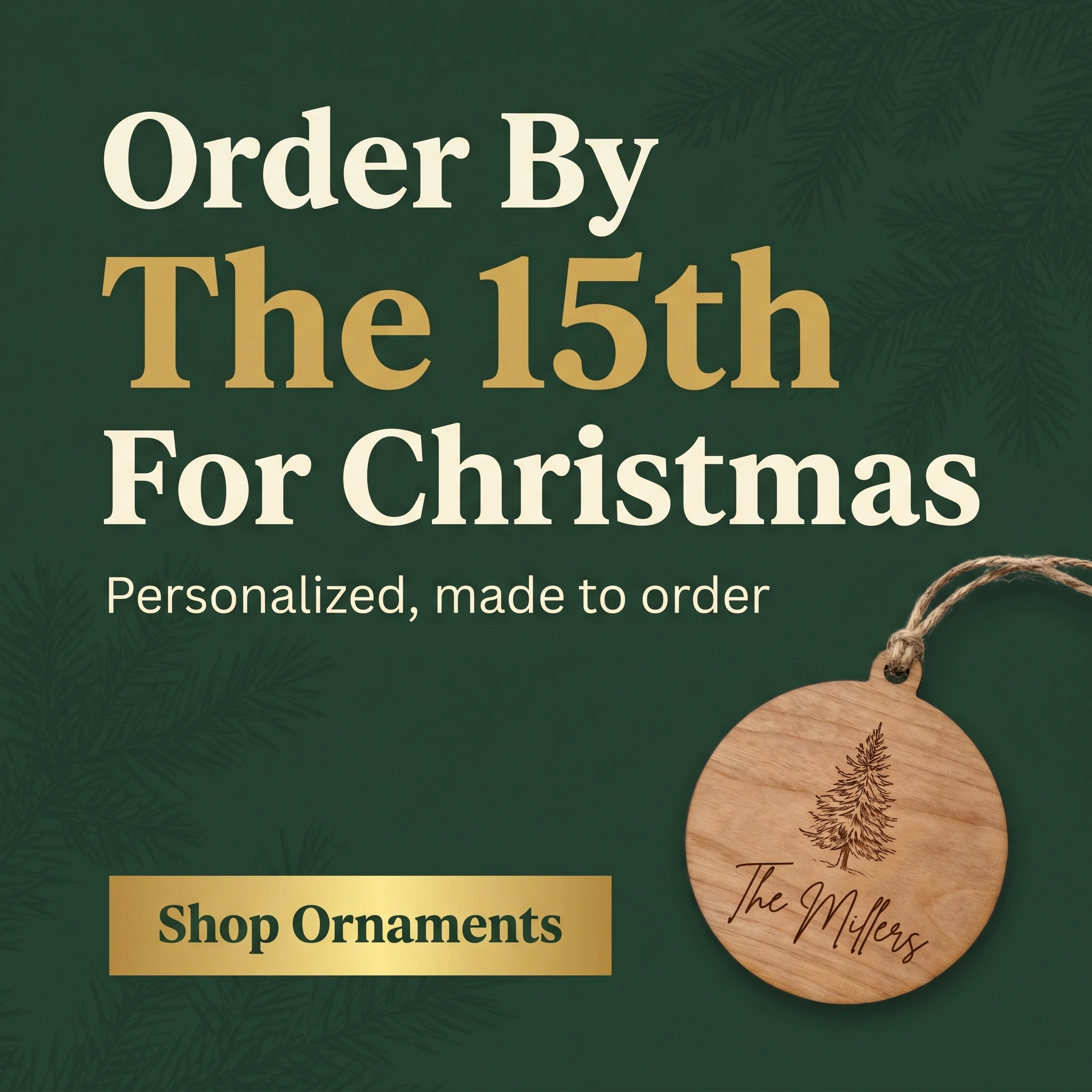
The format & angle. Pinecrest Makery’s seasonal push: bold festive type, a clear deadline, a warm holiday palette. Urgency built from a real shipping cutoff.
Who it targets. Cold and warm holiday shoppers who procrastinate and need a date to act on.
The hook. “Order By The 15th For Christmas.” A genuine deadline that creates urgency and sets honest expectations.
Why it works. A shipping cutoff is the most credible urgency a maker has — it’s real, so it converts the procrastinator without the trust damage of a fake countdown. It also protects the shop: stating the deadline prevents the late-order disappointment that turns into a bad review. For made-to-order products, the date is both a sales driver and a customer-service safeguard, and the typography-led layout makes it impossible to miss.
Steal it. Calculate your true production-plus-shipping cutoff and put that date front and center ahead of every gift peak. Run it hard in the final two weeks, then rotate the creative before the message fatigues.
Make five, not one
A maker’s story, a giftable hero, a pet transformation, a giver’s pride, and an honest deadline — five ads aimed at five shoppers across the gifting calendar. That range is what gets rewarded now — Andromeda-era delivery hands each concept to the shopper it suits, the gift-giver and the pet parent and the procrastinator alike, instead of pitting five versions of one photo against each other. Sellers on other channels run parallel playbooks — the Amazon seller ad examples breakdown covers external traffic to marketplace listings, and the Shopify store ad examples post handles your own storefront.
Producing five-plus genuinely different concepts for every product and every gift peak is the bottleneck for a small shop with no time, and it’s what Zendux solves: it generates on-brand static variants and bulk-launches them across your ad sets, no evening lost at the kitchen table.